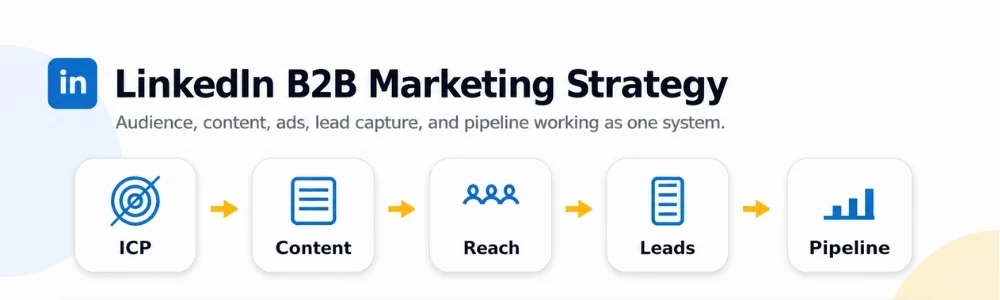

A LinkedIn B2B marketing strategy is a plan for using LinkedIn to reach the right business audience, build trust with useful content, support sales conversations, and turn attention into a qualified pipeline. The strongest strategy combines a clear ICP, optimized company and executive profiles, consistent thought leadership, ethical networking, paid campaigns, retargeting, lead capture, and measurement across the full funnel.
LinkedIn is not just a place to post company updates. For B2B businesses, it can become a serious demand generation channel because buyers, founders, managers, investors, recruiters, and decision-makers already use the platform in a professional context. If your first goal is visibility, start with a focused LinkedIn brand awareness campaign for the right decision-makers.
LinkedIn says it has more than 1.3 billion members globally, and its official advertising resources highlight professional targeting across objectives such as brand awareness, engagement, lead generation, and conversions.
The mistake many businesses make is treating LinkedIn as a random posting channel. They post when they remember, run ads when pipeline is low, and send connection requests without a clear reason. That approach rarely builds trust. A proper strategy connects audience, positioning, content, ads, and sales follow-up into one system.
This guide gives you a practical, step-by-step LinkedIn B2B marketing strategy for 2026. It is written for founders, marketing teams, sales leaders, consultants, agencies, SaaS companies, and professional service businesses that want LinkedIn to create real business outcomes, not just impressions.
What Is LinkedIn B2B Marketing?
LinkedIn B2B marketing is the process of using LinkedIn to promote products, services, expertise, or ideas to other businesses and professional buyers. It can include organic content, personal branding, company page management, paid ads, thought leader ads, lead generation forms, account-based marketing, events, webinars, and sales outreach.
The goal isn't always to make an immediate sale. In B2B, the buying journey is longer and usually involves more than one person. A good LinkedIn strategy helps your ideal audience know your brand, understand your point of view, trust your expertise, and eventually take a clear next step, such as downloading a guide, registering for a webinar, booking a call, or replying to a sales conversation.
Why LinkedIn Matters for B2B Marketing in 2026
• Professional context: People use LinkedIn with a work mindset, which makes it stronger for B2B education, hiring, partnerships, and buying research than many entertainment-first platforms.
• Audience quality: LinkedIn advertising allows marketers to target by company, industry, job function, seniority, skills, interests, and retargeting audiences.
• Trust through people: Founder, executive, and subject-matter expert content often feels more credible than brand-only messaging when it is useful and authentic.
• Full-funnel tools: Campaign Manager supports objectives across awareness, consideration, and conversions, including lead generation and website conversions.
• Sales alignment: LinkedIn can support the entire revenue motion, from awareness to warm introductions, retargeting, lead capture, and follow-up.
The 20-Part LinkedIn B2B Marketing Strategy Framework
Use the table below as the master structure. Each point is explained in detail after the table.
Step | Focus | Business purpose |
|---|---|---|
1 | Define the ICP and buying committee | Reach the people who can actually influence the deal |
2 | Set one funnel goal | Avoid mixing awareness, leads, and sales into one campaign |
3 | Optimize profiles and pages | Make the first impression credible |
4 | Build content pillars | Create consistency and topical authority |
5 | Publish thought leadership | Build trust before demand exists |
6 | Use the right content formats | Match format to message and funnel stage |
7 | Use native video | Improve clarity and human connection |
8 | Build employee advocacy | Increase trust through real people |
9 | Engage in comments | Turn visibility into relationships |
10 | Connect ethically | Grow a relevant network without spam |
11 | Use Sales Navigator where relevant | Build better prospect lists and account views |
12 | Choose ad objectives correctly | Pay for the result that matches the campaign goal |
13 | Use Thought Leader Ads | Amplify trusted personal content |
14 | Use Lead Gen Forms | Capture lower-friction B2B leads |
15 | Retarget engaged audiences | Move warm audiences to the next step |
16 | Nurture leads outside LinkedIn | Convert attention into sales conversations |
17 | Run ABM for high-value accounts | Focus depth on target companies |
18 | Align sales and marketing | Prevent leads from dying after capture |
19 | Measure full-funnel KPIs | Track what actually moves pipeline |
20 | Run a 90-day improvement cycle | Build a repeatable operating system |
1. Define your ICP and buying committee
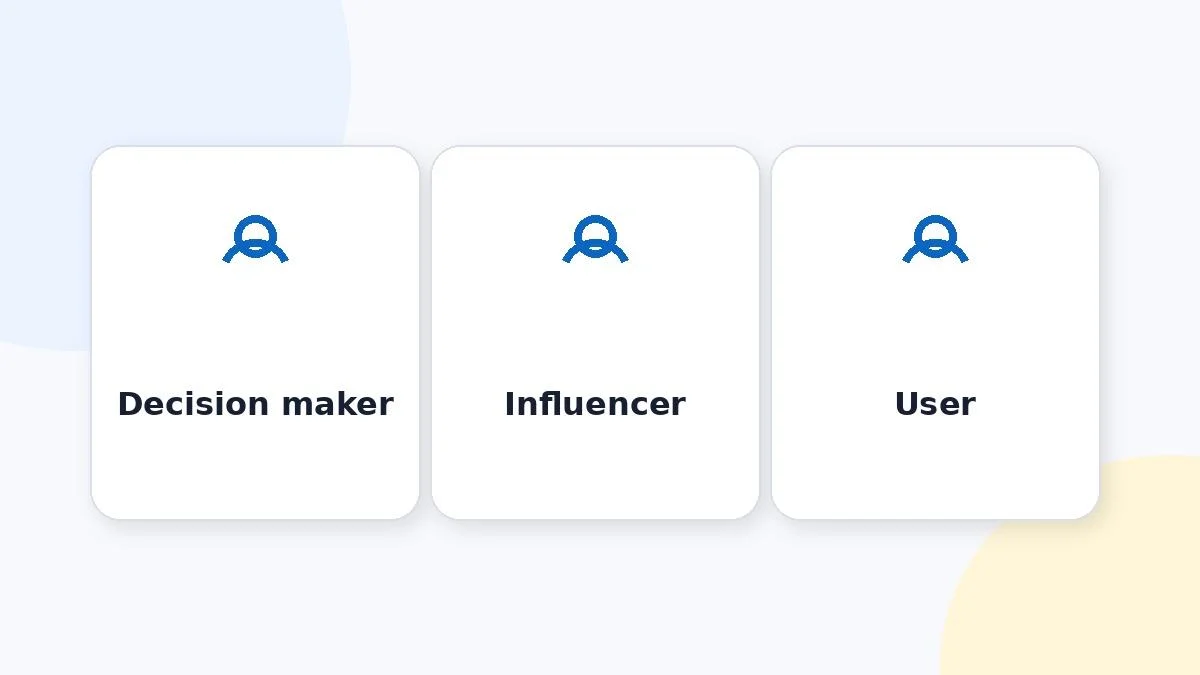
Before writing a single post or launching an ad, define who the strategy is for. A broad audience like "business owners" is too general. In B2B, you need to understand the company profile, the job roles involved, the decision-maker, the influencer, the user, and the blocker. For example, a SaaS company selling HR software may need to influence the CHRO, HR operations manager, finance leader, IT stakeholder, and end users. Your content should speak to the whole buying committee, not only one person.
• Industry and company size
• Primary decision-maker
• Secondary influencers
• Pain points and buying triggers
• Current alternatives
• Objections and risk concerns
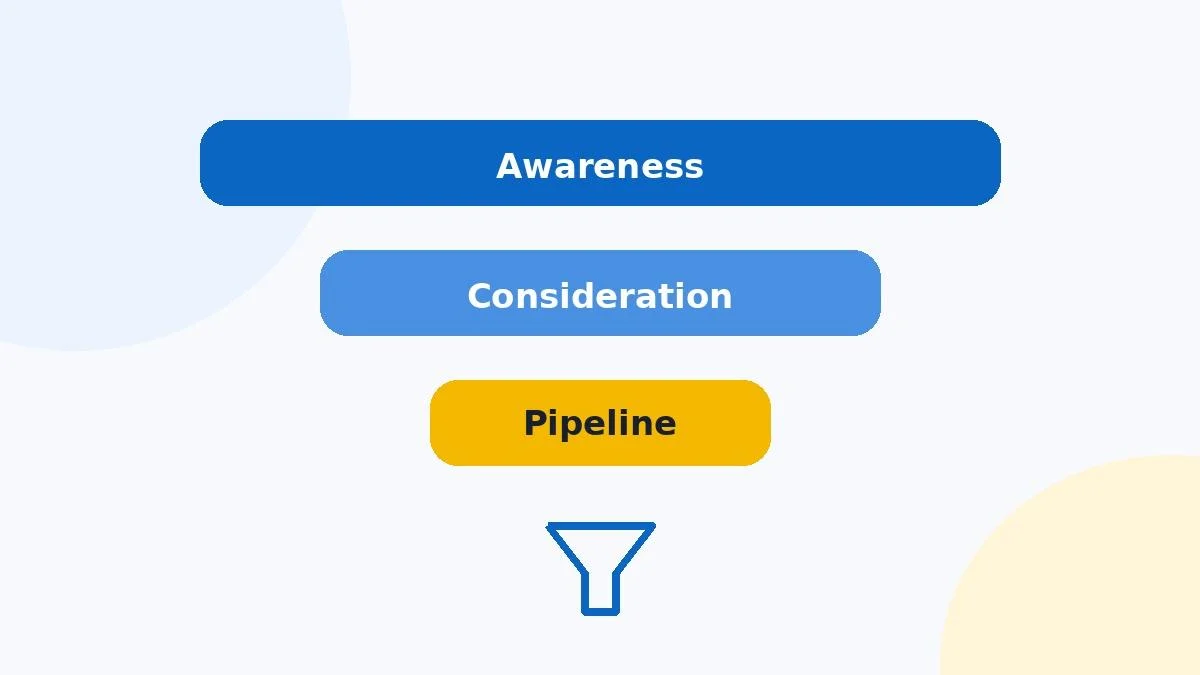
2. Set one clear funnel goal
Most LinkedIn strategies fail because they try to do everything at once. Awareness content should not be judged only by booked calls. Lead generation campaigns should not be optimized only for cheap impressions. Decide whether your current priority is visibility, engagement, traffic, lead capture, or pipeline creation. LinkedIn Campaign Manager organizes objectives around funnel stages such as awareness, consideration, and conversions, so your strategy should do the same.
• Awareness: reach the right people repeatedly
• Consideration: drive website visits, video views, or engagement
• Lead generation: collect qualified leads through forms or landing pages
• Pipeline: create sales conversations from warm accounts
3. Optimize your company page and executive profiles
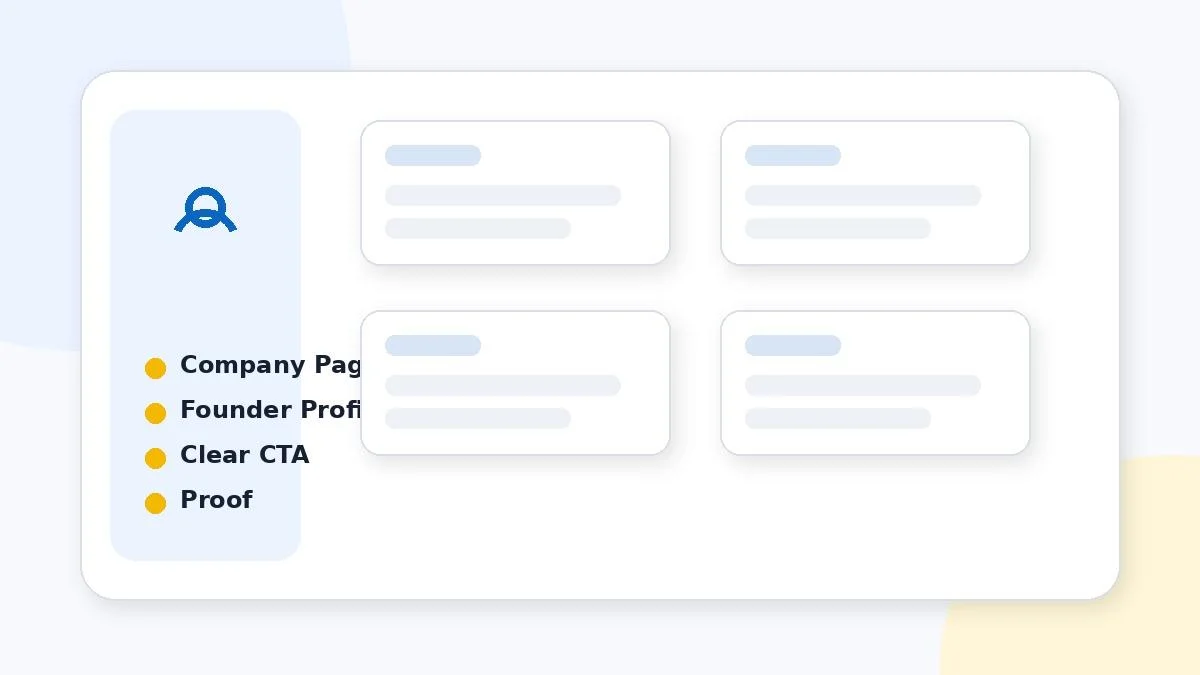
Every campaign sends people somewhere. If they click your company page or founder profile and see outdated messaging, unclear positioning, or weak proof, the opportunity is wasted. Before investing heavily in outreach or ads, make sure you improve your LinkedIn company page so visitors can trust your business.
LinkedIn says Pages with complete information, such as a logo, description, and website URL, can be more discoverable and may receive 30 percent more weekly views. Your page and profiles should explain who you help, what problem you solve, what proof you have, and what someone should do next.
• Company tagline and About section
• Banner image and service positioning
• Founder and executive headlines
• Featured case studies and lead magnets
• Website link and contact path
4. Build content pillars before creating posts
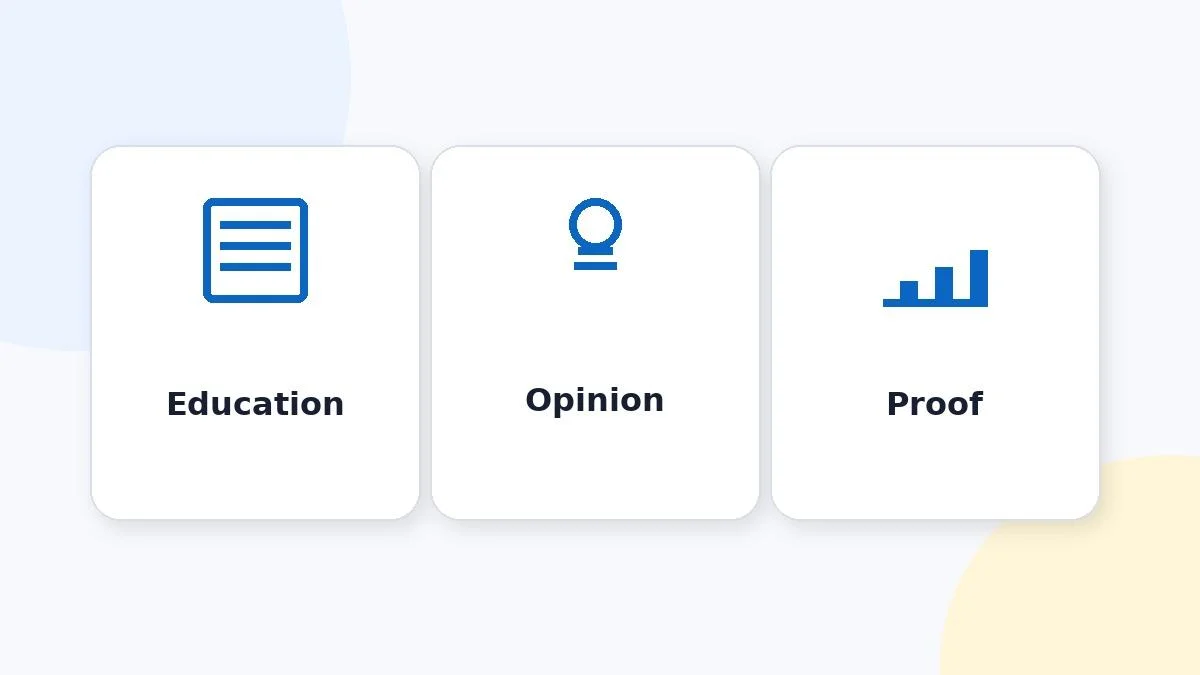
Random posting does not create a brand memory. A content pillar system gives your LinkedIn presence a consistent shape. Pick three to five themes that connect directly to your expertise and buyer problems. Each pillar should help your audience understand the problem better, trust your perspective, or move closer to action.
• Education: how-to advice and frameworks
• Perspective: opinions and market shifts
• Proof: case studies and results
• People: founder lessons and team expertise
• Product: use cases and objections
5. Publish thought leadership, not only promotional content
B2B buyers rarely trust a brand because it says “we are the best.” They trust people who explain problems clearly, share experience, and help them make better decisions. Thought leadership should be specific, practical, and honest. It can come from founders, consultants, sales leaders, product experts, customer success teams, or practitioners who work close to the problem.
• A mistake your market keeps making
• A belief you disagree with
• A lesson from a real project
• A framework your team uses
• A prediction based on customer conversations
6. Choose content formats based on the job to be done
Different LinkedIn formats serve different purposes. A text post can communicate a sharp point of view. A document post can explain a framework. A video can humanize a founder or simplify a complex idea. A single image can make a point quickly. Use the format that helps the message land, not the format that is currently popular.
• Text: opinions, lessons, quick insights
• Document: frameworks, checklists, guides
• Video: founder POV, product walkthrough, event recap
• Image: data point, quote, simple comparison
• Poll: lightweight audience research
7. Use native video for trust and explanation
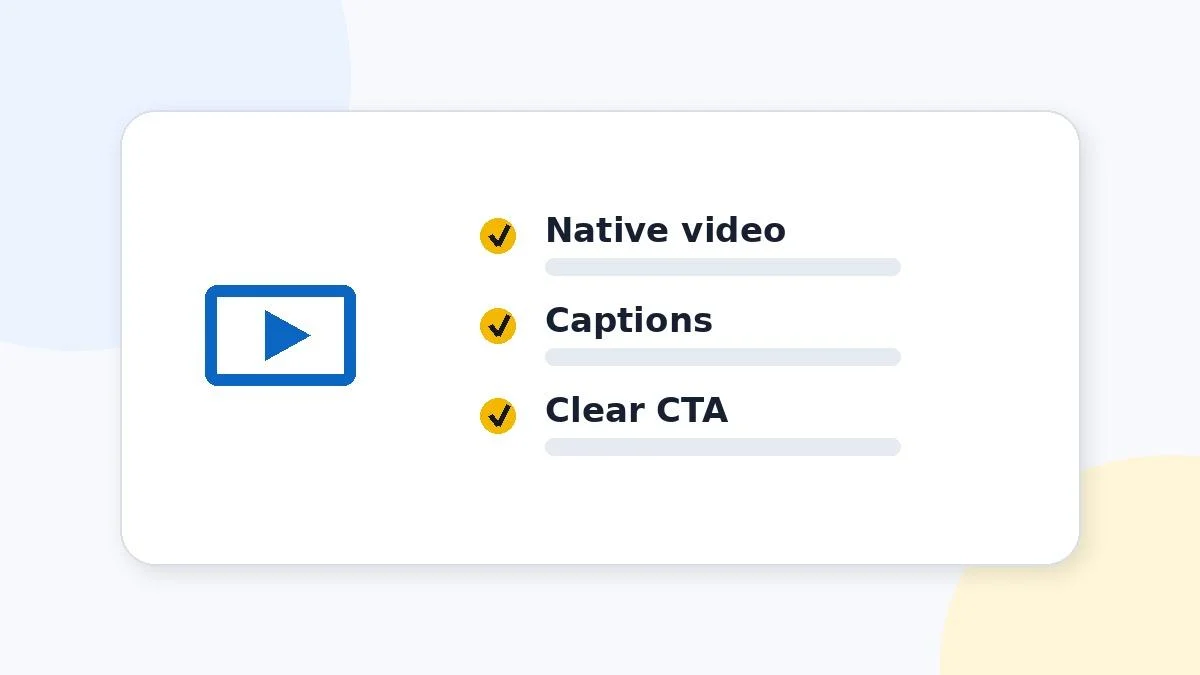
Video continues to matter in B2B because complex products and services are easier to explain when people can see and hear the person behind the message. Use short native videos for founder insights, product education, webinar clips, event takeaways, customer stories, and objection handling. Keep videos focused. One video should answer one idea clearly.
• Founder explains a market problem
• Customer success leader answers a common objection
• Product expert shows a simple workflow
• Consultant explains a framework in 60 seconds
8. Build employee advocacy without forcing employees
Your company page is useful for credibility, but people usually connect more deeply with other people. Encourage employees and leaders to share useful content in their own voice. Do not force copy-paste captions. Give them context, suggested angles, and creative freedom. The goal is not to make everyone sound like the brand account. The goal is to let real expertise travel further.
• Share weekly topic prompts
• Create swipe files, not scripts
• Let experts add their own examples
• Recognize quality contributions
• Avoid mandatory posting pressure
9. Use comments as a relationship channel
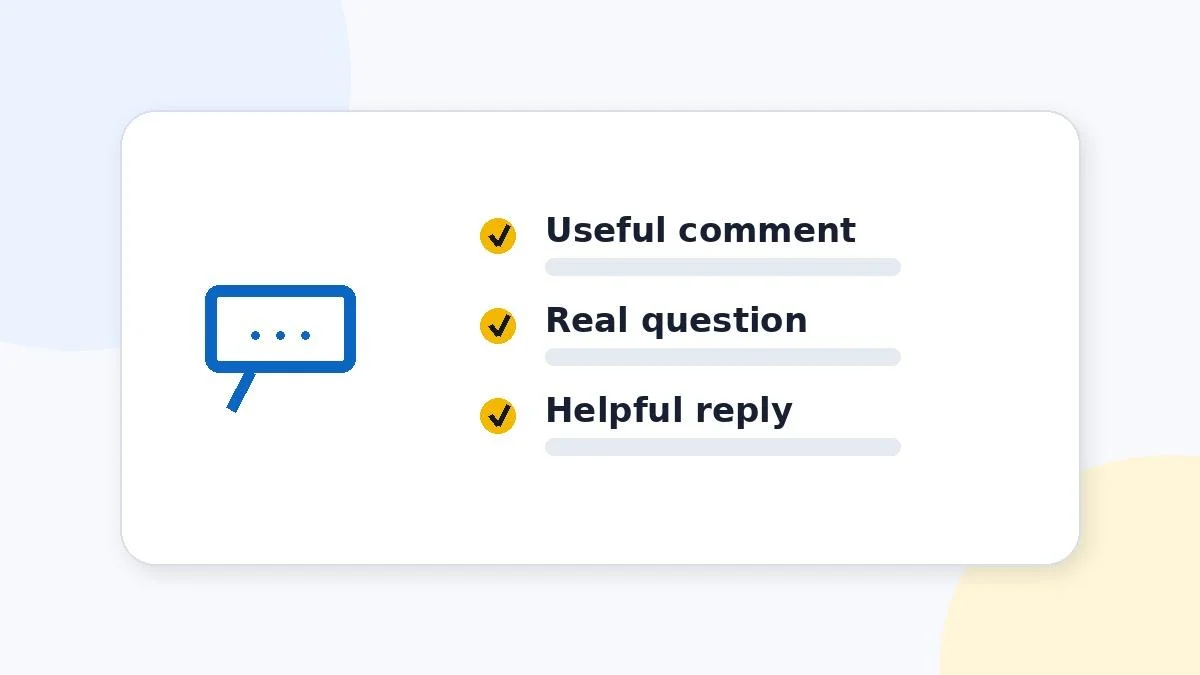
Comments are not just engagement signals. They are a way to enter relevant conversations with your market. The best comments add context, a useful example, or a thoughtful question. Avoid generic comments such as “great post.” A sharp comment on the right person’s post can create profile visits, replies, and warm conversations without sounding like outreach.
• Agree or challenge respectfully
• Add a specific example
• Share one useful takeaway
• Ask a genuine follow-up question
10. Grow your network with relevant, ethical connection requests
Connection growth only matters when the network is relevant. Do not send mass requests to random people. Connect with people who share a clear context, such as the same industry, a common event, a mutual connection, a content interaction, or a target account relationship. Personalize when it helps the recipient understand why the connection makes sense.
• They engaged with your post
• You attended the same event
• They match your ICP
• You share a mutual connection
• You can offer useful context
11. Use Sales Navigator if prospecting is part of the strategy
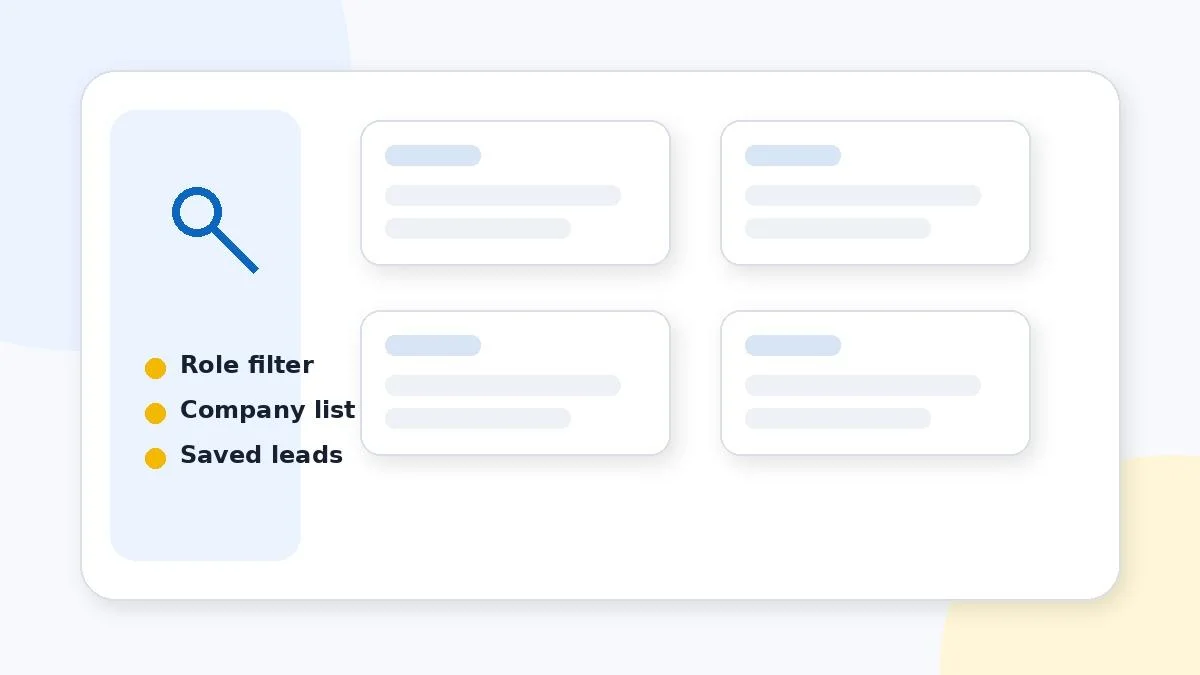
For teams doing active B2B sales, Sales Navigator can help build better account and lead lists. For premium outreach, learn how to use LinkedIn InMail for professional conversations without sounding generic or pushy.
Use it to understand target accounts, save leads, track job changes, and segment prospects. The key is to use it for research and relevance, not for high-volume spam. A smaller list of better-fit accounts is more useful than a large list that sales will never follow up properly.
• Industry
• Company headcount
• Seniority
• Function
• Geography
• Recent job changes
12. Choose LinkedIn ad objectives carefully
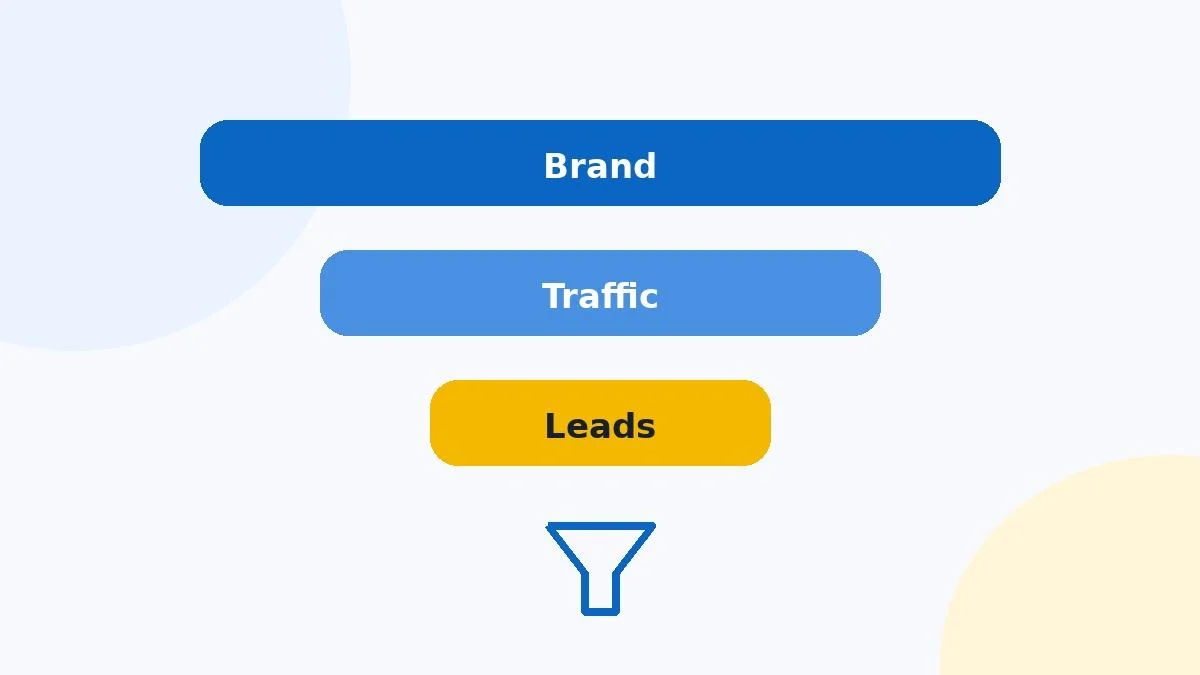
The objective you choose affects how LinkedIn optimizes delivery. If your goal is brand recognition, awareness may fit. If your goal is traffic, website visits may fit. If your goal is capturing qualified contacts, lead generation may fit. Do not pick an objective by name alone. Pick it based on the action you actually want and the stage of the funnel you are targeting.
• Awareness: reach and impressions
• Engagement: reactions, comments, shares, follows, and clicks
• Website visits: traffic to a landing page
• Lead generation: native LinkedIn forms
• Website conversions: tracked actions on your website
13. Use Thought Leader Ads to amplify trusted voices
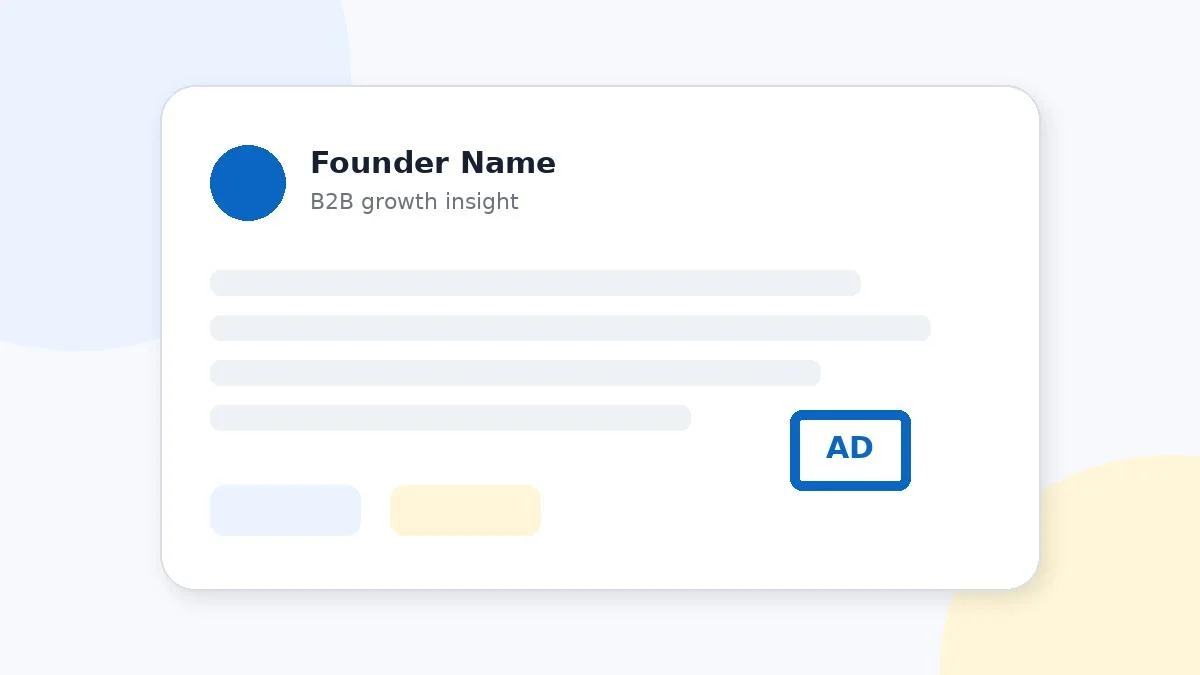
Thought Leader Ads allow advertisers to promote eligible member posts as Sponsored Content. This can work well when a founder, executive, or expert has posted something useful that already feels native to the feed. The format is not magic. It works best when the original post has a clear point of view, useful content, and a strong audience fit.
• Founder market insight
• Expert educational post
• Customer story from a leader
• Event announcement from a trusted person
• Research takeaway from a subject expert
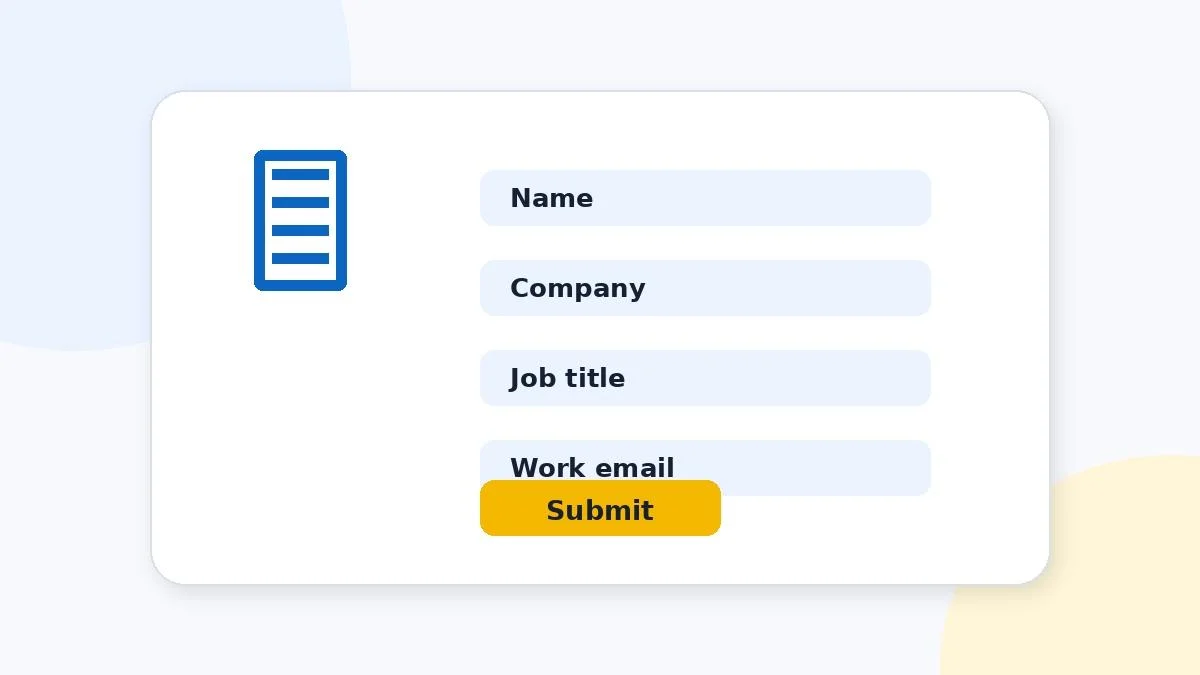
14. Use Lead Gen Forms for lower-friction capture
LinkedIn Lead Gen Forms come pre-filled with professional profile data, which can reduce friction for the member. They are useful for webinars, guides, checklists, demos, consultations, event signups, and research reports. Keep the form short. Asking for too much information can reduce completion quality.
• Benchmark report
• Webinar registration
• Checklist download
• Consultation request
• Product demo interest
15. Retarget people who already showed interest
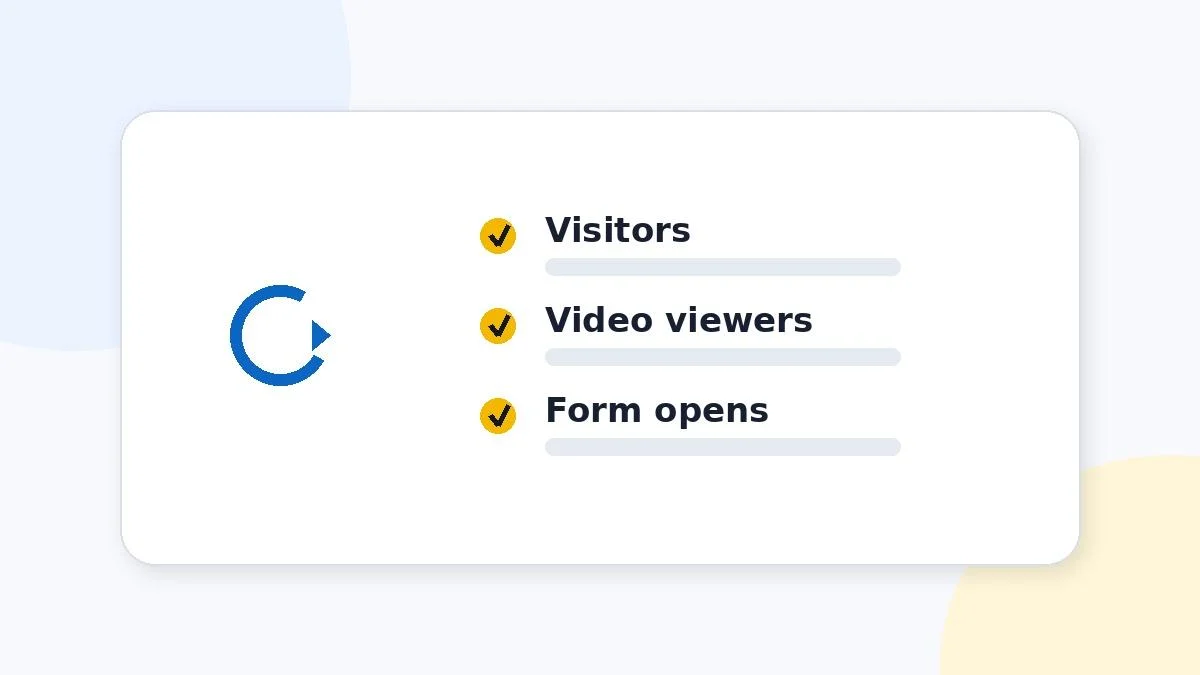
Cold audiences need education. Warm audiences need a next step. LinkedIn Matched Audiences can support retargeting based on actions such as website visits, video views, Lead Gen Form activity, Page engagement, and ad engagement, subject to member preferences and platform rules. Use retargeting to move people from awareness to consideration and from consideration to lead capture.
• Website visitors
• Video viewers
• Document ad engagers
• Lead form opens
• Company page engagers
16. Create a nurture path after the LinkedIn touchpoint
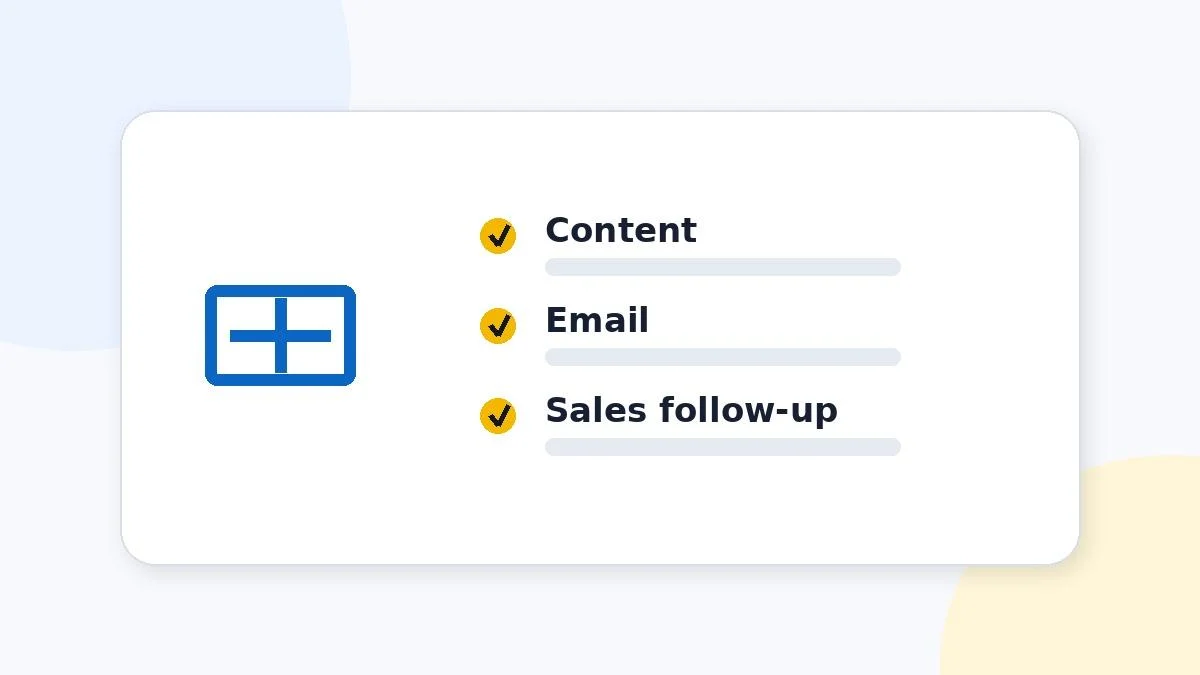
A lead is not the end of the strategy. It is the start of the next conversation. For end-to-end support, our LinkedIn marketing services for B2B brands can help you turn strategy into consistent execution.
After someone downloads a guide or registers for a webinar, send useful follow-up content, connect them to the right sales owner, and continue educating them based on their interest. Avoid pushing for a demo too early if the offer was educational.
• Thank-you email
• Related resource
• Problem-focused case study
• Soft consultation CTA
• Sales follow-up when intent rises
17. Use ABM for high-value accounts
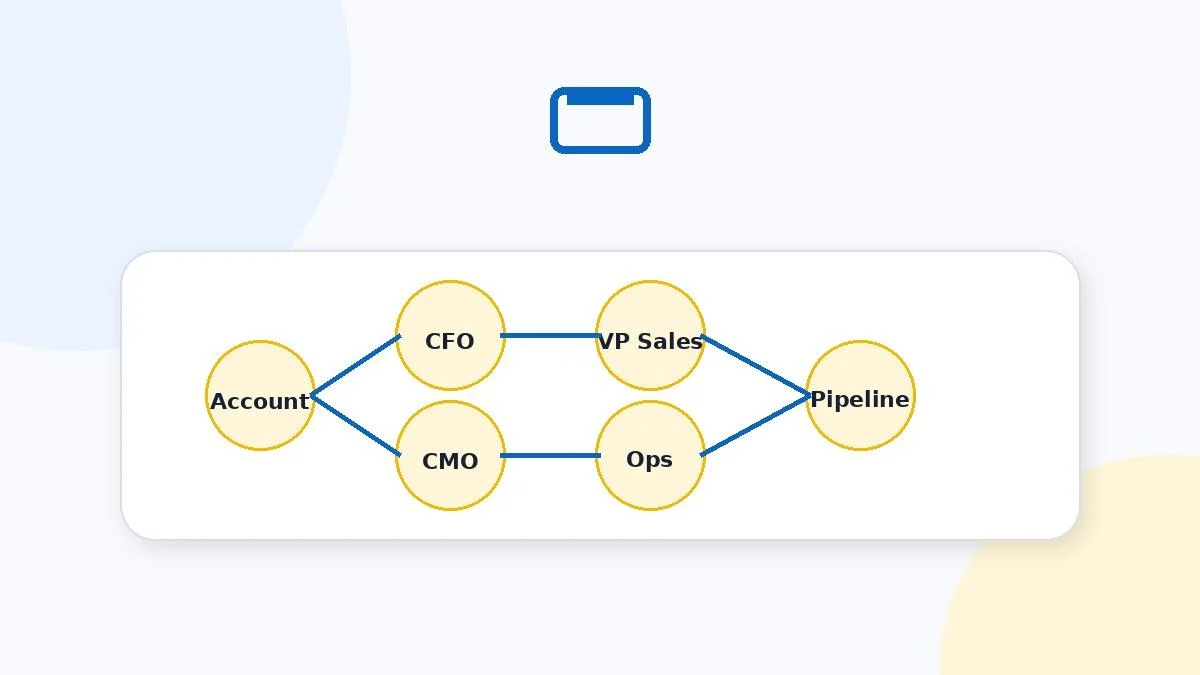
Account-based marketing works well on LinkedIn because B2B deals often involve multiple people at the same company. Build a target account list, identify roles in the buying committee, create account-relevant content, and combine ads with sales outreach. ABM is not about reaching everyone. It is about repeatedly reaching the right people inside the companies that matter most.
• Select target accounts
• Map buying roles
• Create account-level messaging
• Run ads to the account group
• Coordinate sales follow-up
18. Align sales and marketing before launch
LinkedIn marketing creates more value when sales knows what is happening. Share campaign themes, target accounts, content assets, lead criteria, and follow-up expectations before launching. Define what happens when someone engages, downloads, replies, or books a call. Without this alignment, good leads can sit untouched and campaigns can look weaker than they really are.
• Shared ICP
• Lead scoring rules
• Follow-up SLA
• Message templates
• Weekly feedback loop
19. Measure the right KPIs at each stage
A B2B LinkedIn strategy should not be judged by one metric. Awareness campaigns need reach and relevant engagement. Consideration campaigns need clicks, content views, and audience quality. Lead generation campaigns need cost per qualified lead, form completion rate, and sales acceptance. Pipeline campaigns need opportunities and revenue influence.
• Awareness: reach and frequency
• Engagement: comments and saves
• Traffic: landing page visits
• Leads: qualified submissions
• Revenue: meetings, opportunities, pipeline
20. Run the strategy in 90-day cycles
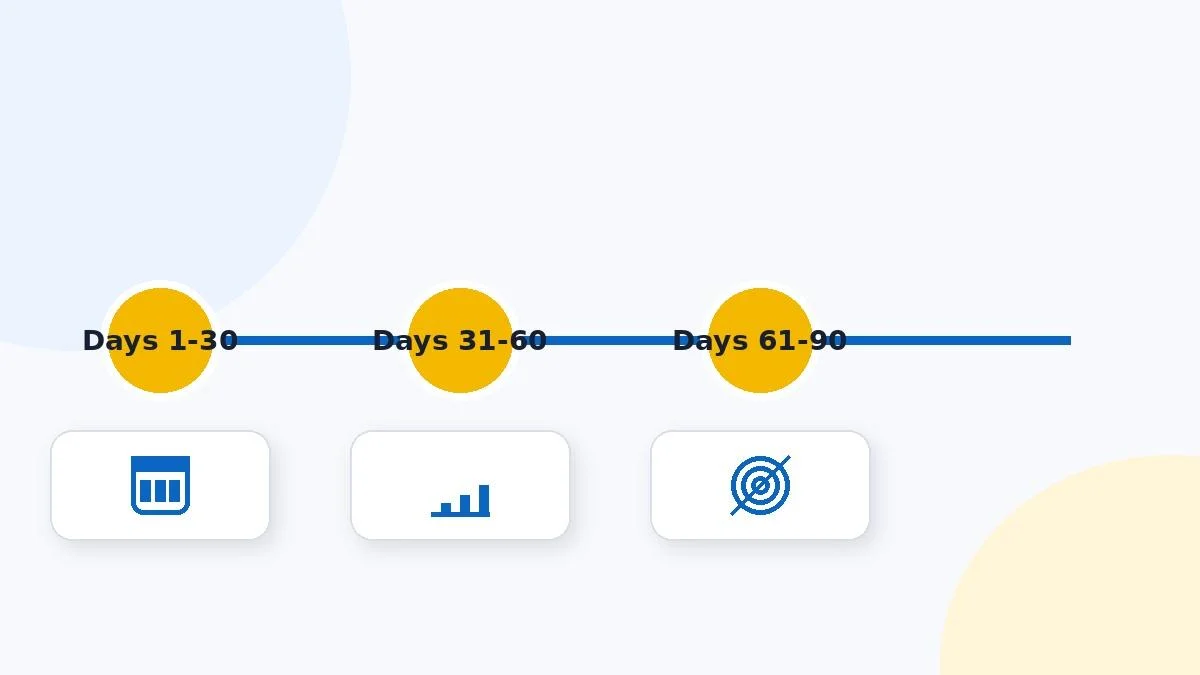
LinkedIn needs consistency. A 90-day cycle gives enough time to test content, gather data, optimize ads, and understand sales feedback. Do not rewrite the entire strategy every week. Review signals weekly, but make bigger strategic changes monthly or quarterly. This keeps the team focused while still learning quickly.
• Days 1-30: foundation and content testing
• Days 31-60: paid tests and retargeting
• Days 61-90: scale winners and improve sales follow-up
Organic vs Paid LinkedIn B2B Marketing
Organic and paid LinkedIn marketing should not compete with each other. Organic content builds trust, teaches the market, and gives your team reusable ideas. Paid campaigns add control, scale, targeting, and retargeting. The best B2B strategy uses both.
Channel | Best for | Weakness to manage |
|---|---|---|
Organic personal profiles | Trust, expertise, founder visibility, community engagement | Reach can be inconsistent and depends on content quality |
Company page | Credibility, updates, hiring, brand verification | Usually weaker for human trust if used alone |
Paid ads | Scale, account targeting, retargeting, lead capture | Can get expensive without strong offers and measurement |
Sales outreach | One-to-one conversations and account progress | Can feel spammy without relevance and timing |
Below is just dummy content:
Recommended Weekly LinkedIn Operating Rhythm
Day | Action | Owner |
|---|---|---|
Monday | Review previous week’s content, ad metrics, and sales feedback | Marketing lead |
Tuesday | Publish one educational or perspective post from a leader | Founder or subject expert |
Wednesday | Engage with target accounts and industry conversations | Sales and marketing |
Thursday | Publish a proof, case study, or customer-learning post | Marketing team |
Friday | Update CRM notes, retargeting audiences, and next-week topics | Revenue team |
Example 90-Day LinkedIn B2B Strategy Plan
Phase | Focus | Actions |
|---|---|---|
Days 1-15 | Foundation | Define ICP, update company page, optimize executive profiles, install Insight Tag, map content pillars |
Days 16-30 | Organic testing | Publish 8 to 12 posts, test hooks, identify top-performing topics, start comment engagement |
Days 31-45 | Paid testing | Run small awareness, traffic, or engagement tests based on the strongest content |
Days 46-60 | Lead capture | Launch a webinar, checklist, report, or consultation offer with Lead Gen Forms or landing pages |
Days 61-75 | Retargeting and ABM | Build retargeting audiences and target selected account lists with relevant content |
Days 76-90 | Scale and optimize | Move budget to winners, improve follow-up, update sales scripts, and plan the next cycle |
AEO and GEO Notes for This Blog
To improve visibility in AI search, this article should include a clear definition, answer-first introduction, practical tables, question-based headings, FAQ schema, author information, publish and modified dates, and links to supporting sources. The blog should also connect internally to related pages on LinkedIn branding, LinkedIn profile optimization, LinkedIn headline optimization, and B2B lead generation if those pages exist on the website.
Final Thoughts: Build Trust Before You Ask for the Sale
A strong LinkedIn B2B marketing strategy is not about posting more. It is about becoming easier to understand, easier to trust, and easier to contact for the right people. Start with a clear ICP, build useful content around real buyer problems, use paid campaigns where they add scale, and measure the work against the full funnel.
LinkedIn works best when marketing and sales treat it as one connected system. Your posts create familiarity. Your profiles create credibility. Your ads create reach. Your lead magnets capture demand. Your sales team turns that demand into conversations. When all of these parts work together, LinkedIn becomes more than a social platform. It becomes a B2B growth channel.