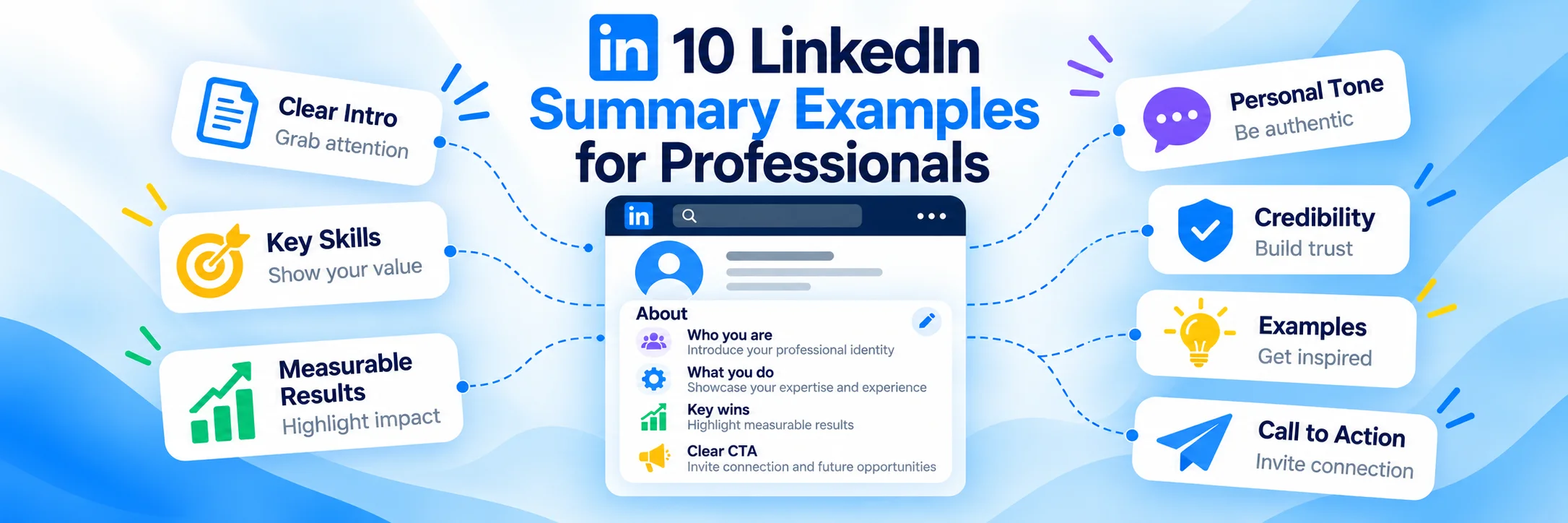

Your LinkedIn summary, also called the About section, is one of the most overlooked parts of your profile. Your headline tells people what you do, and your experience section tells them where you've worked. The summary is the only place where you get to explain who you are, what you bring to the table, and where you're headed.
It's also where most people go wrong. Some leave it blank, and others fill it with the stiff, corporate language of a brochure nobody asked to read.
A good summary does neither.
It sounds like a professional version of you.
In this article, I'll walk through why the summary matters, what separates a strong one from a forgettable one, and ten styles you can borrow from, depending on where you are in your career.
Why Your About Section Is Important
Think about how people actually use LinkedIn. A recruiter, a potential client, or a future collaborator lands on your profile and has a few seconds to decide whether you're worth a closer look.They may first notice your photo and headline, then read your About section to understand you better. It feels more personal than the rest of the profile and gives them a clearer idea of who you are.
Your experience section can tell them that you worked at a company for two years. It can't tell them why you made that move, what you learned, or what you want next.
The summary connects those dots. It turns a list of jobs into a story, and stories are what people remember.
That's why the summary deserves real attention. It doesn't need to be long or clever, but it does need to help the right people understand you quickly.
The Three Qualities Every Strong Summary Shares
No matter your style or career stage, a good summary usually has three things: clear information, real experience and a bit of personality. .
Clarity means a reader can tell what you do and where you're headed within a few seconds.
Credibility means the claims feel earned rather than inflated.
Personality means your summary should sound natural and personal, like you wrote it yourself, not copied from a template.
Miss any one of these and the summary falls flat. Clarity without personality reads like a job description. Personality without credibility reads like a pitch. Credibility without clarity leaves the reader working too hard. Keep these three in mind as we go through the below 10 LinkedIn summary examples for professionals:
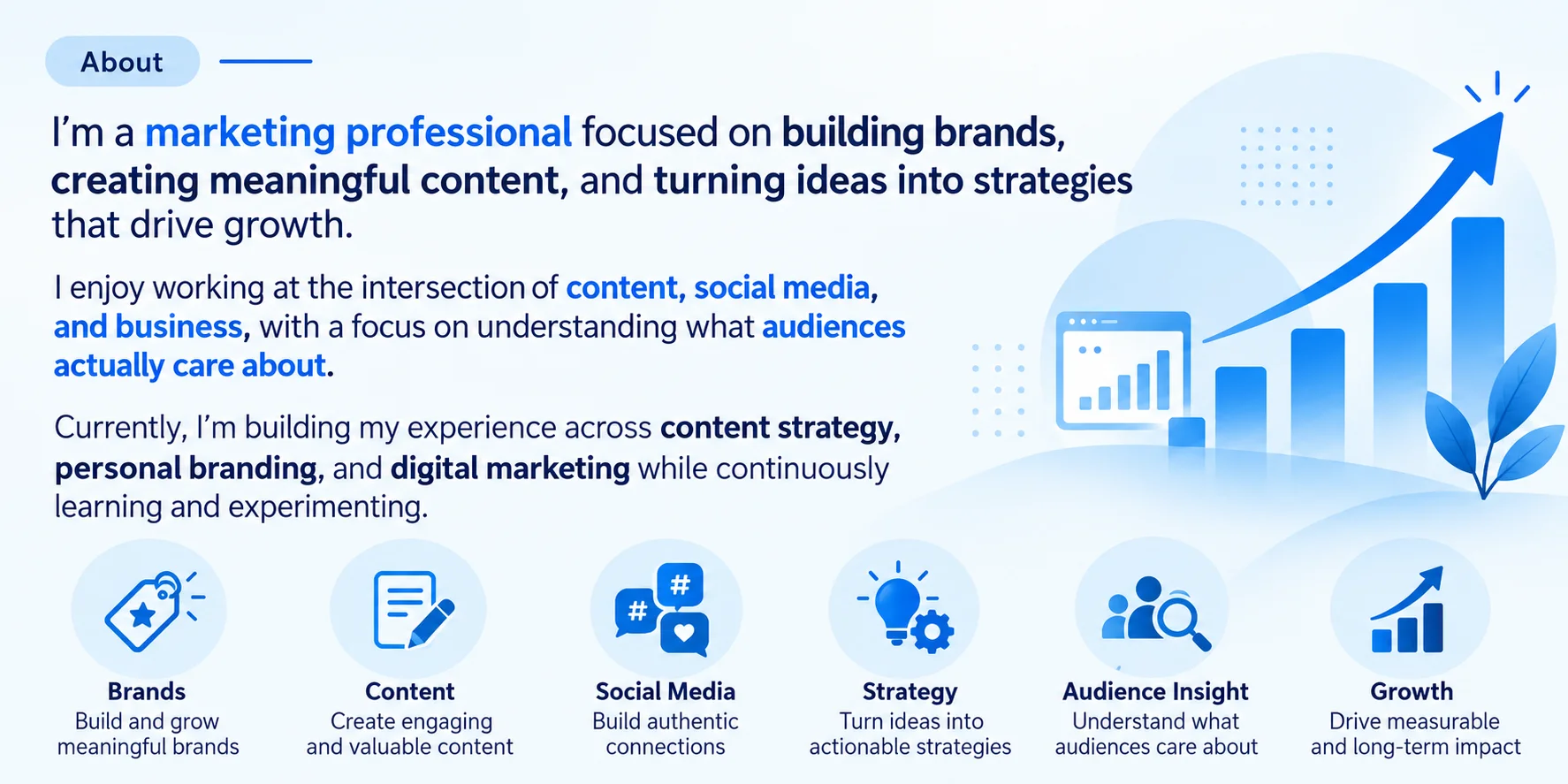
1. The Career-Focused Professional
If you already have some experience and want your profile to communicate a clear professional direction, keep the summary focused on your expertise and interests.
Why it works: It quickly establishes the person's field, interests, and direction without trying to sound overly impressive. Nothing in it is exaggerated, and that restraint is exactly what makes it believable.
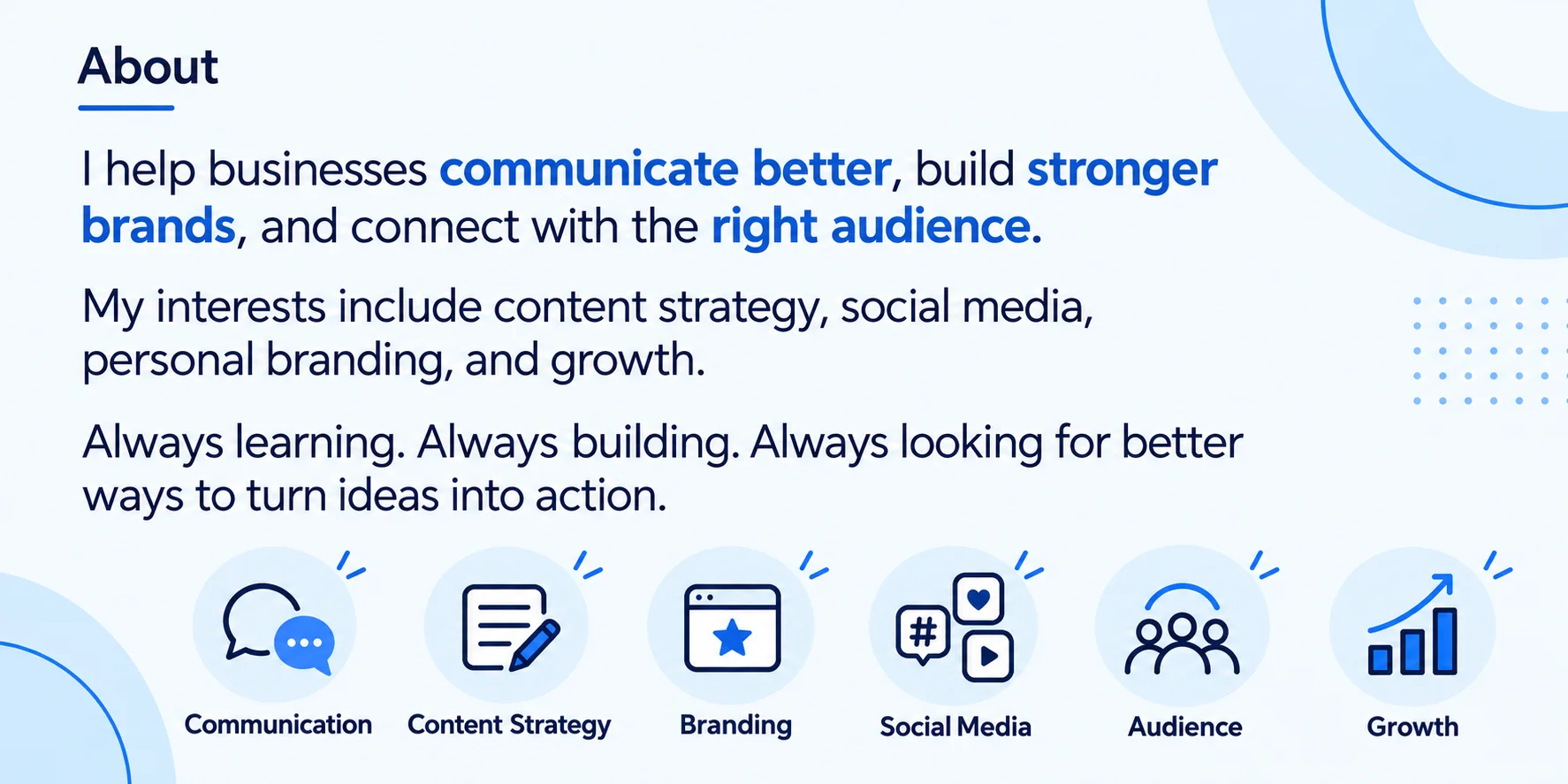
2. The Short and Confident Summary
Not everyone needs a long About section. If you prefer a clean, direct profile, a few lines can work just as well.
Why it works: It's easy to read, and visitors understand what you do immediately. Short doesn't mean vague. Every line here says something specific, and the closing rhythm adds a bit of personality without taking up space.
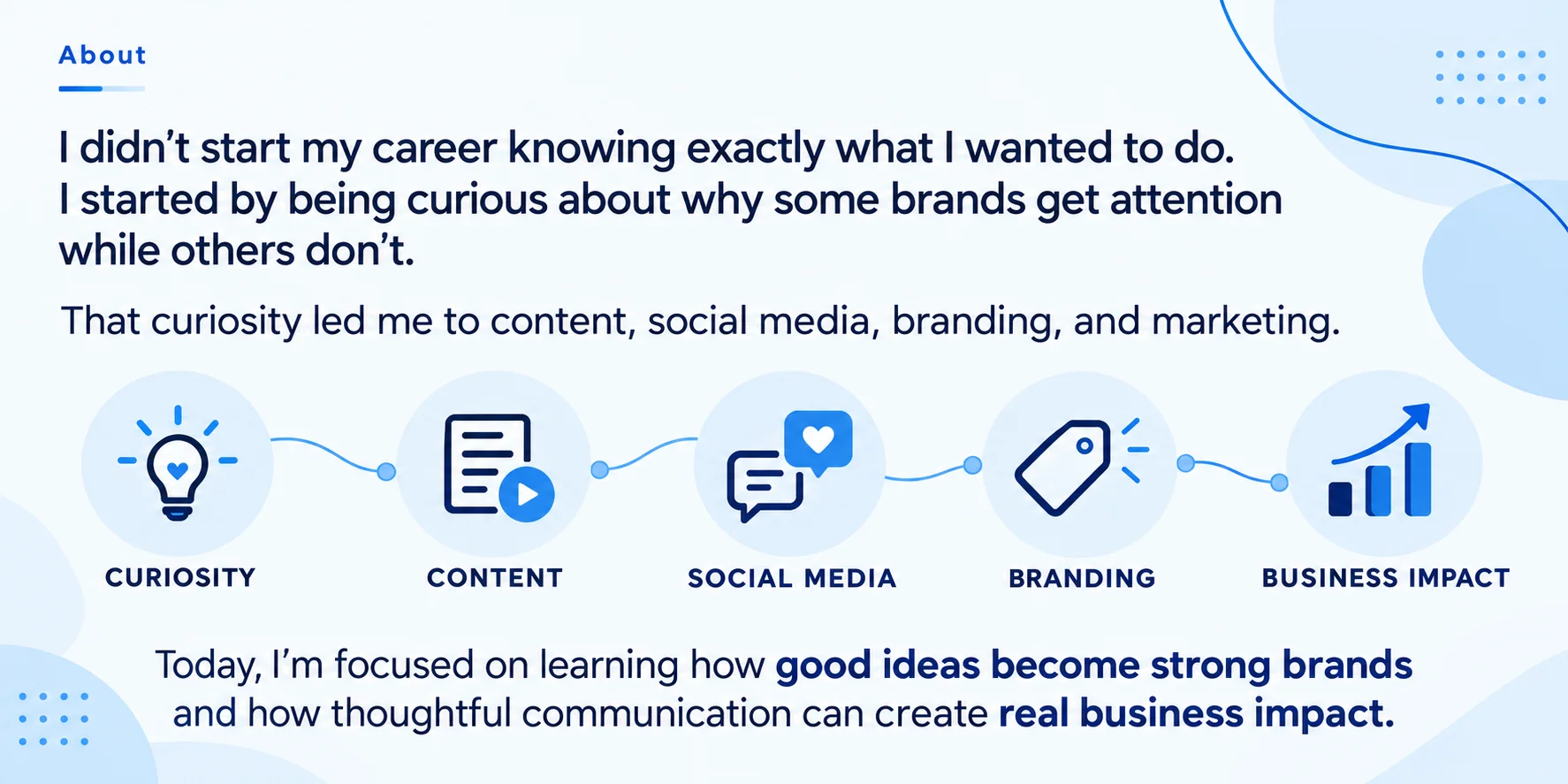
3. The Storytelling Summary
A personal story can make your profile far more memorable. Instead of opening with a job title, start with the curiosity or experience that led you to your current career.
Why it works: It gives the reader context instead of simply listing skills. Most people's careers weren't planned from day one, and admitting that makes you more relatable, not less. The story also shows how you think, which a list of skills never can.
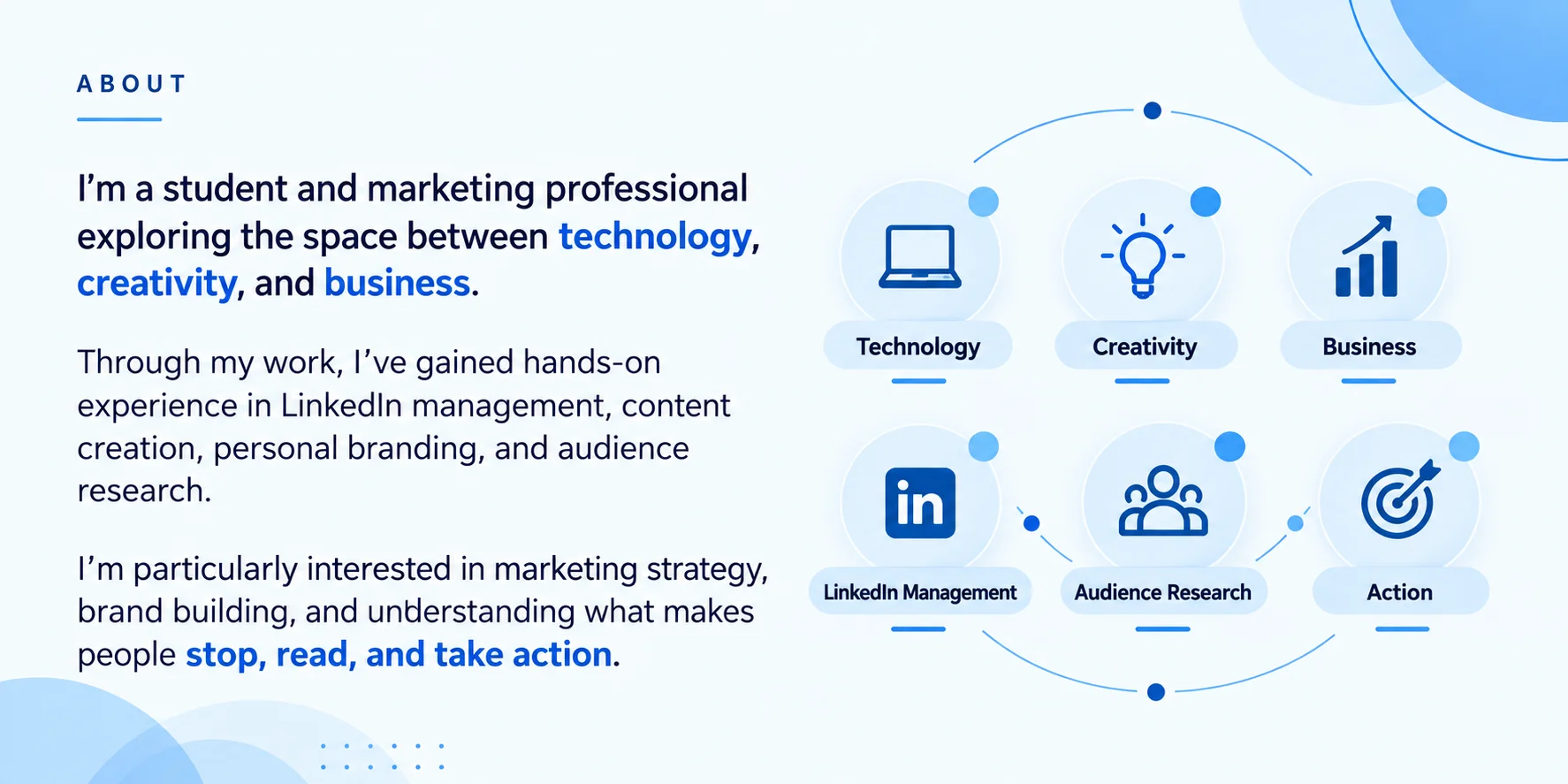
4. The Student + Professional Summary
Students and early-career professionals often get stuck on one question: "I don't have enough experience. What should I write?"
Here's the good news: your summary doesn't have to pretend you have years of experience. Talk about what you're learning, the projects you've worked on, and the direction you're building toward.
Why it works: It communicates potential without exaggerating experience. Readers tend to respond well to honest ambition. Someone who is clear about what they're learning and where they want to go is often more compelling than someone who overstates their resume.
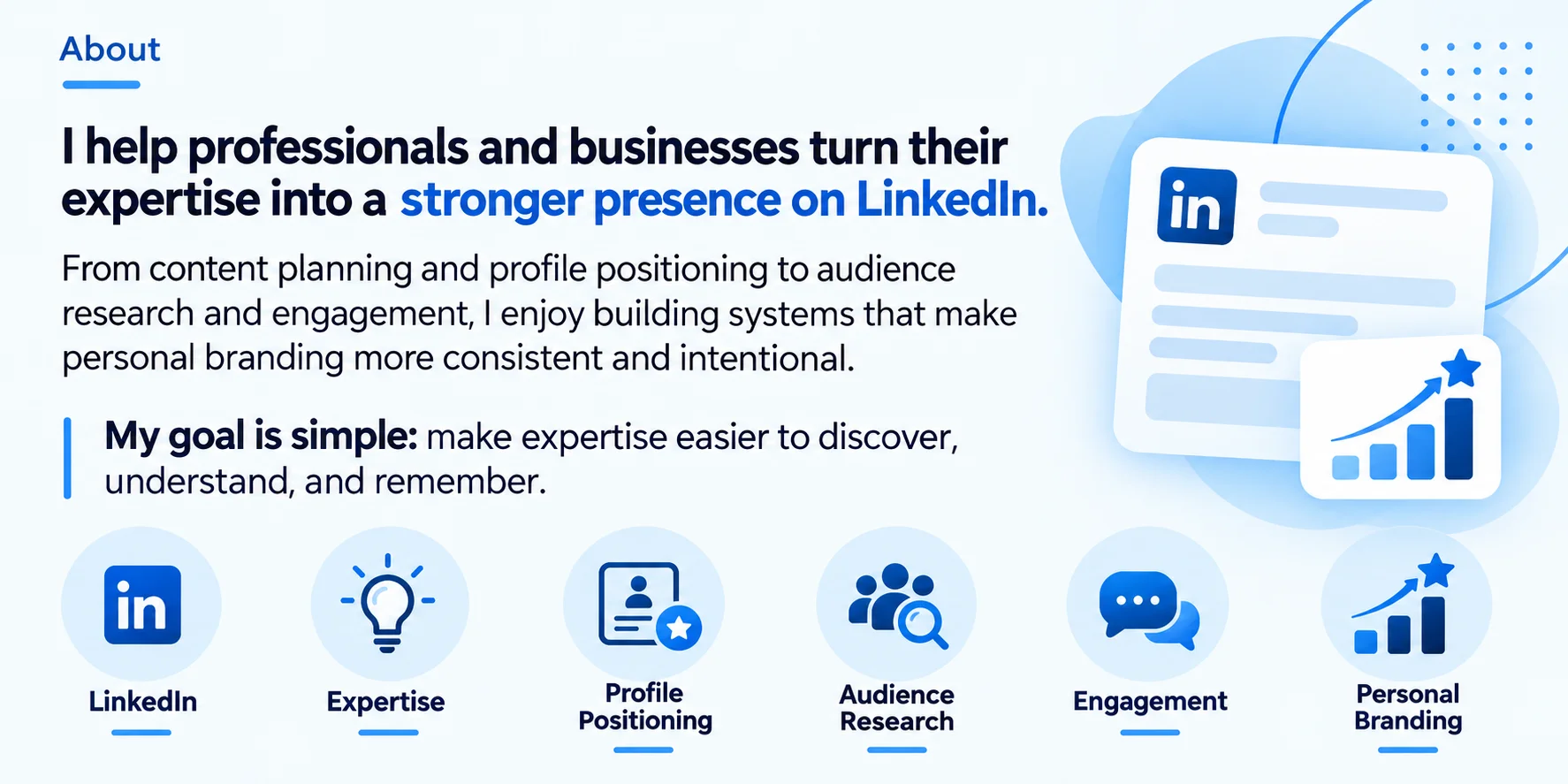
5. The Personal Branding Professional
If personal branding is your area of expertise, your own LinkedIn profile should prove it. This is one of the few cases where your profile is itself part of your portfolio.
Why it works: It clearly explains who the person helps, what they do, and the outcome they're trying to create. That's the three-part formula behind most strong positioning statements: audience, service, result.
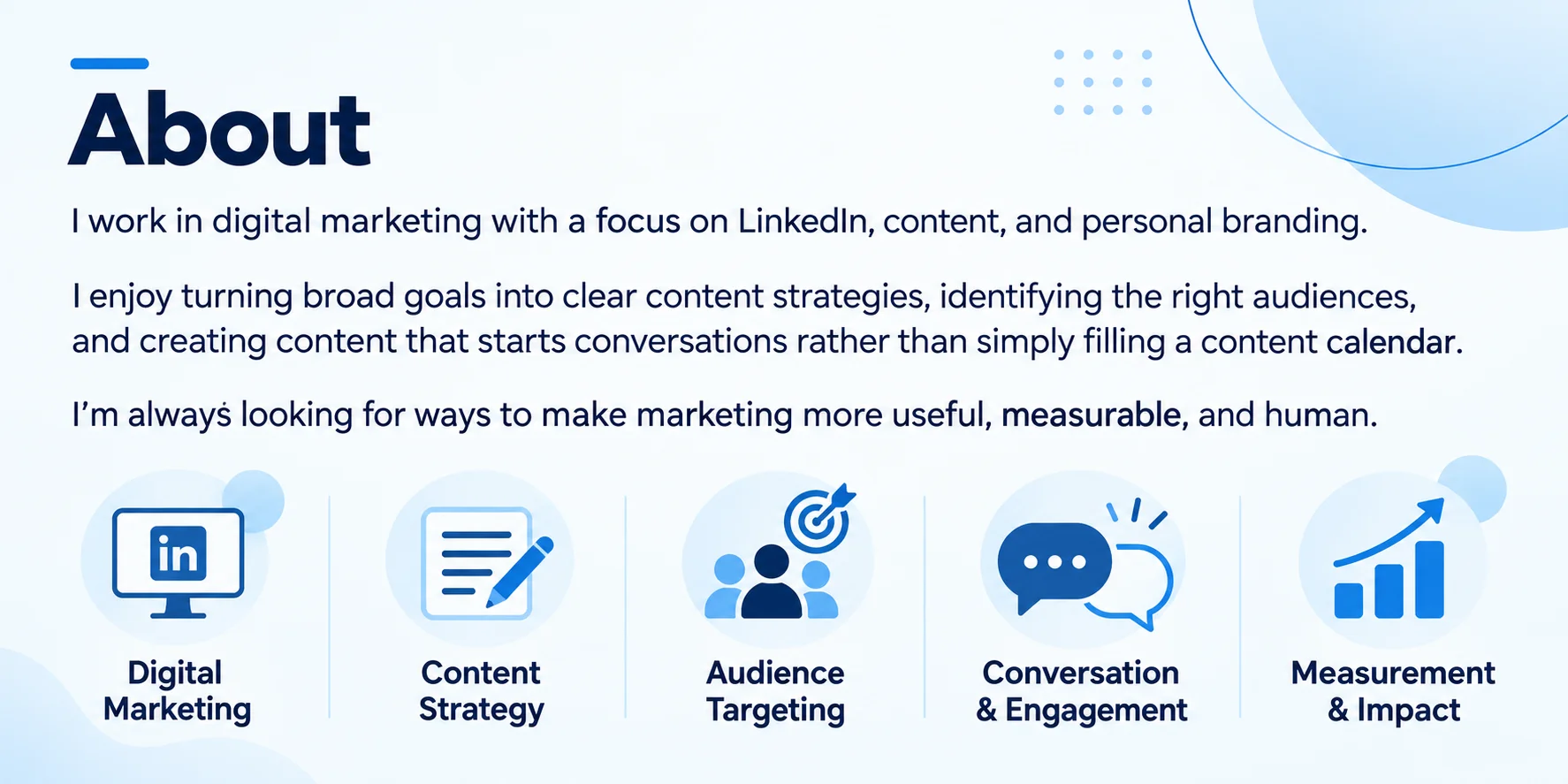
6. The Results-Oriented Summary
Professionals in marketing, sales, consulting, operations, and other performance-driven roles can use the About section to show how they think about results.
Why it works: Instead of just saying "I create content," it explains the thinking behind the work. Saying you create content describes a task. Saying you aim to start conversations rather than fill a calendar describes a philosophy, and philosophies are what set people apart.
7. The Creative Professional
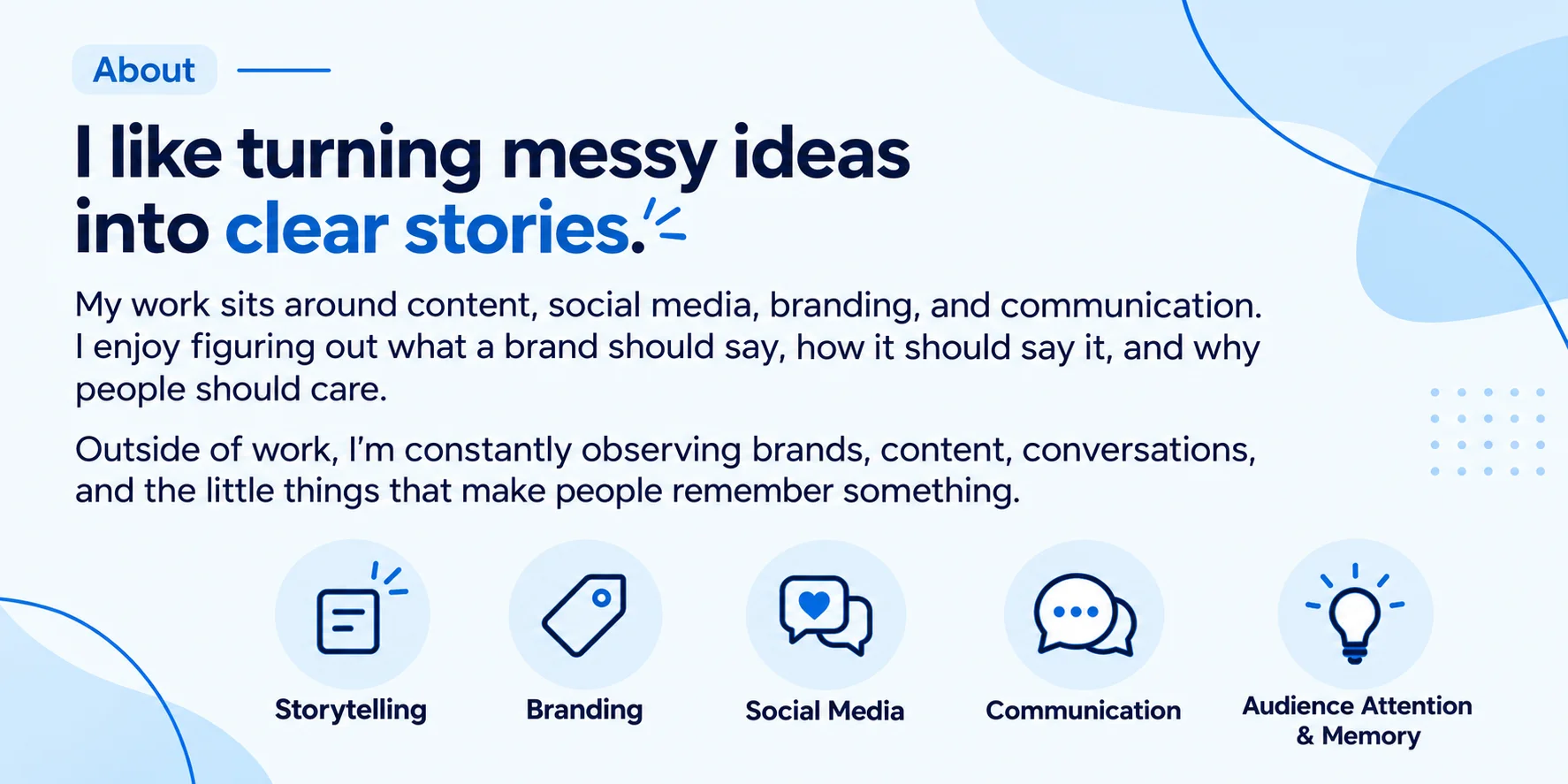
For people working in content, design, branding, advertising, or communication, a more creative opening can help the profile stand out.
Why it works: It communicates personality while staying professional. The first line does a lot of work, because it shows how the person thinks before saying what they do. If your job is communication, your summary is a live demonstration of your skill.
8. The Founder or Consultant Summary
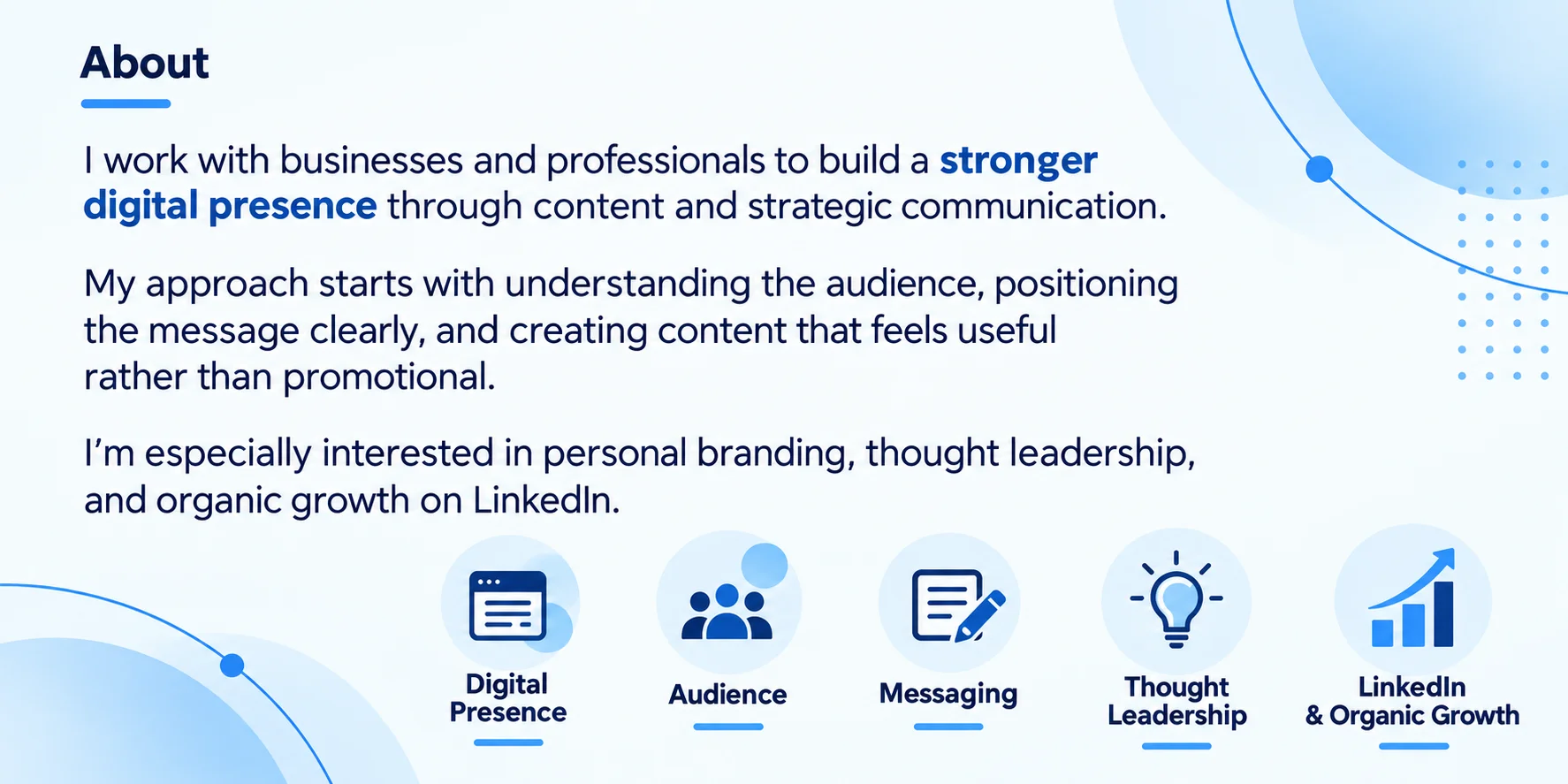
Founders and consultants usually need their summary to explain both their expertise and the problems they solve. Potential clients aren't just asking who you are. They're asking whether you can help them.
Why it works: The reader can quickly understand the person's work, approach, and areas of expertise. Mentioning an approach, not just a service, signals that there's a method behind the work, which builds trust before a conversation even begins.
9. The Career-Transition Summary
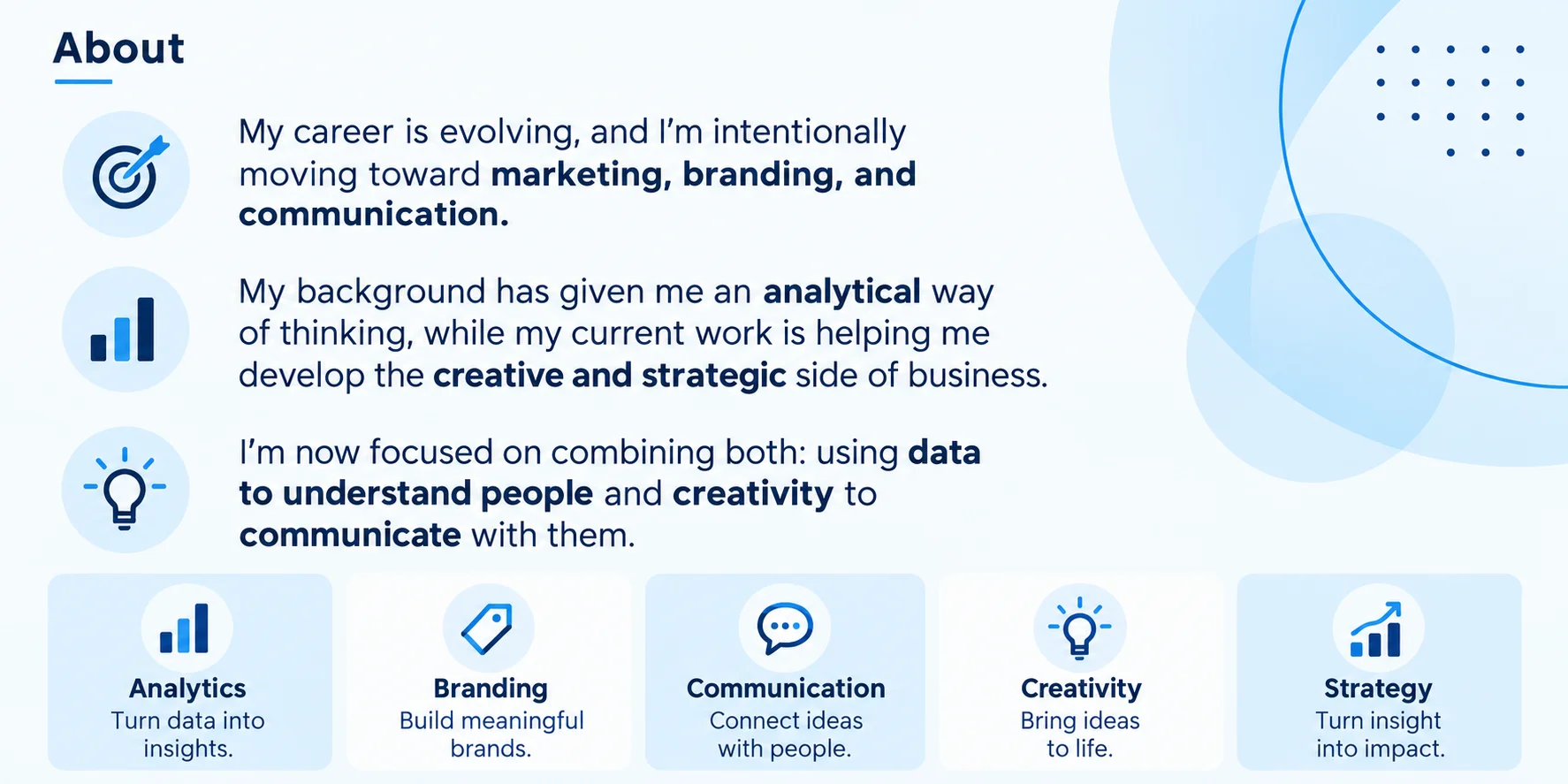
Changing careers can make your LinkedIn profile feel confusing, since your past and your intended future don't obviously match. Instead of hiding your previous experience, use the summary to explain how your existing skills connect to where you're going.
Why it works: It creates a logical connection between the person's past experience and future direction. An unexplained jump looks like confusion, but a clear bridge looks like strategy. The word "intentionally" matters here, because it frames the change as a choice rather than an escape.
10. The Simple and Human Summary
Sometimes the best LinkedIn summary is simply one that sounds like a real person. You don't need complicated vocabulary or dozens of keywords.
Why it works: It feels personal without becoming too casual. There's no jargon and no posturing. It reads the way a thoughtful person would actually talk about their work over coffee.
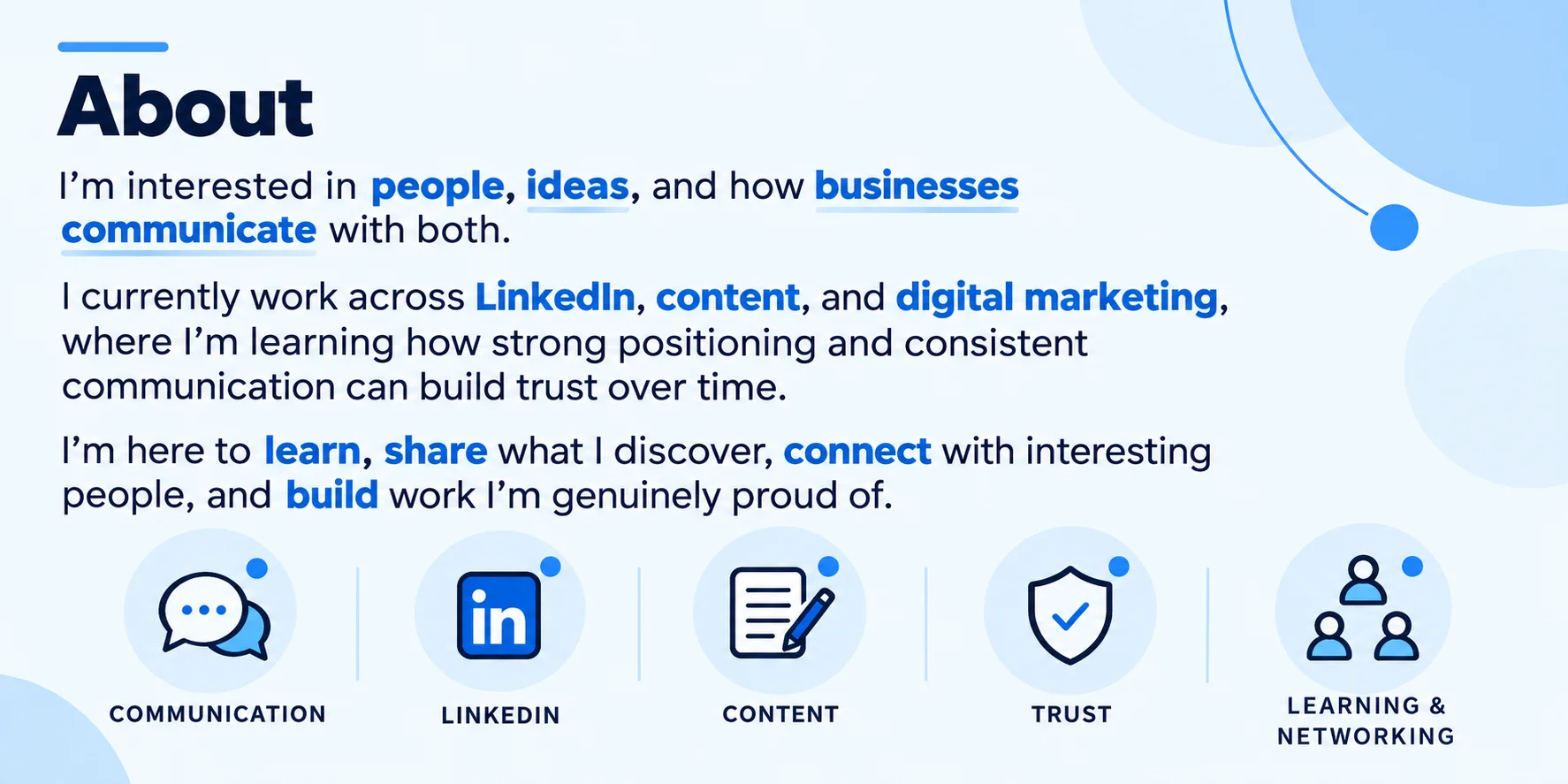
What Should You Include?
There isn't one perfect formula, but a good About section usually answers five simple questions:
Who are you? Give the reader some context about your professional identity.
What do you do? Mention your current role, expertise, or area of work.
What are you good at? Highlight a few relevant skills instead of listing everything you know.
What do you care about? This is where your professional interests and personality show up.
Where are you going? If you're looking for a new role, building a business, or developing a specialization, make that direction clear.
You don't need to answer all five in equal measure. A short summary might cover three of them in a single paragraph. The point is that someone reading it should never be left wondering who you are or what you want.
What to Avoid
Two mistakes show up again and again.
The first is the corporate opening. Lines like "Results-driven dynamic professional with a proven track record…" tell the reader almost nothing, because anyone could have written them.
Unless you genuinely have a reason to use that language, skip it.
The second mistake is making your About section look like a copy of your resume. Your experience section already shows your job history, and repeating it wastes the one space where you get to speak in your own voice.
Instead, use the summary to connect the dots. Think of it as the short story behind your professional profile.
How to Actually Write Yours
If you're staring at a blank box, try this process. First, write down your answers to the five questions above in plain, messy sentences, as if you were explaining your work to a friend. Don't worry about polish.
Next, pick the style from this list that matches your situation, whether that's the storyteller, the career changer, or the short and confident approach, and reshape your rough answers to fit it. Then read it out loud. If a sentence doesn’t sound like something you would normally say, change it so it feels more natural. Finally, cut anything that exists only to sound impressive.
That last step is the hardest and the most valuable. Most weak summaries aren't weak because of what's missing. They're weak because of what's padding the space.
Final Thought
Your LinkedIn summary doesn't have to impress everyone. It should make it easy for the right people to understand you.Remember the three qualities: clarity, credibility, and personality.
Tell people what you do. Show them what you care about. Give them a reason to remember you.And most importantly, write it in a way that actually sounds like you.