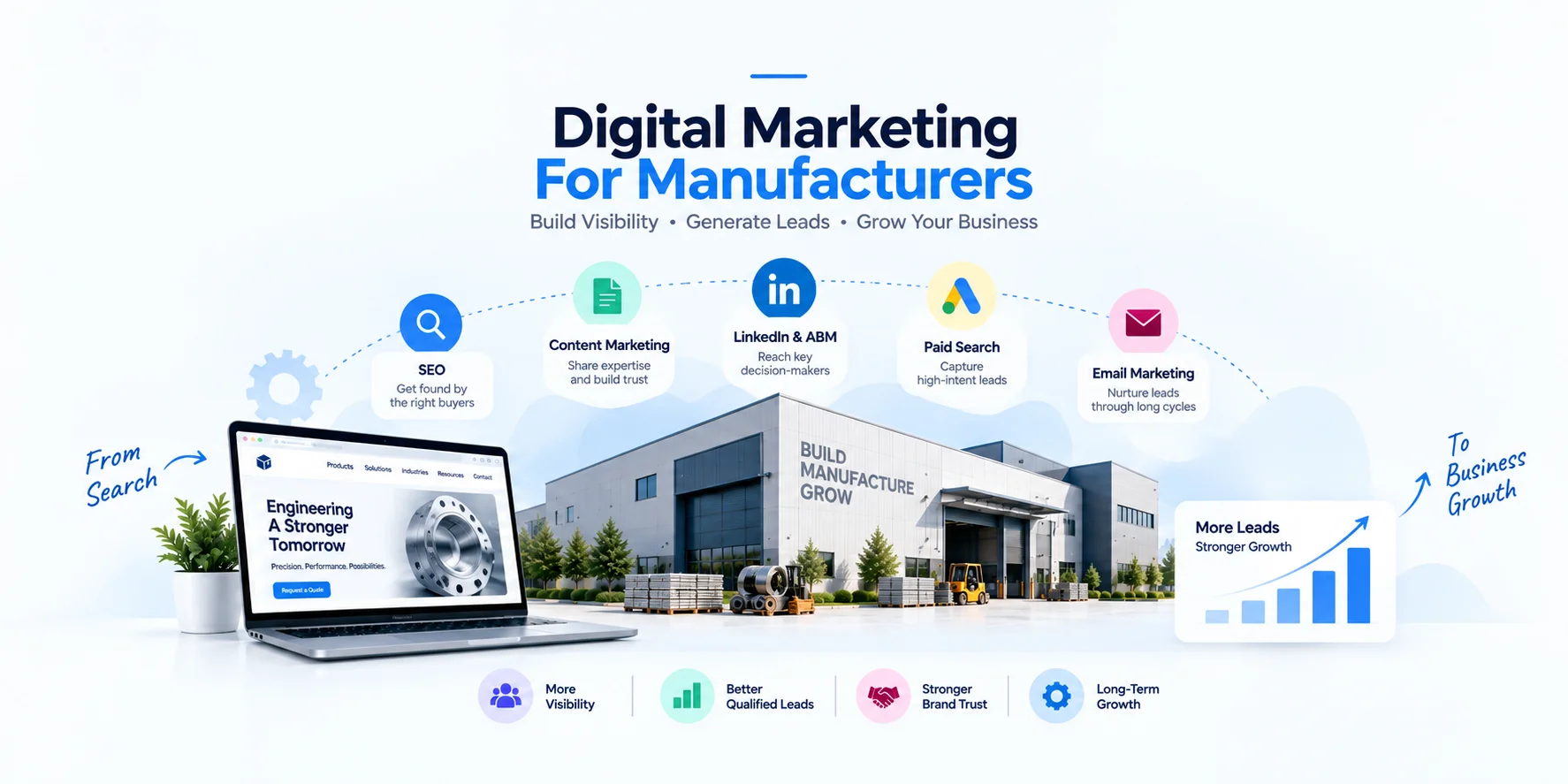

Quick Answer: Digital marketing for manufacturers works when it mirrors how industrial buyers actually research: mostly alone, mostly online, and mostly before they ever talk to a sales rep. The strongest approach combines a technically detailed website, strong SEO, targeted content like spec sheets and case studies, LinkedIn and account-based marketing, and a nurture email sequence built for long sales cycles. Trade shows and referrals still matter, but they now work best alongside digital, not instead of it.
Why Manufacturers Can No Longer Rely on Trade Shows and Referrals Alone
Industrial buying behavior has changed faster than many manufacturers have adjusted their marketing. The data makes the shift clear.
• 57% of industrial buyers make their purchase decision before ever directly interacting with a manufacturer.
• 98% of industrial manufacturers now generate sales-qualified leads through digital marketing, ending the era where trade shows and cold outreach carried most of demand generation.
• B2B buyers typically do around 12 searches and review 3 to 5 pieces of content before they reach out to a salesperson.
• 78% of industrial buyers used AI-based tools such as chatbots, generative summaries, or comparison agents to research industrial suppliers in the past 90 days, according to 2026 industrial buyer research.
• Organic search converts at roughly 2.6% for B2B manufacturers, well ahead of paid search at 1.5%, paid social at 0.9%, and trade shows at 0.7%.
The pattern is consistent across the data: by the time a buyer fills out a contact form or calls a sales rep, most of the real decision has already happened online. If a manufacturer is not visible and credible at that stage, it often never makes the shortlist.
How Much Should Manufacturers Spend on Marketing?
Manufacturing marketing budgets sit lower than most B2B industries, but digital's share within that budget keeps growing.
Industry | Typical Marketing Spend (% of Revenue) | Digital Share of Budget |
|---|---|---|
Manufacturing and Industrial | 3 to 6% | ~48 to 53% |
Professional Services | 7 to 10% | ~61 to 71% |
Tech and SaaS | 11 to 15% | ~72 to 78% |
Manufacturers spend less on marketing overall than software or services companies, largely because of longer sales cycles and heavier reliance on existing relationships. But within that smaller budget, digital marketing now accounts for more than half of total spend for most industrial companies, and that share is rising each year.
The Core Digital Marketing Strategies for Manufacturers
1. Industrial SEO Built Around How Engineers Actually Search
Generic keyword targeting does not work well for manufacturers. Engineers and procurement teams search using precise, technical language: part numbers, material specifications, tolerances, industry standards, and certifications.
• Build pages around specific product categories and applications, not just broad terms like "industrial equipment."
• Include technical specifications directly on the page in a clear format, not buried inside a downloadable PDF only.
• Target long-tail, high-intent search terms such as "CNC machining tolerance for aerospace parts" rather than only competing for broad, high-competition keywords.
• Make sure product and category pages load quickly and work well on mobile, since a growing share of B2B research now happens outside a desk.
Manufacturers that need more support with technical optimization can use professional SEO services to improve product-page visibility and reach buyers searching with specific requirements
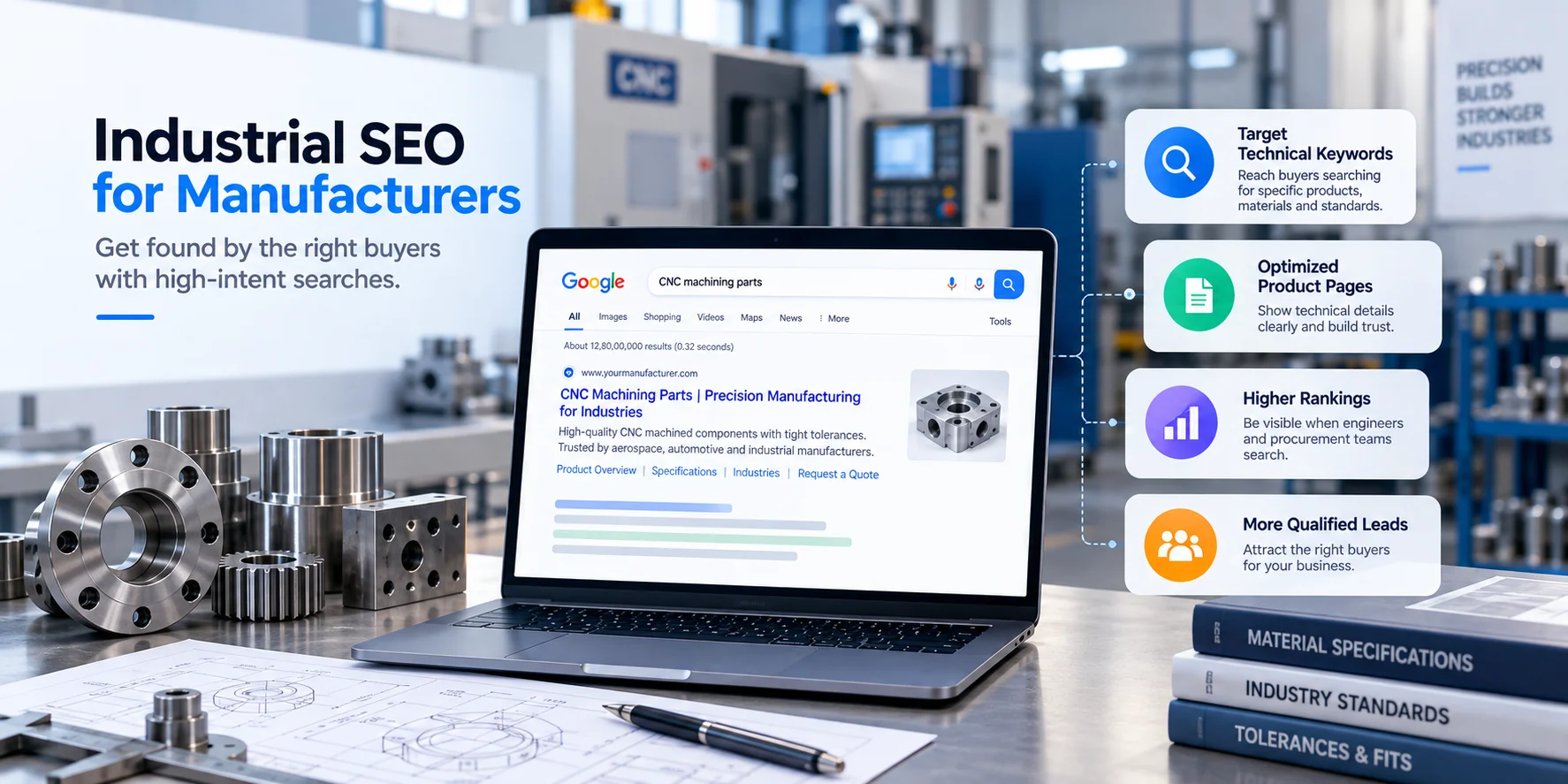
Only about half of manufacturers currently feel confident in their SEO performance, which means this remains one of the clearest ways to pull ahead of competitors who have not invested here yet.
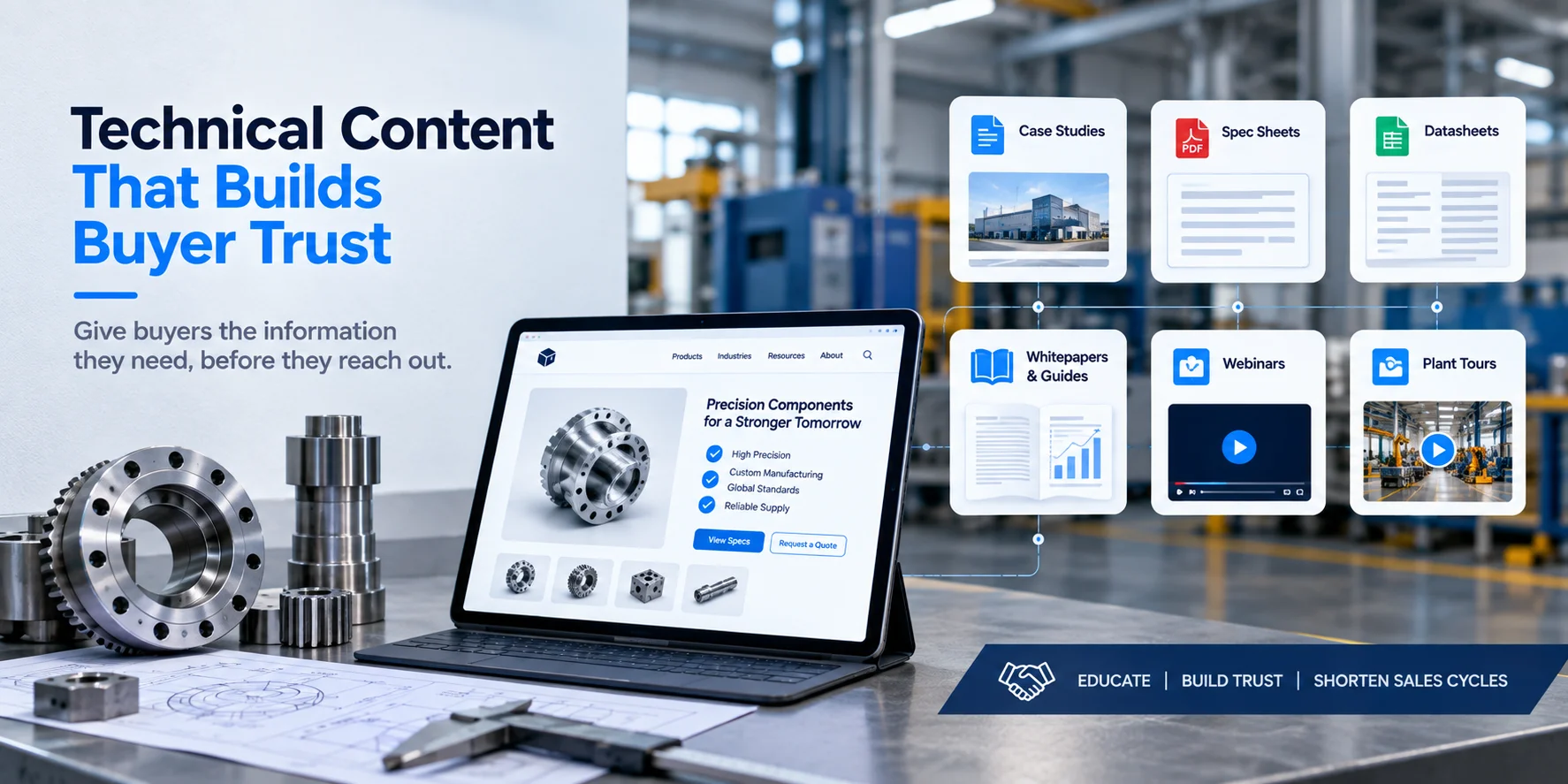
2. Technical Content That Builds Trust Before the First Call
Since most buyers form an opinion before contacting sales, your content has to do the convincing on its own.
• Case studies: show a specific problem, the solution you provided, and measurable results. Industrial buyers trust proof over promises.
• Spec sheets and datasheets: make these easy to find and easy to compare, since procurement teams often build shortlists directly from this information.
• Whitepapers and technical guides: useful for buyers still in the early research stage, and strong for capturing contact details in exchange for deeper technical detail.
• Webinars: widely seen as one of the strongest lead generation formats in manufacturing, since they let engineers ask direct questions in real time.
• Video content, including plant tours: helps overcome a common industrial buying hesitation, since buyers often want to see equipment, process, and quality control before trusting a new supplier.
3. LinkedIn and Account-Based Marketing (ABM)
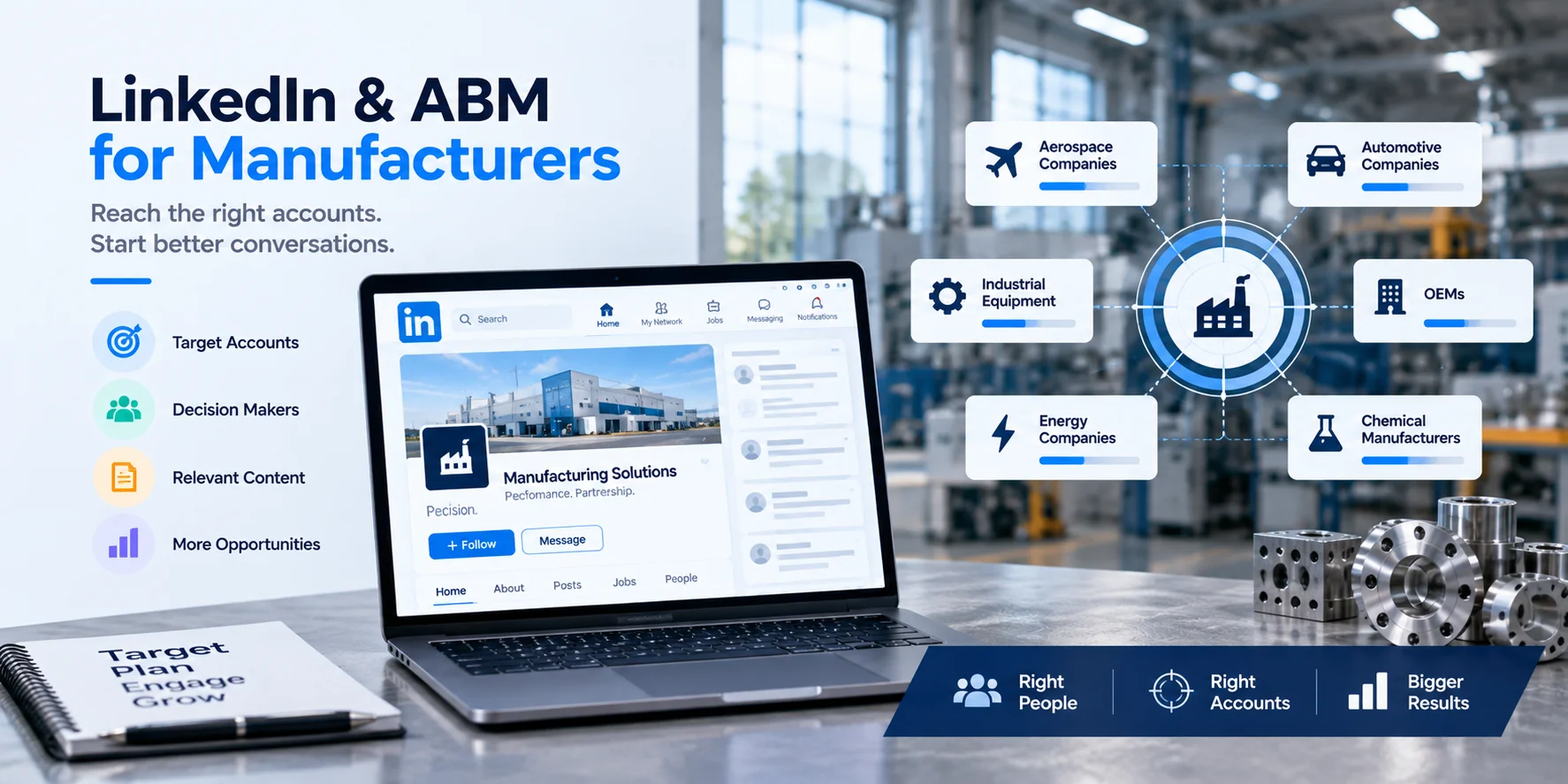
For manufacturers selling into a defined set of target accounts, broad marketing is often less efficient than a focused ABM approach.
• Identify a specific list of target accounts based on industry fit, company size, and buying signals.
• Use LinkedIn to reach the actual buying committee, since most industrial purchases now involve multiple decision-makers rather than a single buyer.
• Pair outreach with relevant content, such as a case study from a similar industry, rather than a generic pitch.
ABM consistently outperforms broad marketing approaches for B2B companies with complex, high-value sales, delivering both higher deal values and shorter sales cycles among businesses that use it well.
A strong linkedIn branding strategy can also help manufacturers build credibility with decision-makers before direct outreach begins.
4. Paid Search for High-Intent Buyers
Paid search works best in manufacturing when it targets buyers who are close to a decision, not broad awareness traffic.
• Focus budget on specific, high-intent search terms tied to a real project or purchase need.
• Expect a meaningfully higher cost per click than consumer industries, but also higher intent and larger deal sizes to offset it.
• Send paid traffic to a page built for the exact search term, not a generic homepage, since specificity is what converts an industrial buyer.
5. Email Nurture Built for Long Sales Cycles
Manufacturing sales cycles commonly run from three to twelve months, sometimes longer for large capital equipment. A single follow-up email will not carry a buyer through that timeline.
• Build a nurture sequence that delivers useful technical content over weeks and months, not just sales messaging.
• Segment your list by industry, application, or stage in the buying process so content stays relevant.
• Keep the supplier's name and expertise visible throughout the cycle, so when the buyer is finally ready, you are already the trusted option.
6. Connecting Digital Marketing With Distributors and Channel Partners
Many manufacturers sell partly or fully through distributors, which digital strategy has to account for.
• Make sure your website clearly supports both direct buyers and channel partners, with an easy way to find the right distributor.
• Share co-brandable content, such as spec sheets or case studies, that distributors can use in their own marketing.
• Track how digital leads are being routed to and handled by distributor partners, since a strong marketing engine can still underperform if handoff to the channel is weak.
How AI Search Is Changing Manufacturing Marketing (GEO and AEO)
The research phase for industrial buyers now often starts with an AI tool rather than a search engine results page. This changes what "being found" actually requires.
• Write direct, factual answers. Structure technical pages so the key specification, capability, or answer appears clearly near the top, since this is what AI tools extract and summarize.
• Keep specifications accurate and consistent everywhere. AI tools cross-reference details across your website, spec sheets, and third-party directories. Inconsistent numbers reduce trust and citation.
• Publish detailed case studies with real outcomes. AI tools favor specific, verifiable claims over vague marketing language when generating comparisons or recommendations.
• Use clear headings and structured data. This helps both traditional search engines and AI systems correctly parse and cite your content.
Manufacturers that treat this as an extension of good technical SEO, rather than a separate project, tend to adapt fastest, since the underlying discipline (clarity, accuracy, and proof) is the same.
A Step-by-Step Digital Marketing Plan for Manufacturers
1. Audit your current visibility. Check where your website ranks for the specific technical terms your buyers actually search, not just your brand name.
2. Fix the foundation. Make sure your website loads fast, works on mobile, and clearly presents specifications, certifications, and capabilities.
3. Build out core content. Prioritize 3 to 5 strong case studies and a complete set of spec sheets before expanding into blog content or whitepapers.
4. Set up email nurture. Even a simple 5 to 7 email sequence spread over a few months will outperform no follow-up at all.
5. Identify your ABM target list. If you sell into a defined set of industries or account types, build a focused LinkedIn and outreach plan around them.
6. Test paid search with a narrow, high-intent keyword list. Start small, track cost per qualified lead, and expand only what performs.
7. Review and adjust quarterly. Manufacturing sales cycles are long, so give each channel enough time to show results before judging it.
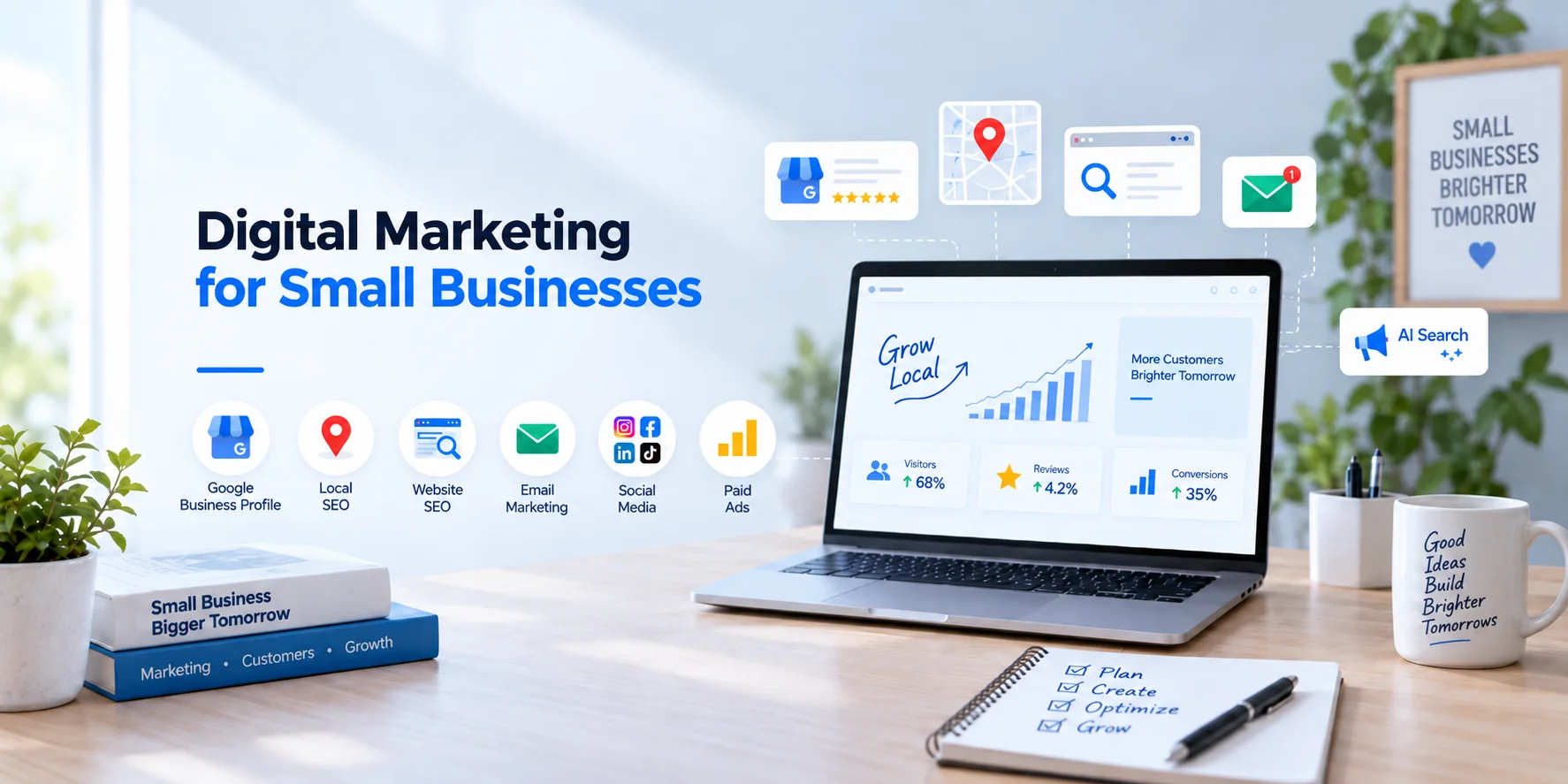
Smaller companies building a similar strategy can also follow this practical guide to digital marketing for small businesses for a broader channel-by-channel approach.
Common Digital Marketing Mistakes Manufacturers Make
• Using your website as an online brochure . A site with no real technical detail gives buyers no reason to stay or convert.
• Hiding specifications behind a PDF only. If specs are not readable directly on the page, both buyers and search engines struggle to find and use them.
• Relying only on trade shows. Trade shows still matter, but buyers now research long before the event, and manufacturers who are invisible online lose the shortlist before the show even starts.
• No follow-up system for long sales cycles. A single email after a trade show or webinar is rarely enough across a multi-month buying process.
• Ignoring SEO because "our buyers don't Google us." The data shows otherwise. Most industrial buyers now research extensively online before ever contacting a supplier directly.
• Writing for internal audiences instead of buyers. Content full of internal jargon or company history, with no clear answer to the buyer's actual question, underperforms both with readers and with AI search tools.
Final Thoughts
Manufacturers that still rely mainly on trade shows and word of mouth are competing against buyers who have already made up their mind before picking up the phone. Digital marketing does not replace the relationships and reputation manufacturers have built over decades. It gives buyers a way to find and trust that reputation before they ever make contact.
Start with a technically strong website and a handful of real case studies. Add SEO and a simple nurture sequence next. Layer in ABM and paid search once you can see what is actually converting. Done in that order, digital marketing becomes a compounding asset for a manufacturer rather than another expense competing with the trade show budget.