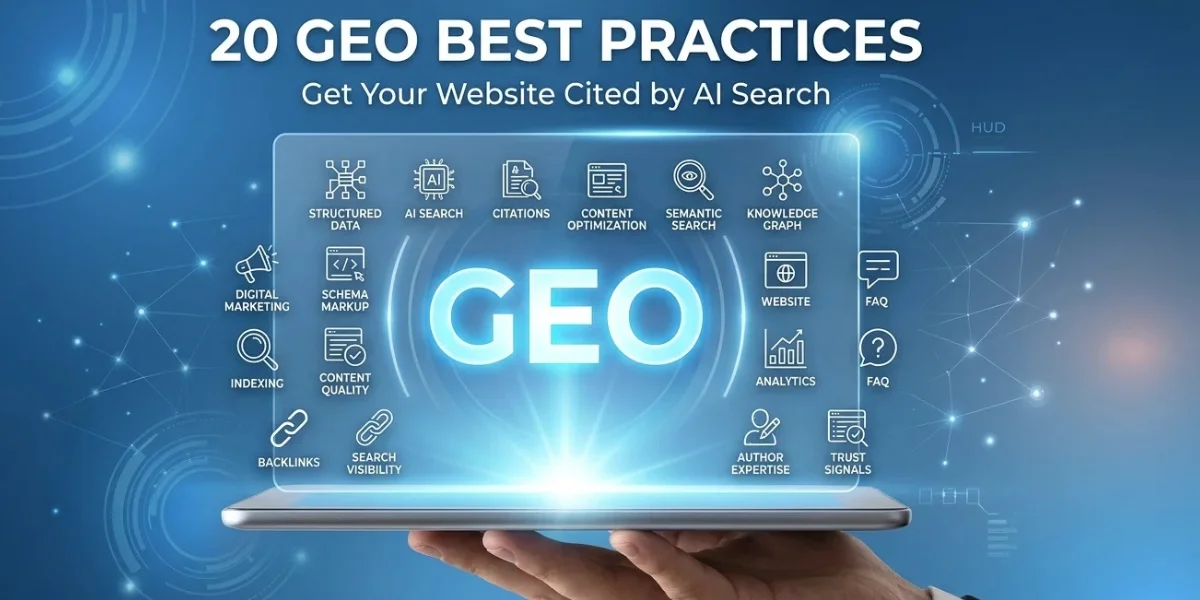

Answer Engine Optimization (AEO) is the practice of structuring your content so that AI tools like Google AI Overviews, ChatGPT, Perplexity, and Gemini can read it, trust it, and quote it directly as the answer.
Traditional SEO focuses on helping your website rank higher in search results. AI SEO goes a step further by helping your content become a trusted source that AI tools choose when answering questions. Here are 25 practical techniques you can start using today.
Search has quietly changed. A large share of people now get their answer straight from an AI summary, a chat response, or a voice assistant, without ever clicking through to a website. If your content is not built for this new layer of search, you become invisible even if you rank well in classic Google results. This guide gives you a practical, step-by-step checklist to fix that.
What Is AEO (Answer Engine Optimization)?
AEO is the discipline of writing and structuring content so that answer engines, which are AI systems that generate direct answers instead of just showing links, can easily extract, verify, and cite your content. Think of Google's blue links as the old world. In the new world, a chatbot reads a small set of sources, picks the clearest and most trustworthy ones, and stitches together one answer. AEO is how you make sure your page is one of those source pages.
AEO vs SEO vs GEO: What Is the Difference?
These three terms get mixed up a lot, so here is a simple breakdown.
Term | What It Optimizes For | Main Goal |
|---|---|---|
SEO | Search engine rankings, crawlability, backlinks, and keywords | Get your page found and ranked on search results pages |
AEO | Clear, structured, question-and-answer style content | Get your content picked as the direct answer or featured snippet |
GEO | How generative AI models interpret and summarize content across the web | Get cited by name inside AI-generated responses like ChatGPT or Gemini |
In practice, these three work together. Strong SEO gets your page indexed and trusted. Strong AEO makes the content easy to lift as a direct answer. Strong GEO signals, such as original data and clear authorship, convince the AI model your content is worth quoting by name. You cannot skip SEO and jump straight to AEO. The foundation still comes first.
Why AEO Matters Right Now
AI-generated answers now sit above the traditional search results for a large share of everyday queries, and that share continues to grow. When a user gets a complete answer without clicking a single link, the businesses that do not appear in that answer lose the chance to be seen at all. This is not a future problem. It is already affecting traffic, leads, and brand visibility. Getting your content AEO-ready is quickly becoming as important as having a mobile-friendly website was a decade ago.
The Complete AEO Checklist: 25 Proven Techniques
We have grouped these 25 techniques into five practical categories: technical foundation, content structure, structured data, authority and trust, and measurement. Work through them in order for the best results.
Category 1: Technical Foundation
1. Make sure your site is fully crawlable
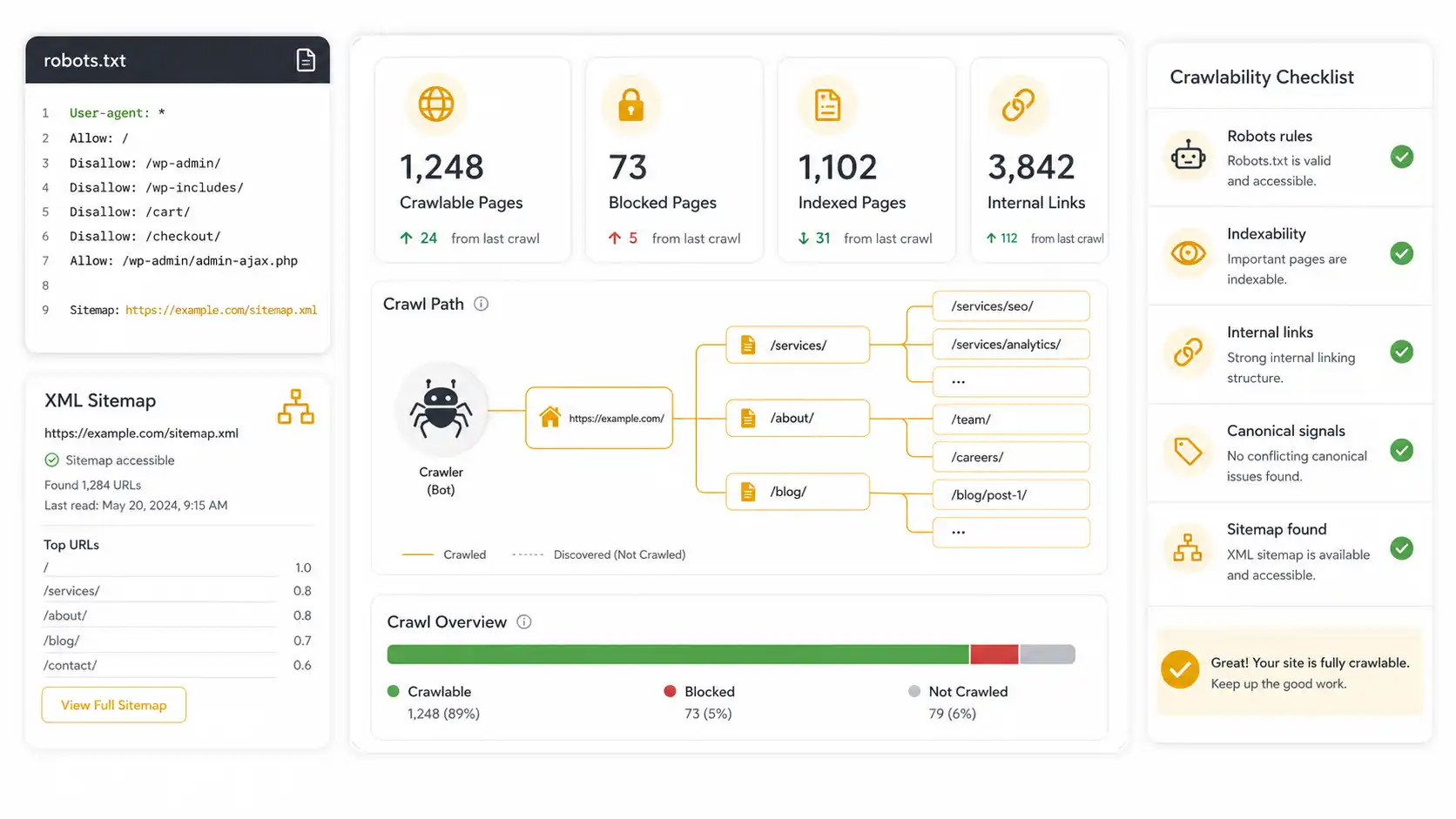
AI crawlers and search crawlers both need to access your pages. Review your robots.txt file and crawler controls to make sure you are not accidentally blocking important pages or AI-related user agents if you want your content considered for citations.
2. Improve page speed and Core Web Vitals
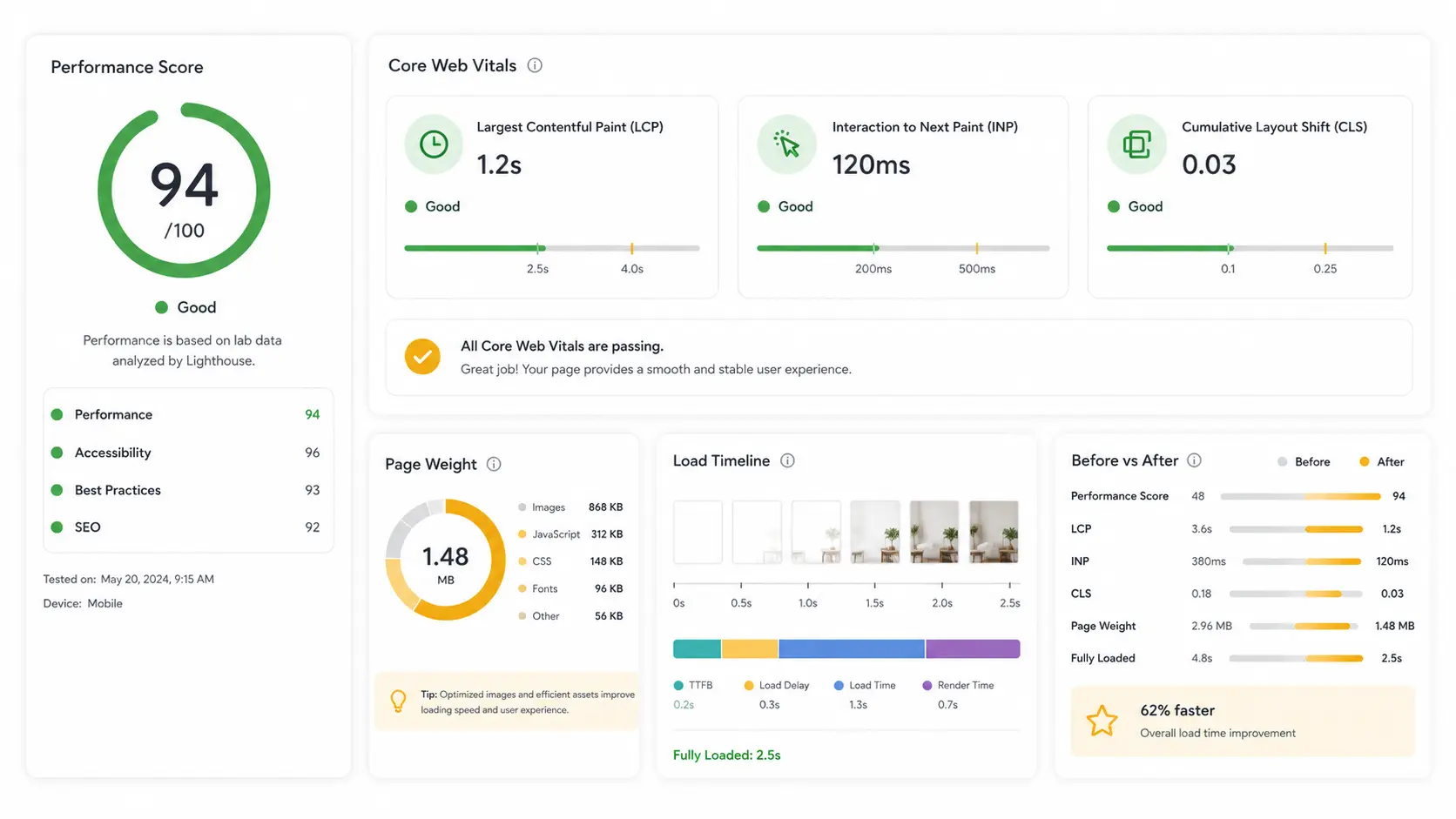
Slow pages can be crawled less efficiently and create a poor user experience. A fast, stable page gives crawlers more chances to process your content completely, which improves overall discoverability and usability.
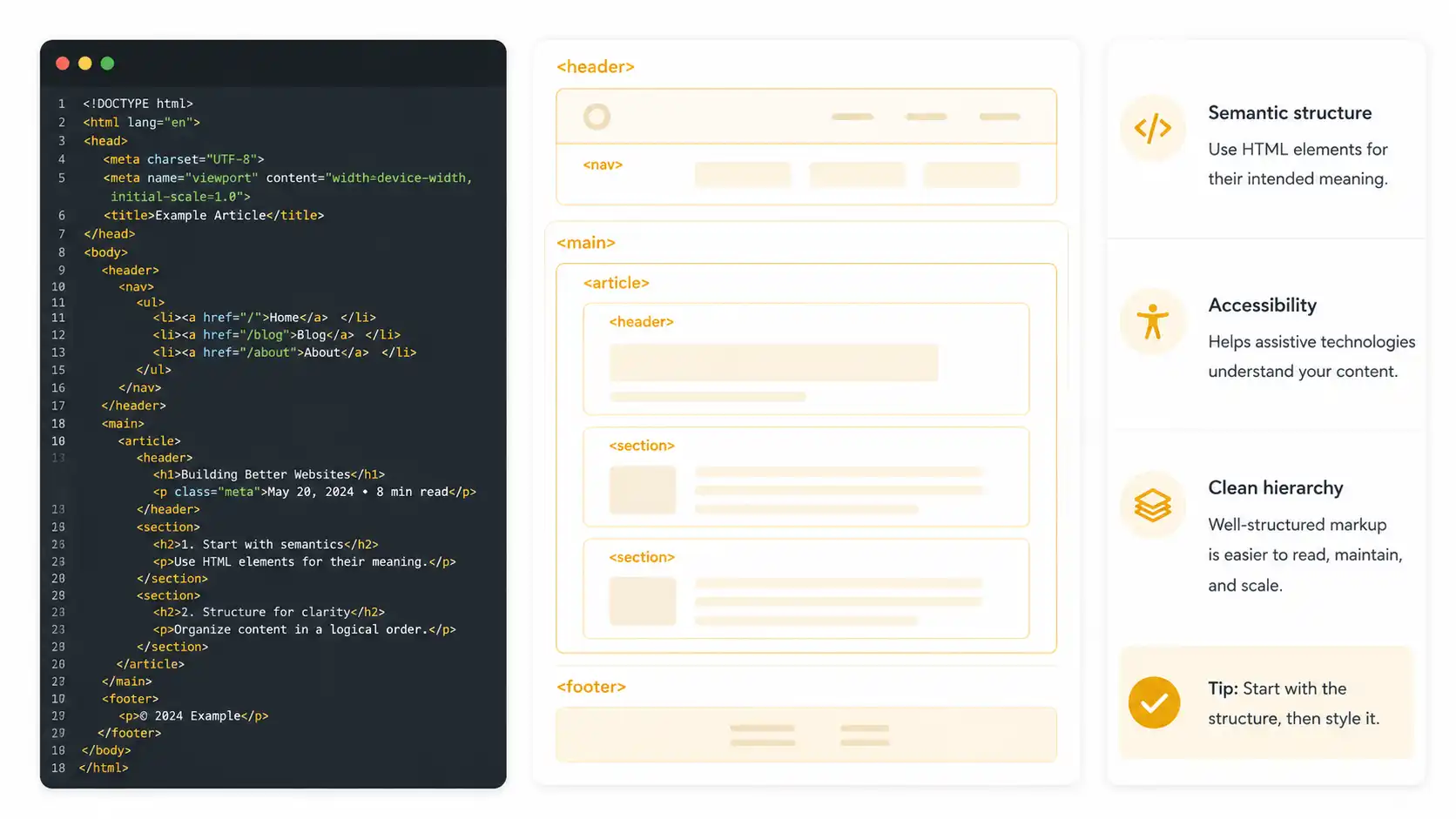
3.Use clean, semantic HTML
Proper use of headings, paragraphs, lists, and tables helps machines understand the structure and hierarchy of your content immediately. Avoid relying on visual styling alone to communicate meaning.
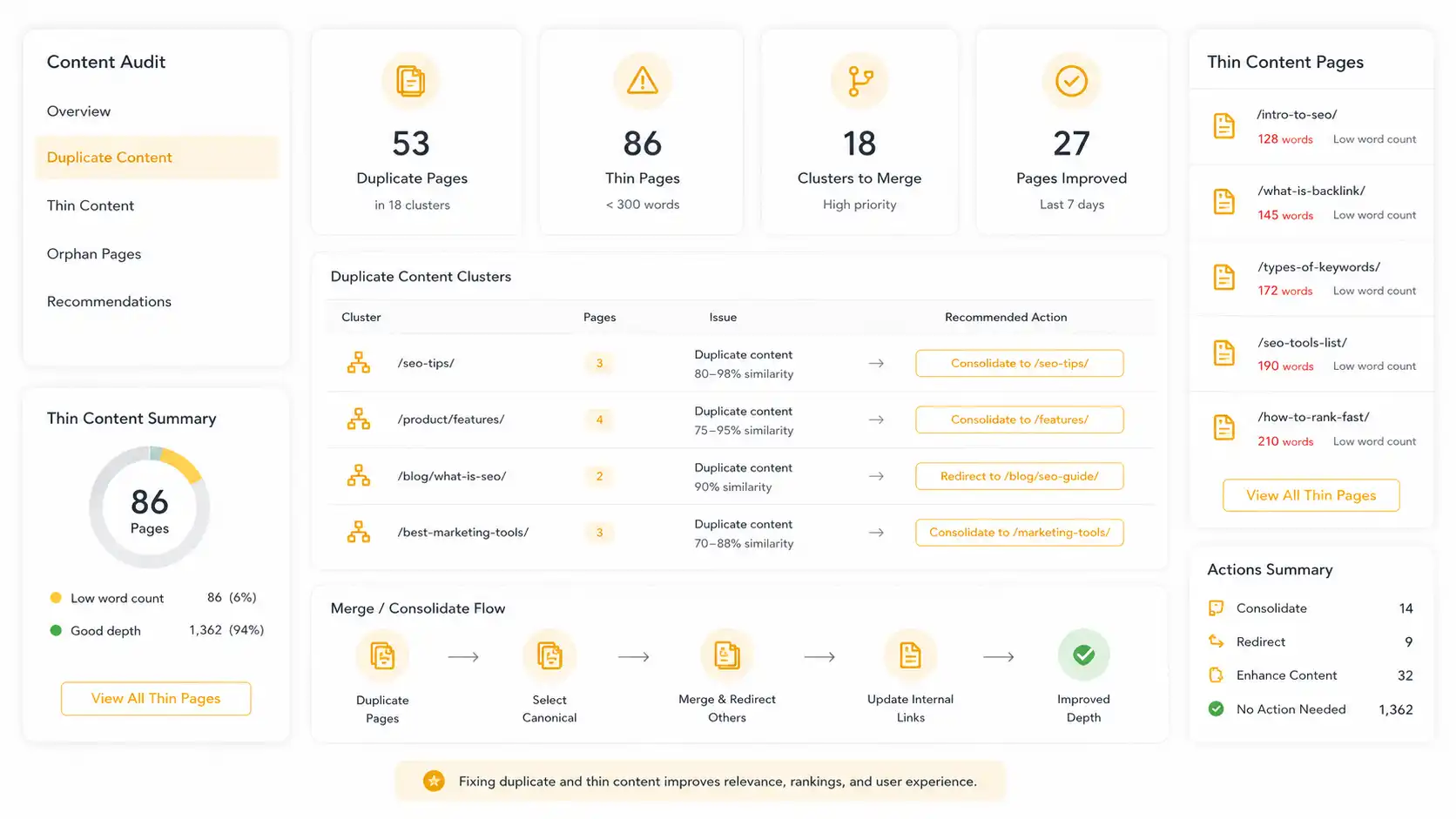
4. Fix duplicate and thin content
Pages that repeat the same information across multiple URLs can confuse both search engines and AI models about which version to trust. Consolidate similar pages and use canonical tags correctly.
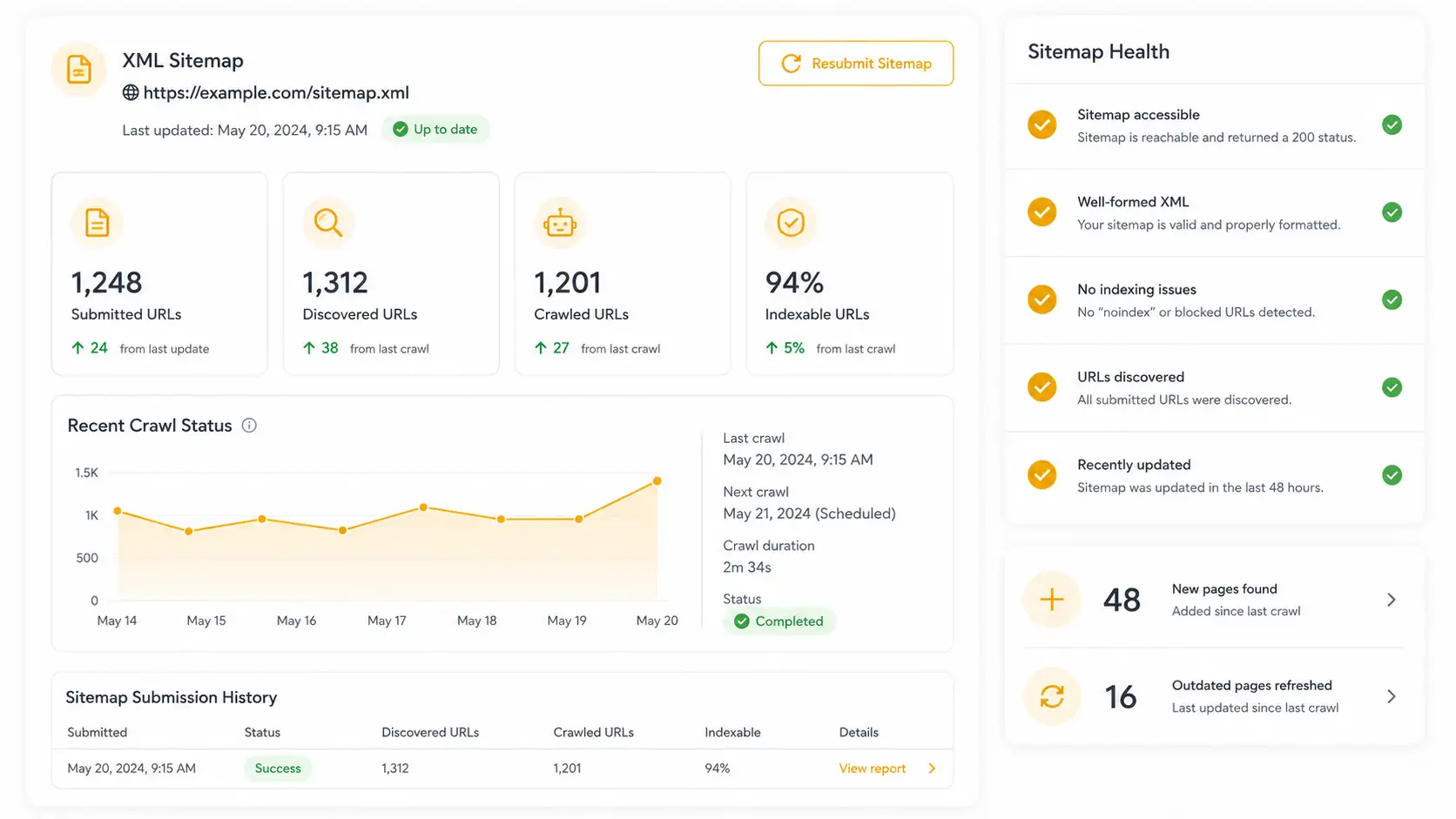
5. Keep your XML sitemap updated
An accurate, current sitemap tells crawlers which pages matter and when they were last changed. This is one of the simplest ways to help systems find your freshest content more quickly.
Category 2: Content Structure and Writing Style
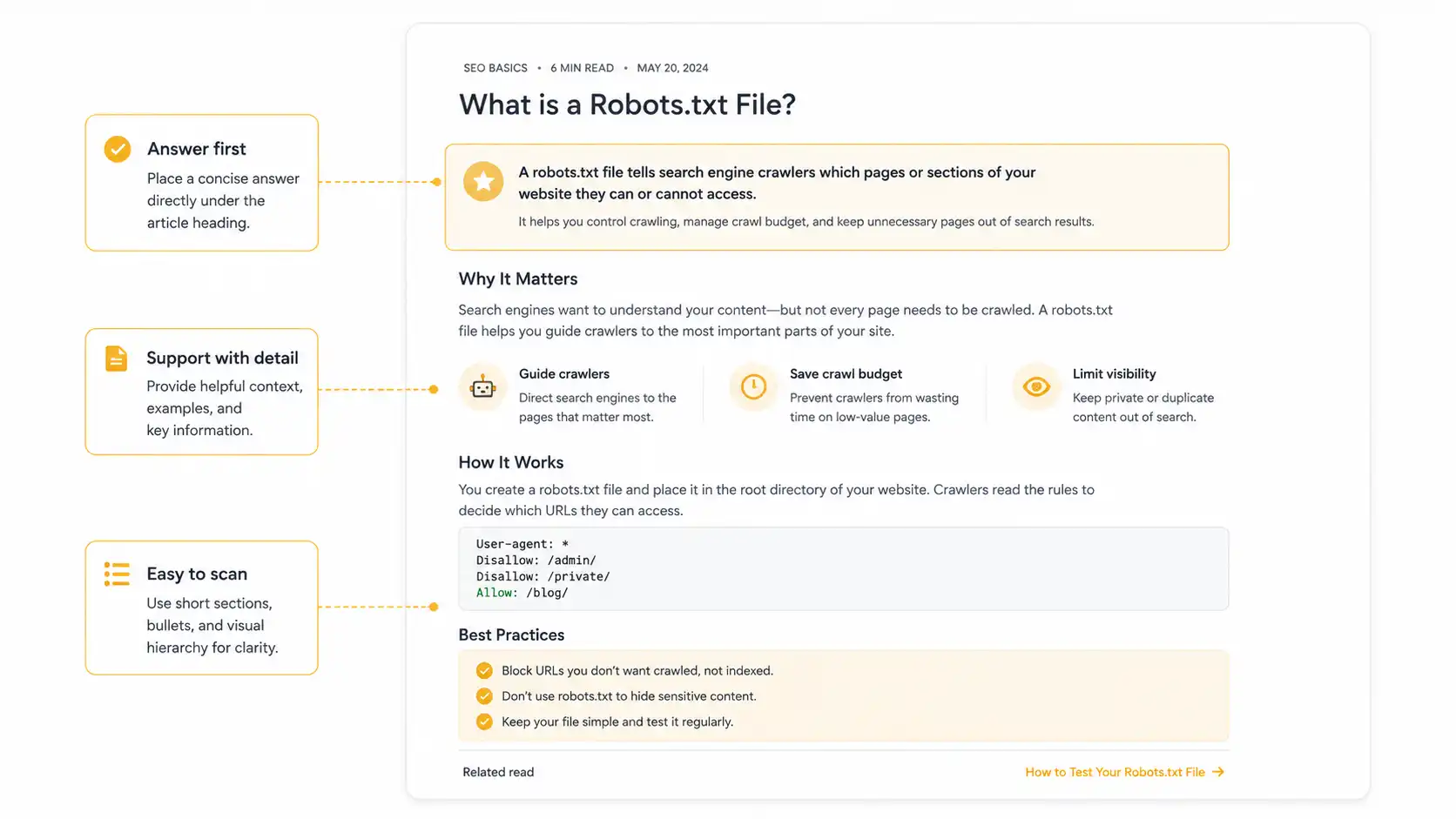
6. Answer the question in the first 40 to 60 words
Do not bury the answer under several paragraphs of introduction. Open each section with a direct, self-contained answer, then add supporting detail below it. This can have one of the biggest impacts on citation potential.
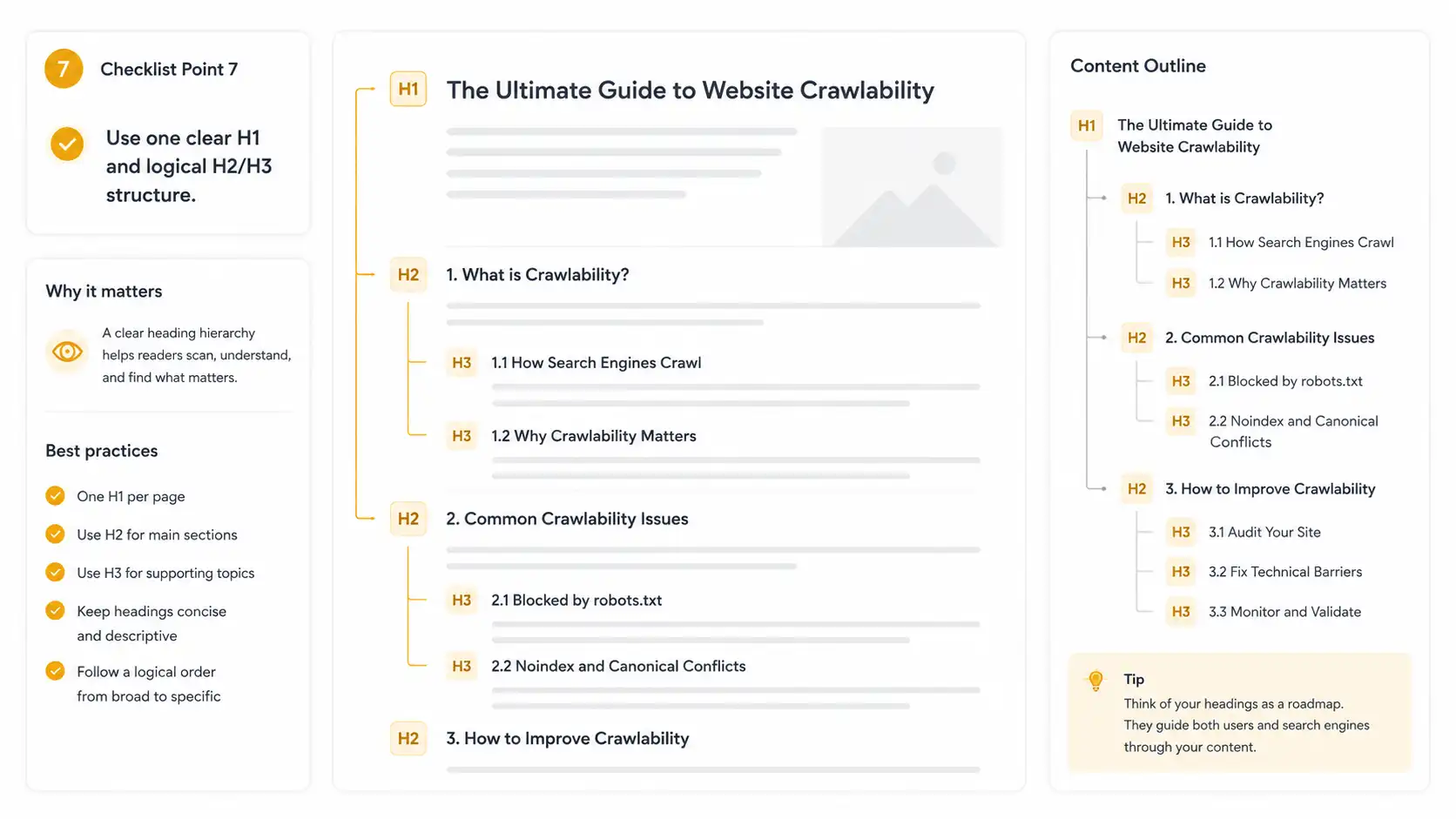
7. Write one clear H1 and a logical H2/H3 structure
Your headings should mirror the actual questions readers ask, in the order they would naturally ask them. This logical flow helps systems map your page to specific search queries.
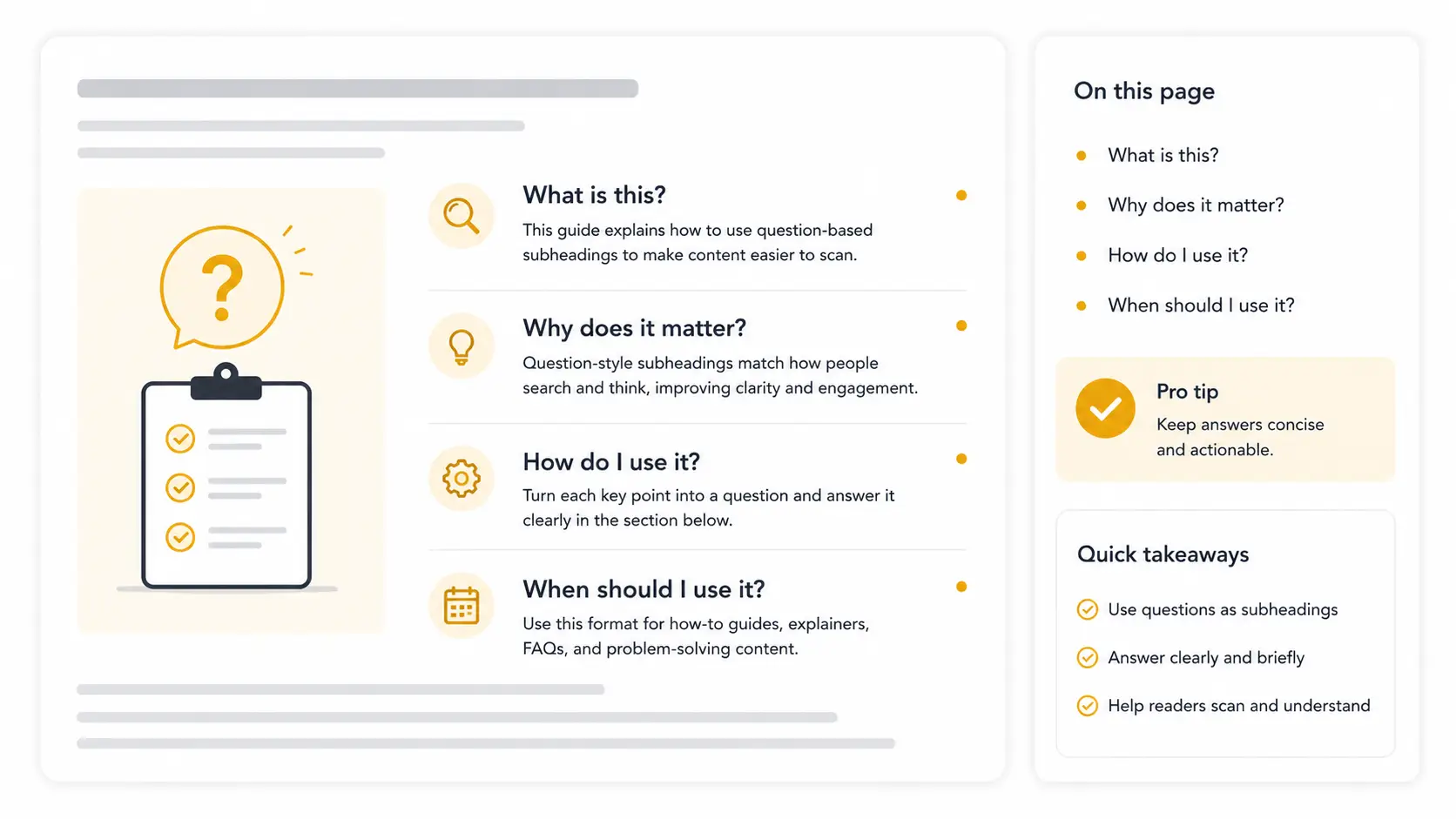
8. Use question-based subheadings
Instead of a vague heading like “Benefits,” use “What Are the Benefits of AEO?” Real questions make it easier for answer engines to match your section to a user's exact query.
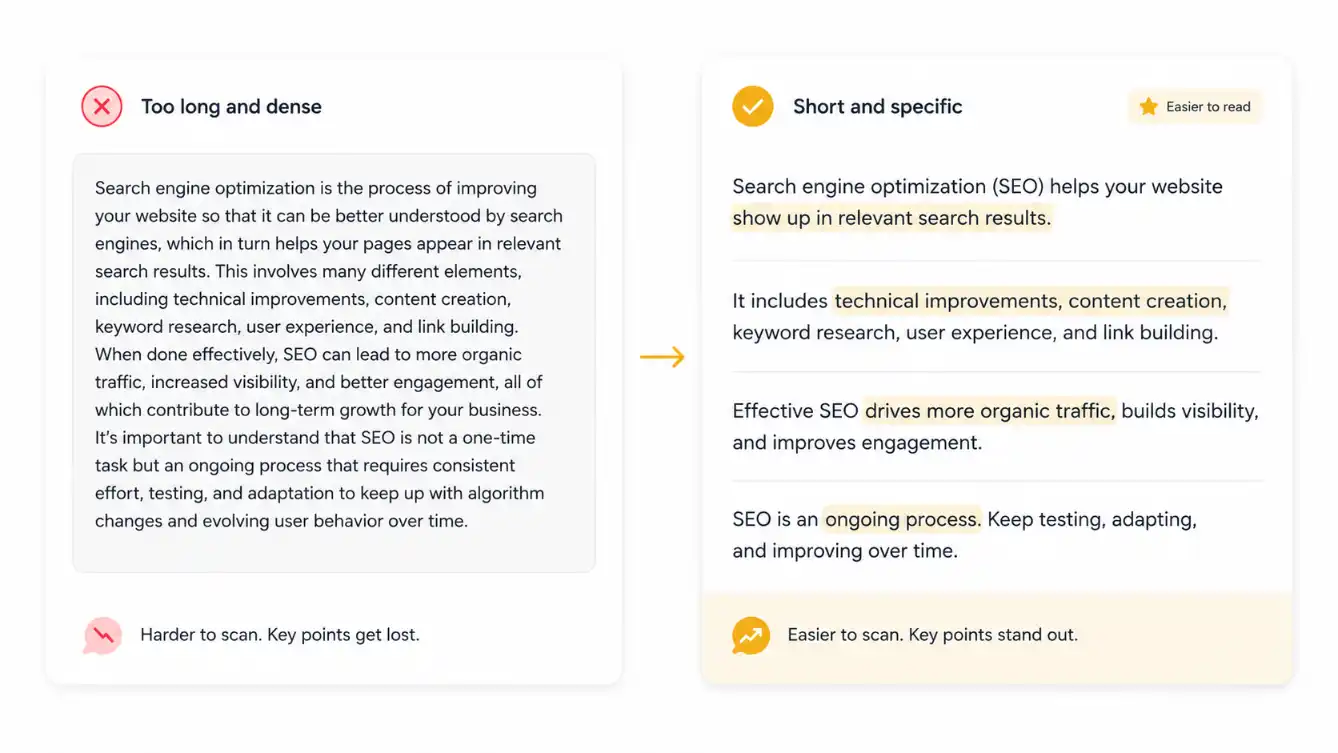
9. Keep paragraphs short and specific
Three to four sentences per paragraph is a practical benchmark. Long, winding paragraphs are harder for systems to extract cleanly and harder for readers to skim.
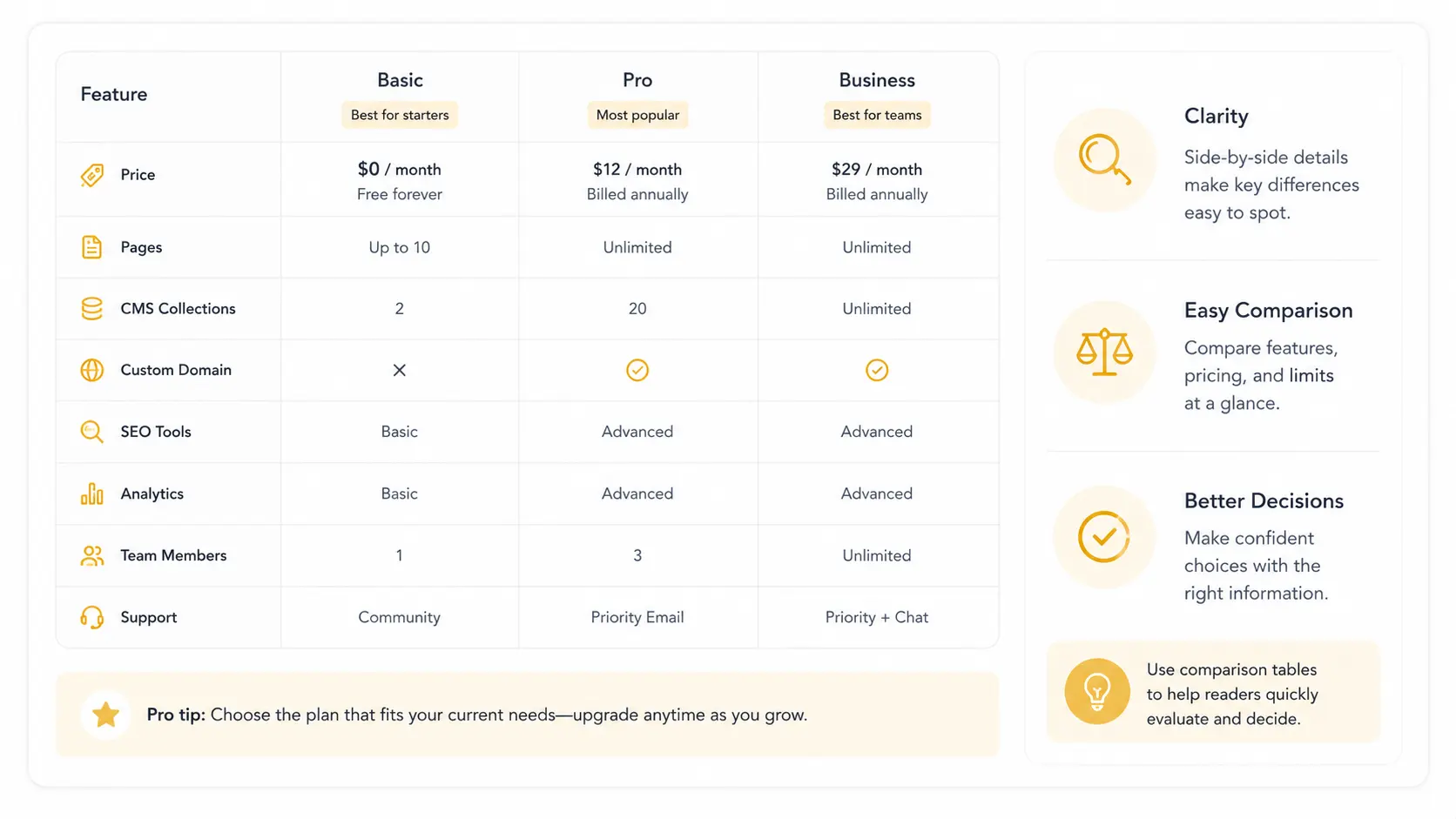
10. Add comparison tables wherever relevant
Tables are some of the most citation-friendly formats because they present clear, structured facts. Whenever you are comparing options, pricing, definitions, or features, use a table.
11. Include numbered or bulleted lists for processes
Step-by-step instructions in list format are much easier for an AI to lift and present as a “how-to” answer than the same steps written out in dense prose.
12. Define key terms clearly
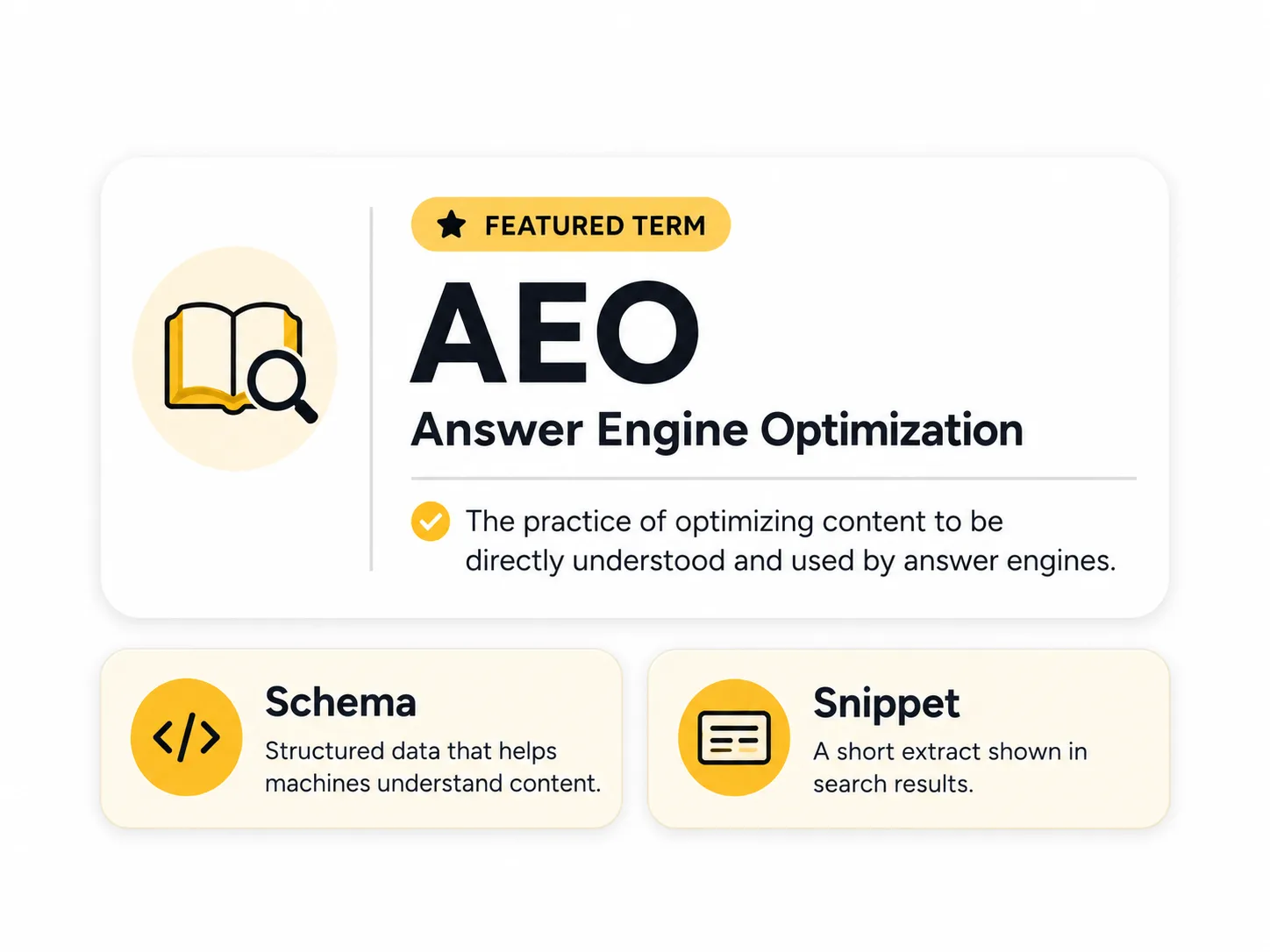
Every important term or concept in your article should have a plain, one- or two-sentence definition somewhere on the page. This helps beginners and improves summarization quality.
13. Use precise numbers, units, and specifics
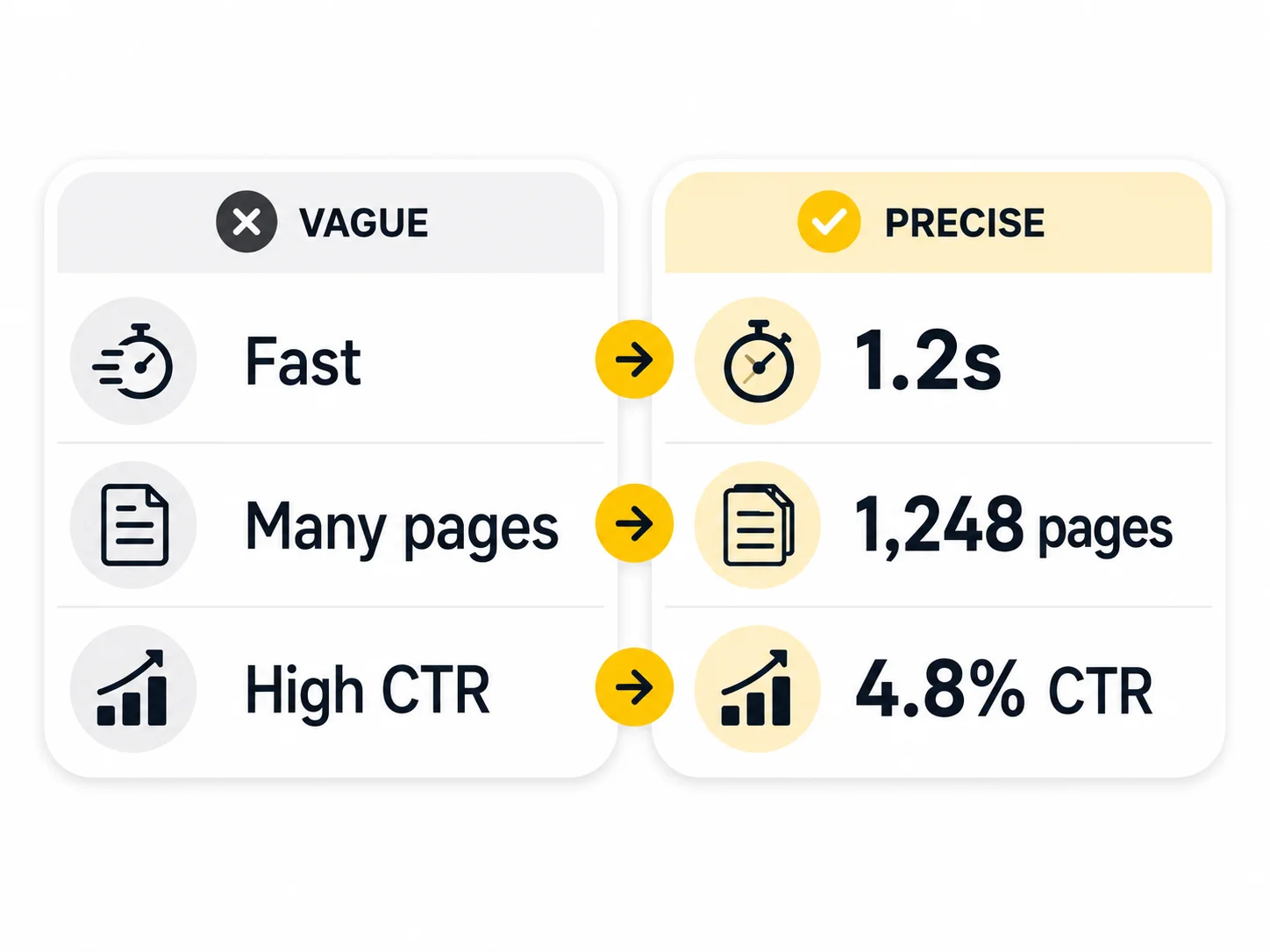
Vague language such as “significantly improves results” is far less useful than concrete facts such as “improves click-through rate by 22 percent.” Specificity makes content more quotable.
14. Add a TL;DR or key takeaways section
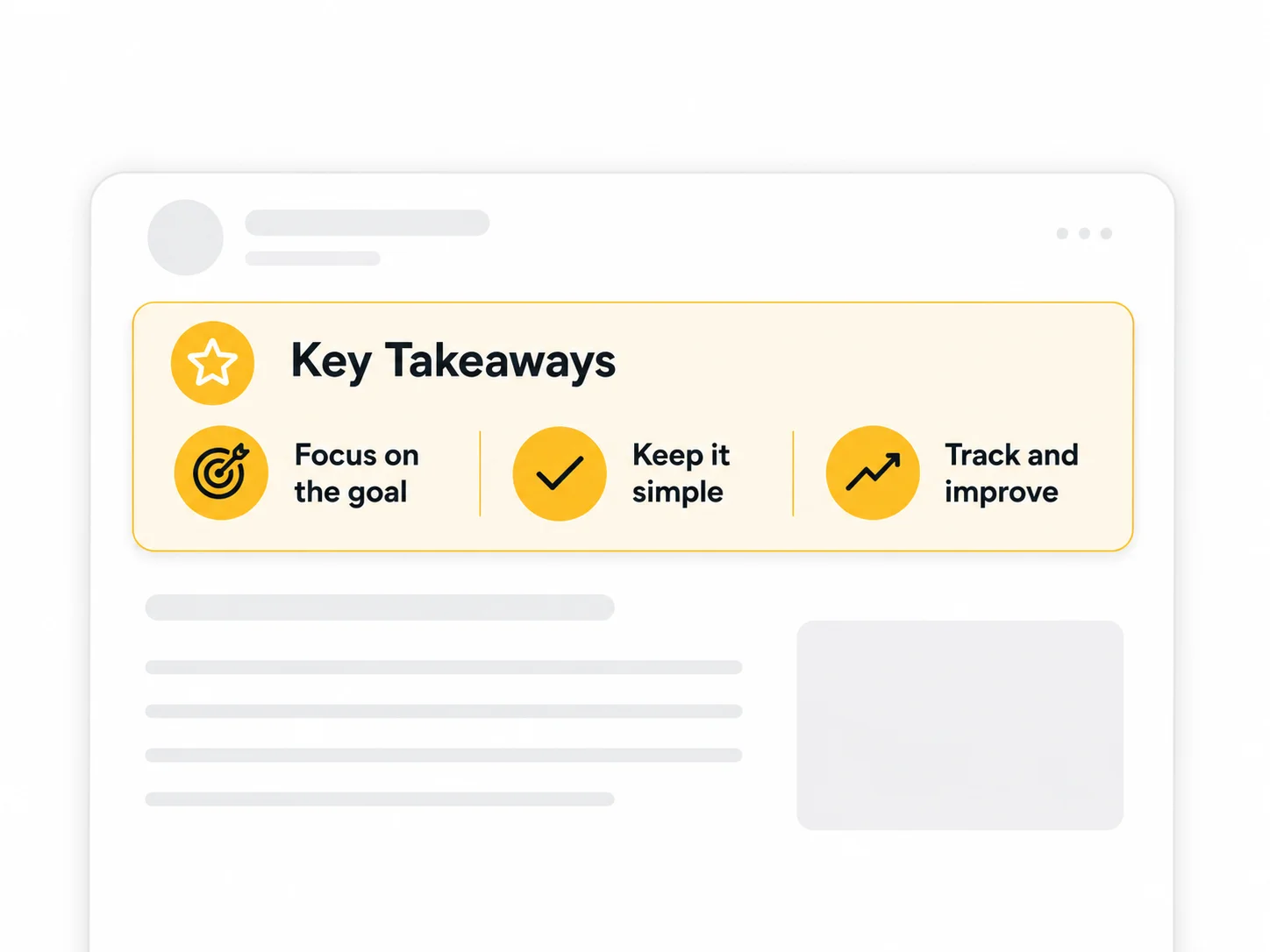
A short summary box near the top or bottom of a long article gives answer systems a condensed, easy-to-extract version of your main points.
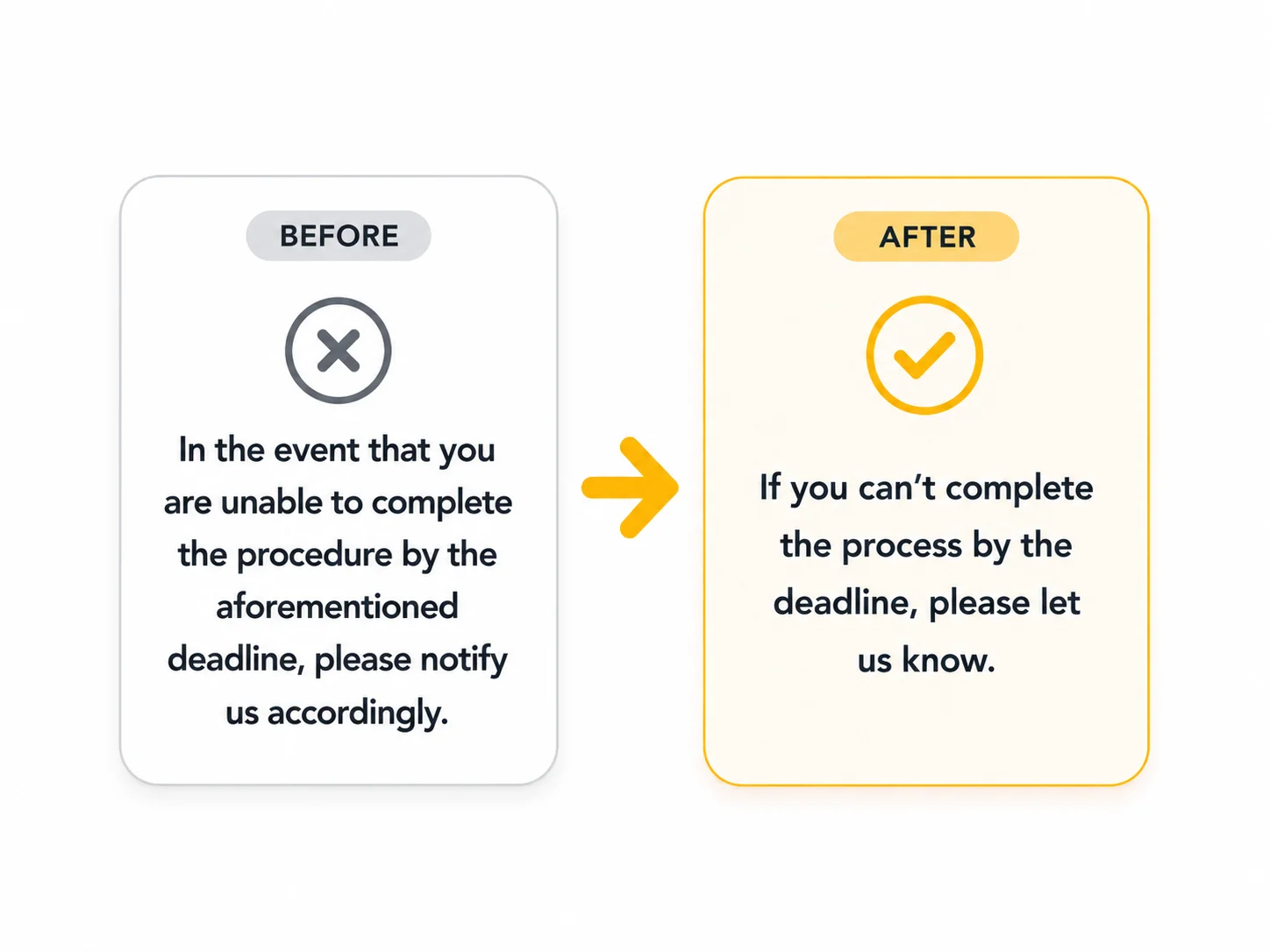
15. Write in plain, direct language
Avoid jargon, marketing fluff, and overly clever wording. Both readers and answer engines prefer content that says exactly what it means in the simplest way possible.
Category 3: Structured Data and Metadata
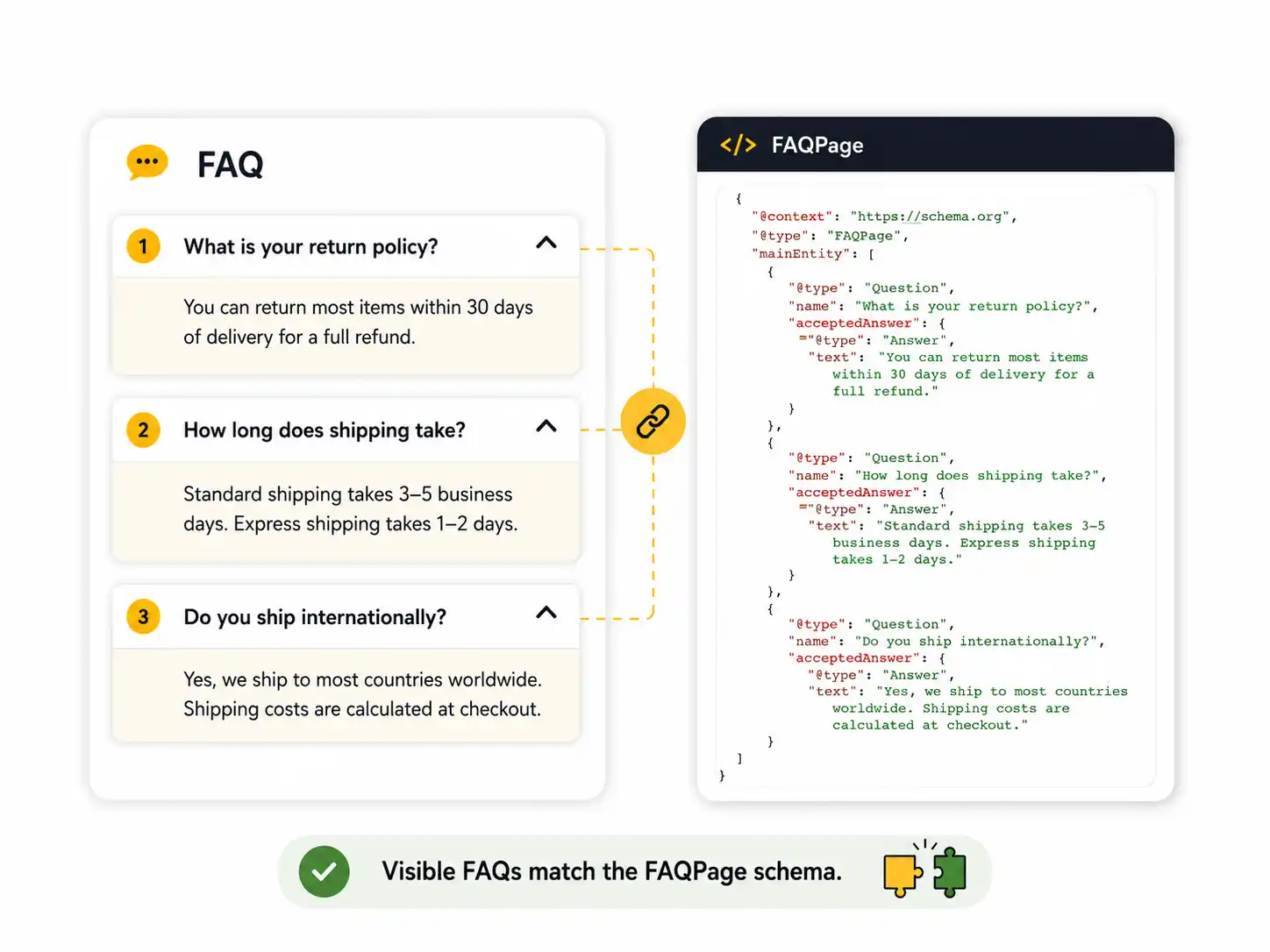
16. Implement FAQ schema on question-based content
Adding FAQPage schema to genuine question-and-answer sections helps systems recognize your content format quickly. Use it only when the questions and answers are actually visible on the page.
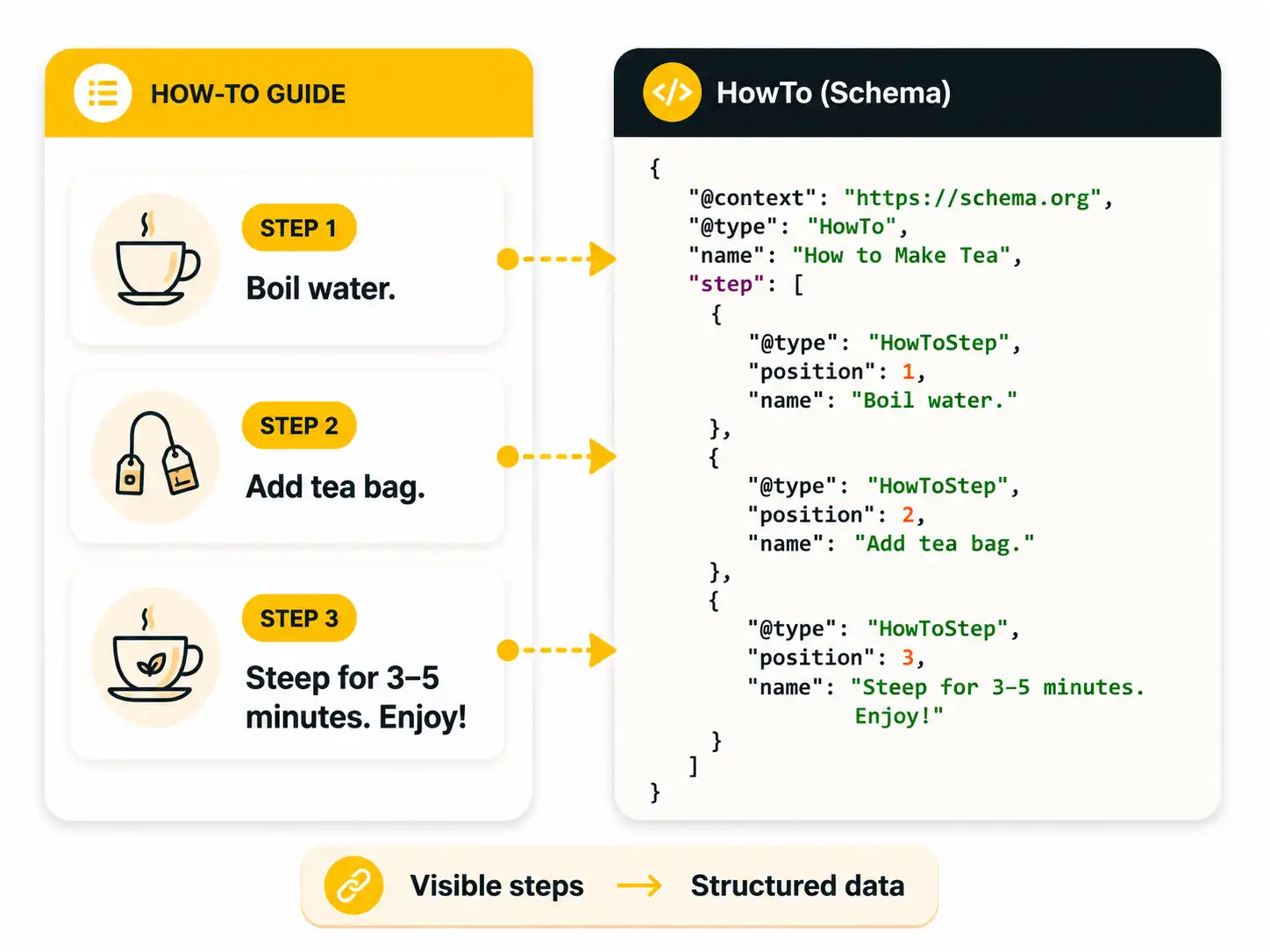
17. Use How To schema for step-by-step guides
If your page walks readers through a process, HowTo schema marks up each step clearly, making it easier for systems to reproduce your instructions accurately.
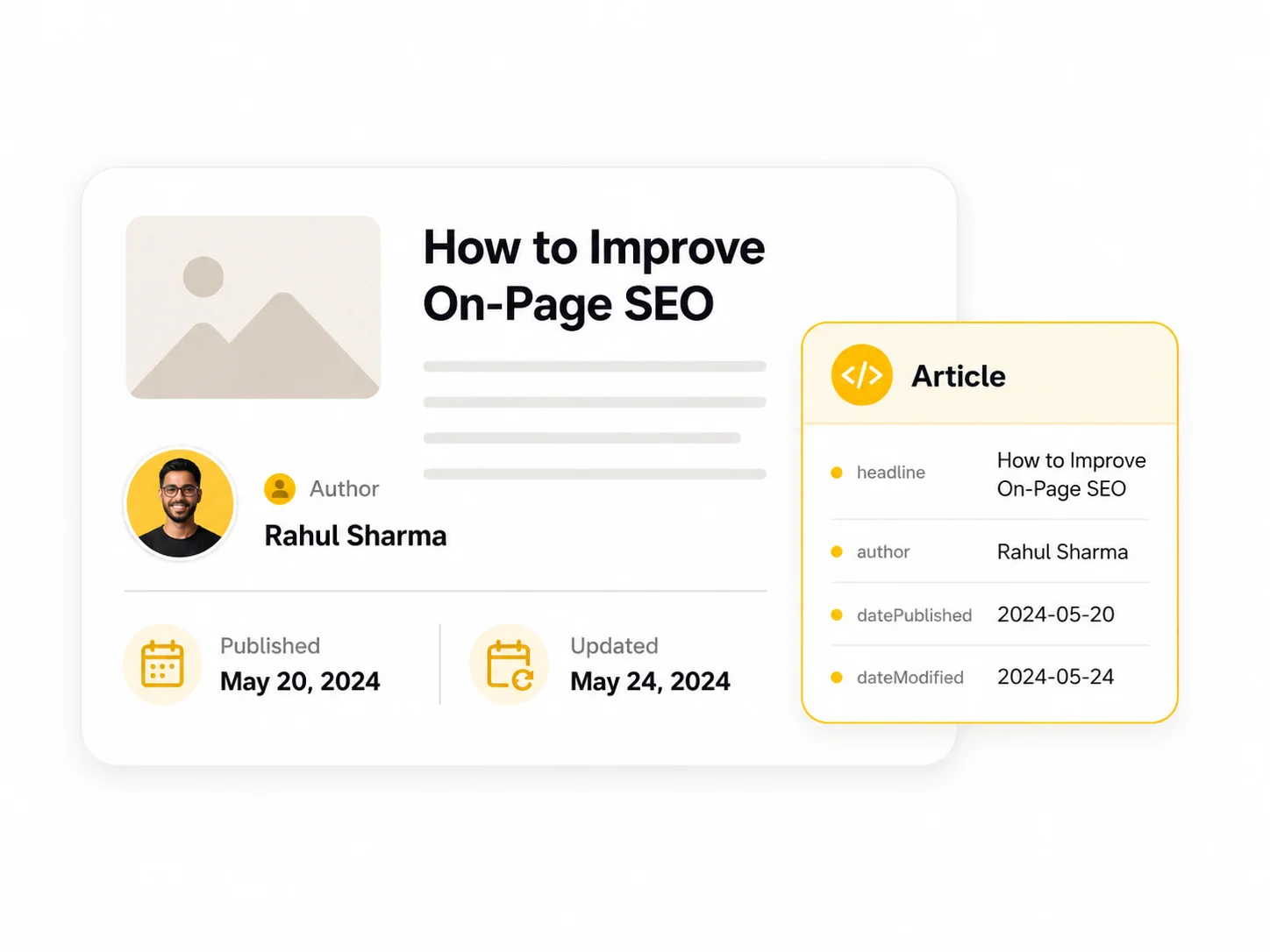
18. Add Article and Author schema
Article schema with clear author, publish date, and organization details can strengthen credibility. Systems weigh authorship and publication context when deciding which sources to trust.
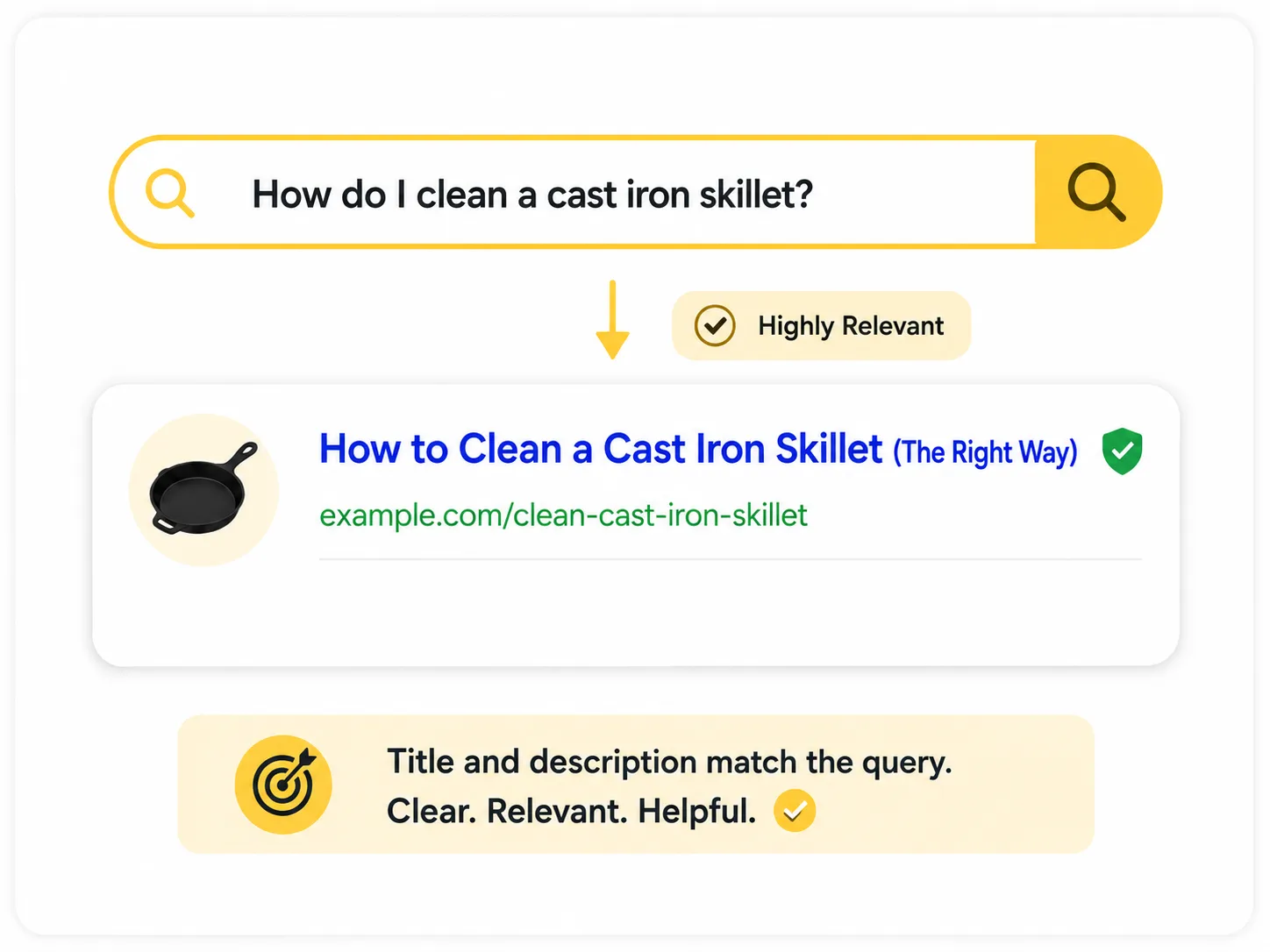
19. Write question-matched title tags and meta descriptions
Include the actual question or phrase your audience searches for in your title tag and meta description. This alignment helps both traditional search engines and answer systems match your page to the right query.
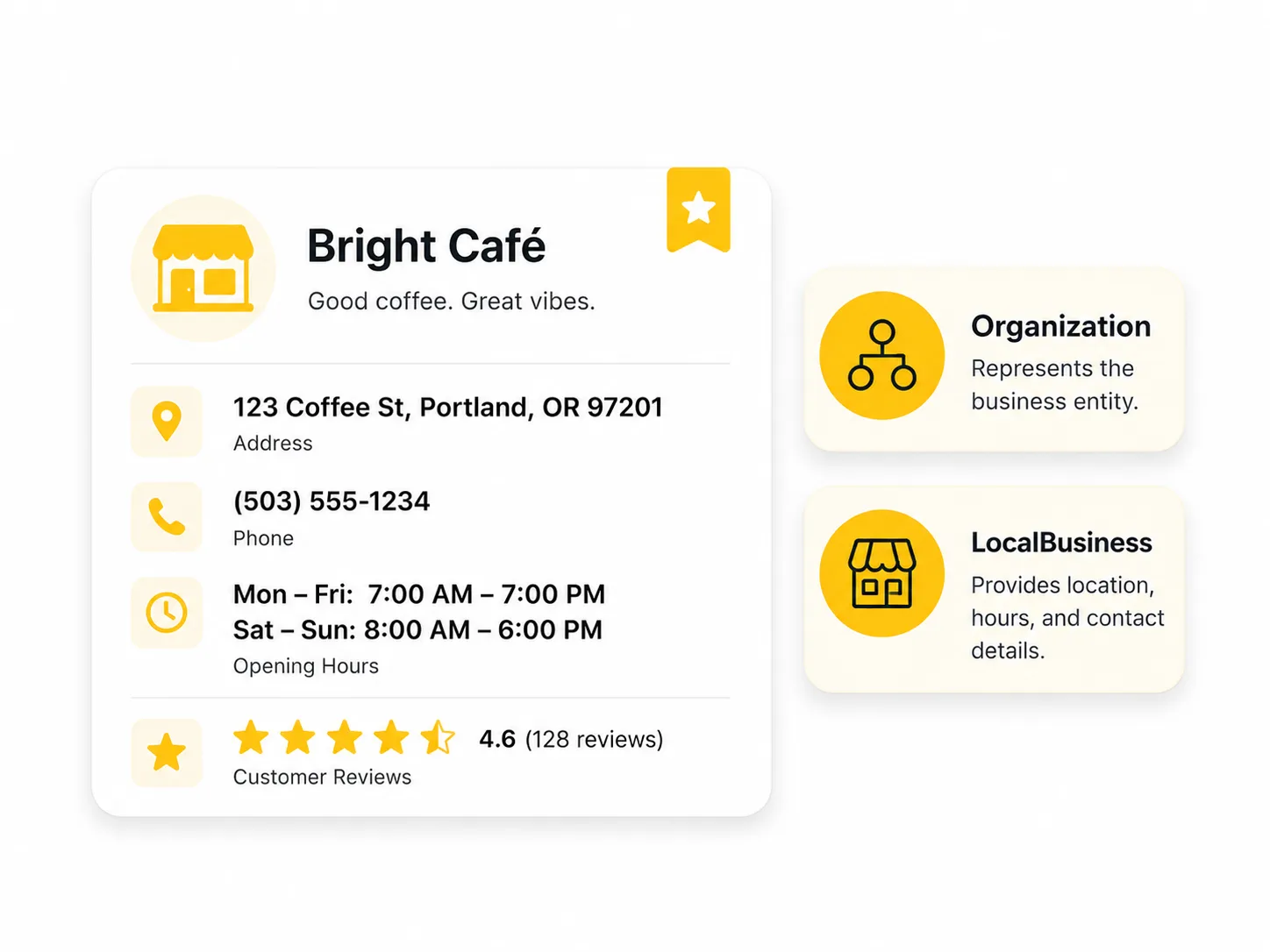
20. Use Organization and Local Business schema
For businesses, adding structured data about your company, such as name, address, services, and contact details, helps systems confirm you are a real and established entity worth citing.
Category 4: Authority and Trust Signals
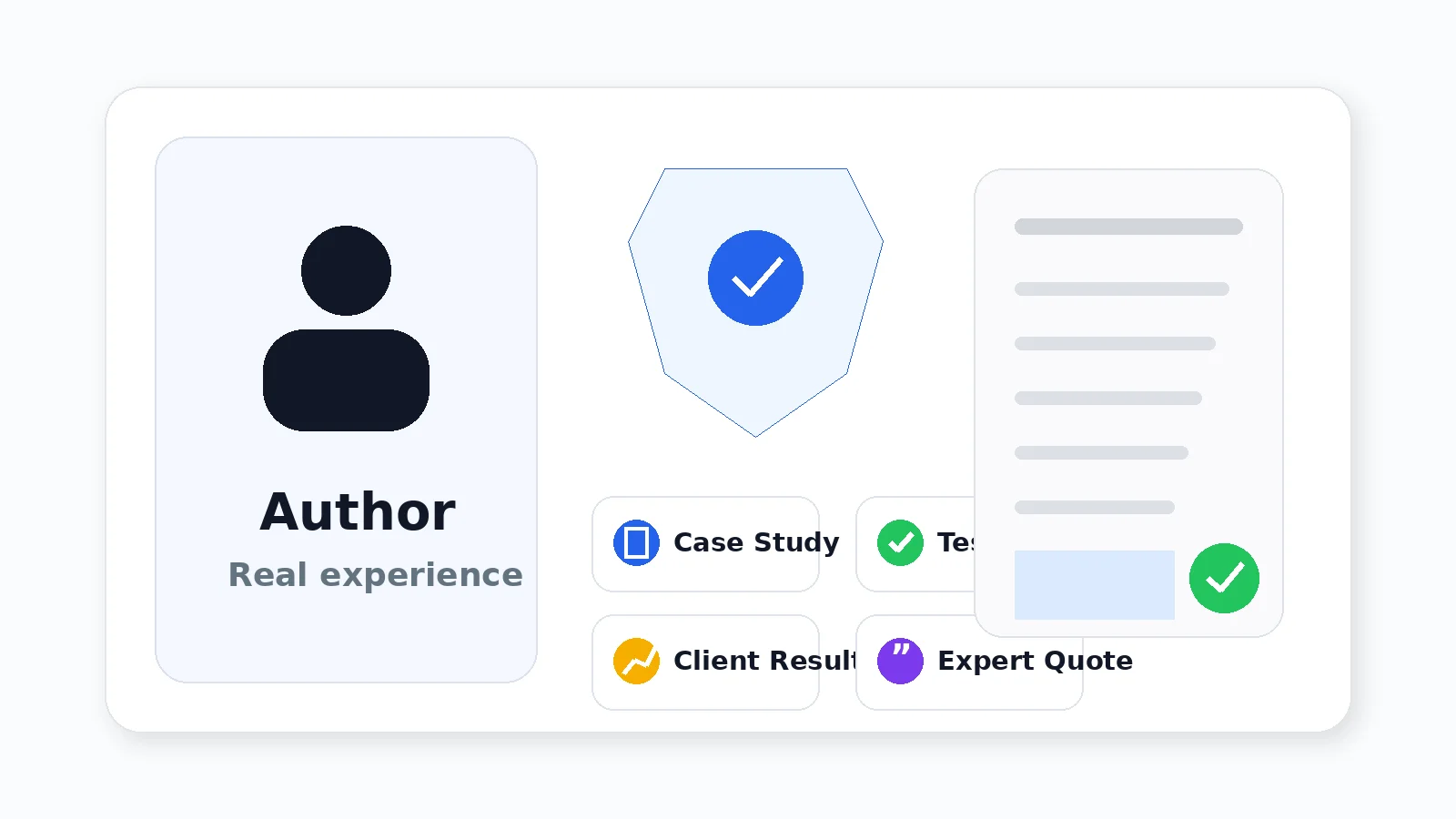
21. Show real expertise and first-hand experience
Mention who wrote the content, their relevant background, and any direct experience with the topic. Systems increasingly weigh demonstrated expertise, not just keyword matching, when choosing a source.
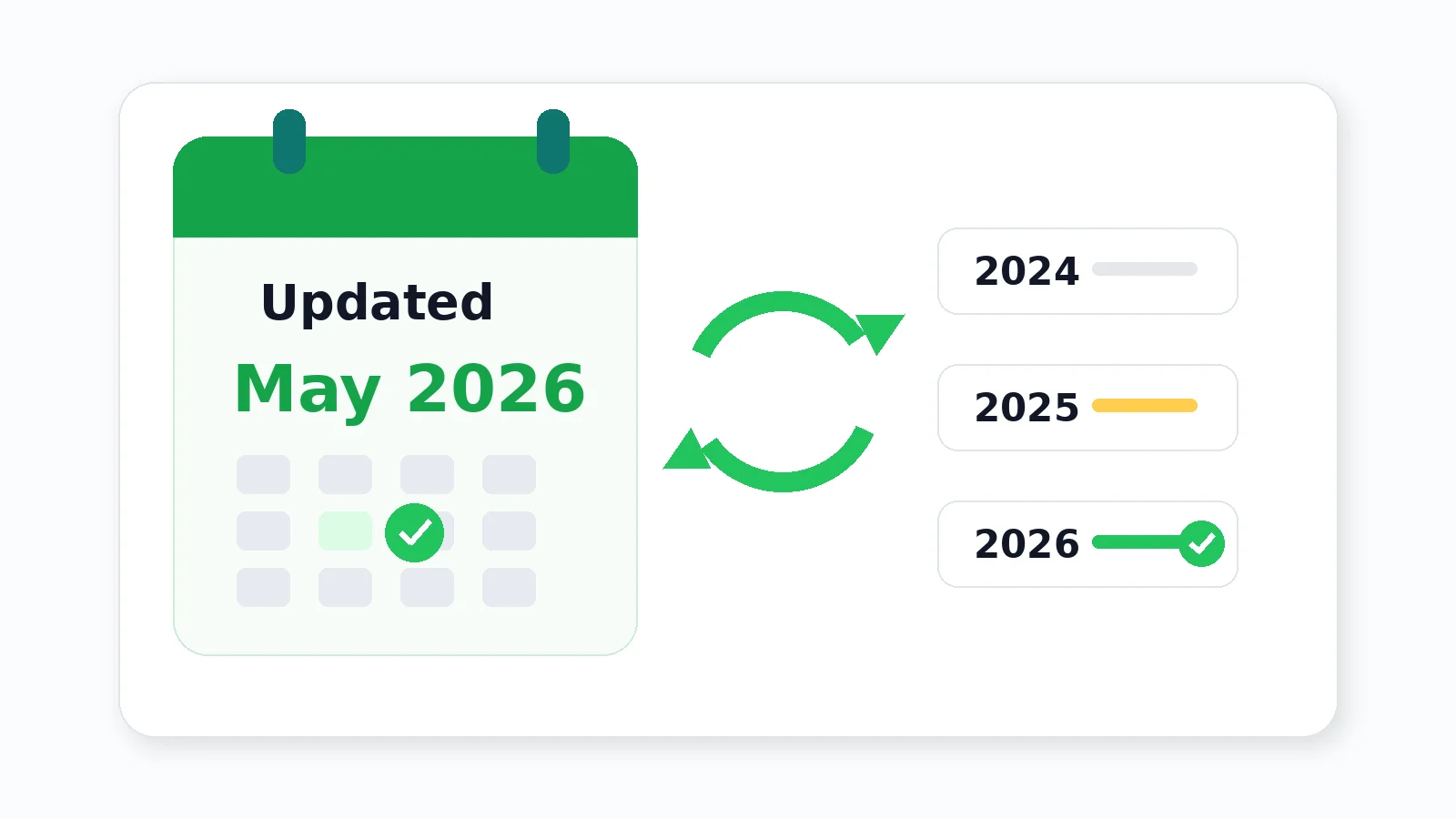
22. Keep content fresh with regular updates
Review and refresh your most important pages on a schedule. Update dates, screenshots, examples, facts, and recommendations so the content remains relevant and current.
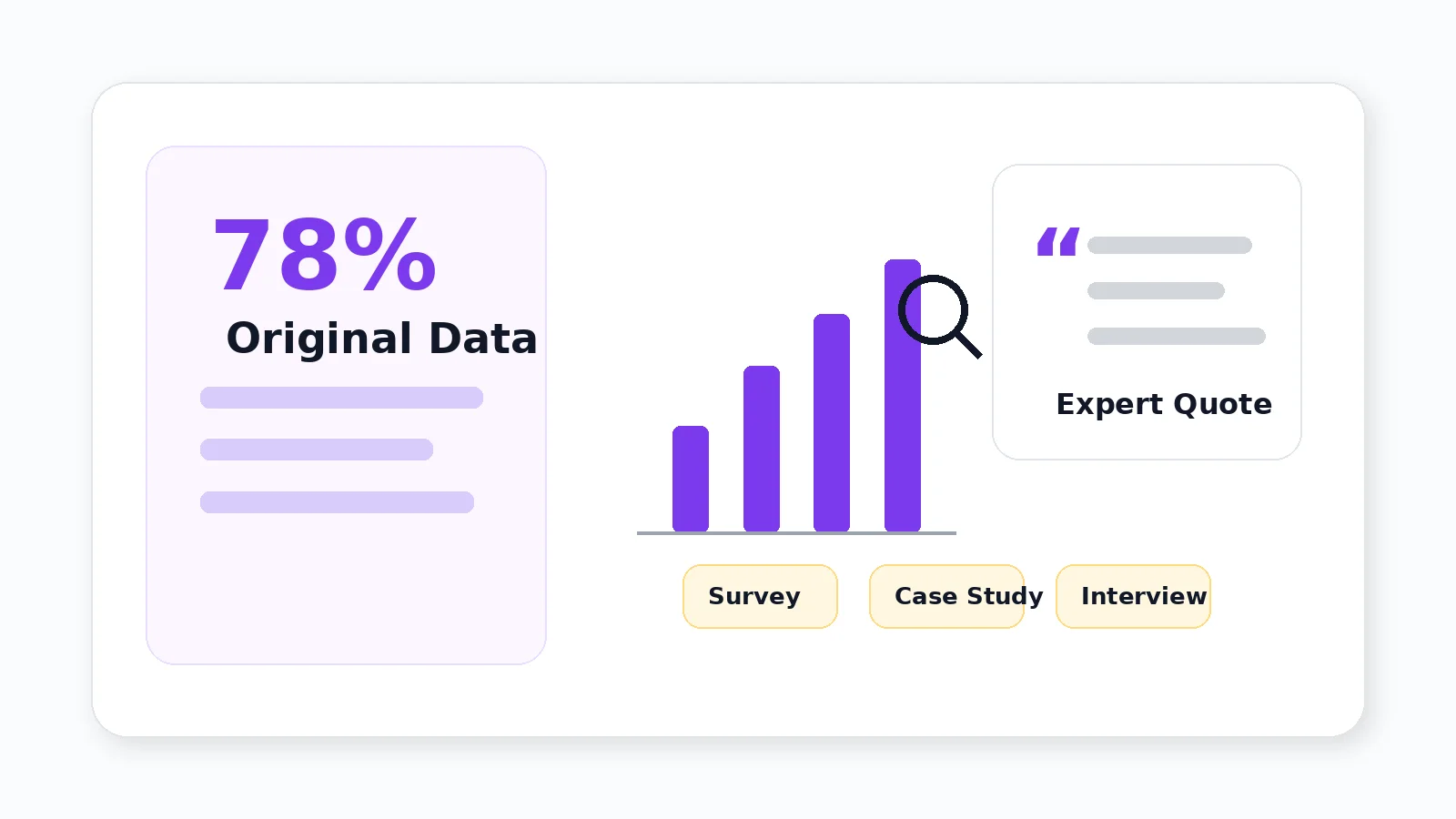
23. Add original data, quotes, or first-party research
Answer engines need a reason to cite you instead of a competitor saying the same thing. Original statistics, case studies, surveys, or expert quotes give your content unique value.
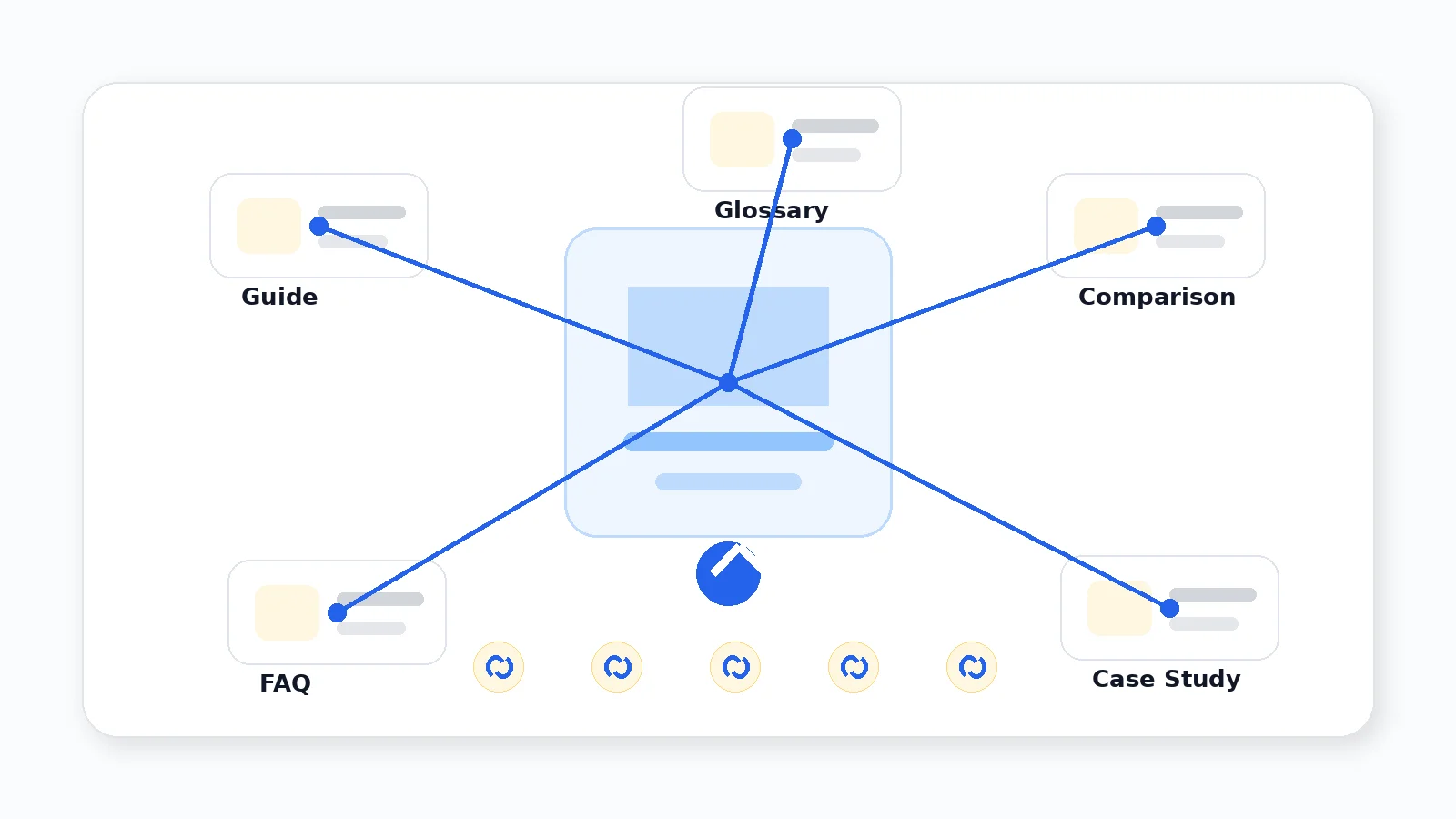
24. Build topical depth with internal linking
Connect related articles and pages so search engines and answer systems understand that you cover a topic in depth, not just in one isolated post. This supports topical authority.
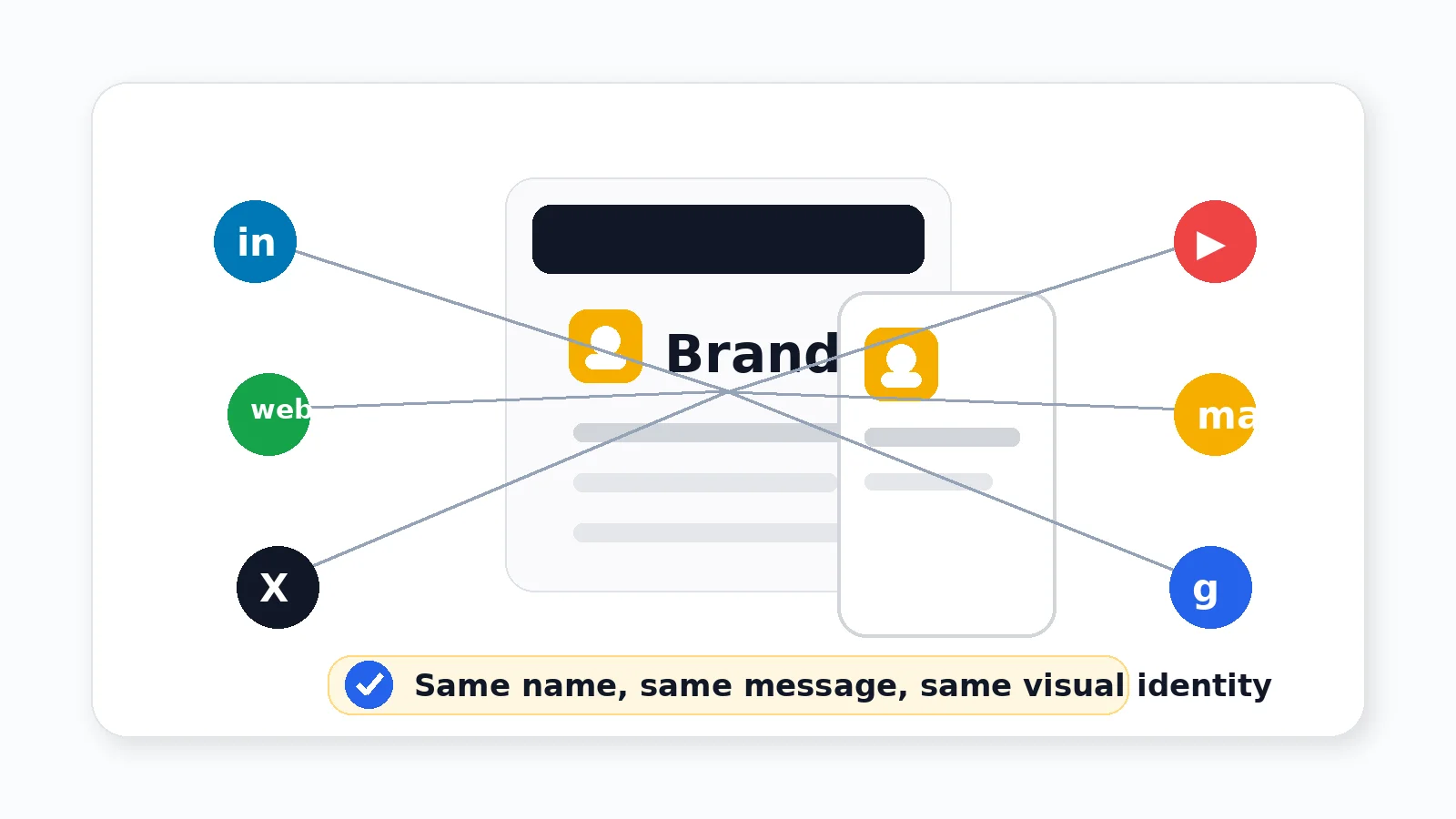
25. Maintain consistent brand presence across platforms
Keep your business name, description, and important facts consistent across your website, Google Business Profile, LinkedIn, and other public profiles. Systems often cross-check entities across multiple sources before deciding how much to trust them.
How Different AI Platforms Prioritize Content
Not every answer engine works the same way, so it helps to understand what each one tends to favor.
Platform | What It Tends to Favor |
|---|---|
Google AI Overviews | Pages that already rank well in traditional search, with clear structure and snippet-ready answers |
ChatGPT Search | Long-form, comprehensive, well-organized guides with clear headings |
Perplexity | Freshness, source authority, and presence across multiple channels |
Microsoft Copilot | Professional and authoritative sources, especially for B2B and workplace-related queries |
Gemini | Multimodal content, including relevant images, video, and structured data |
How to Measure AEO Success
Since AEO does not always drive a click, you need to track different signals than plain traffic numbers.
• Branded search growth: More people searching your brand name directly can indicate that an AI answer introduced them to you first.
• Referral traffic from AI platforms: Check your analytics for sources such as chatgpt.com, perplexity.ai, or copilot.microsoft.com.
• Manual citation checks: Ask ChatGPT, Perplexity, Gemini, and similar tools questions related to your industry and note whether your content or brand gets mentioned.
• Featured snippet and AI Overview appearances: Use Google Search Console and supporting tools to monitor visibility in answer layers where possible.
• Engagement and conversions: Even without direct clicks, watch for gains in direct traffic, branded searches, inquiries, or assisted conversions after major content updates.
Common AEO Mistakes to Avoid
• Adding fake or mismatched schema. Schema should always reflect content that is actually visible on the page.
• Treating AEO as a one-time project. Pages that are refreshed and reinforced over time usually perform better.
• Writing long introductions before the answer. If a reader or system has to work too hard to find the point, you reduce your citation chances.
• Ignoring your off-site presence, such as your Google Business Profile and social profiles. Off-site consistency matters for entity trust.
• Chasing keywords instead of answering the real question behind the query.
Final Thoughts
AEO is not a replacement for SEO, and it is not a one-time checklist you complete and forget. It is an ongoing habit of writing clearer, more structured, and more trustworthy content that both people and AI systems can use with confidence.
Start with the technical basics. Tighten your content structure. Add the right schema. Build genuine authority. Keep everything fresh. Do this consistently, and you put your business in a much stronger position to be the source that AI answers point to, not the page that gets left out.
If you want help turning this checklist into an actual content and SEO strategy for your business, Get Catalyzed’s SEO team can build and execute an AEO-ready plan for your website. You can also start with a free SEO audit to see exactly where your site stands today.