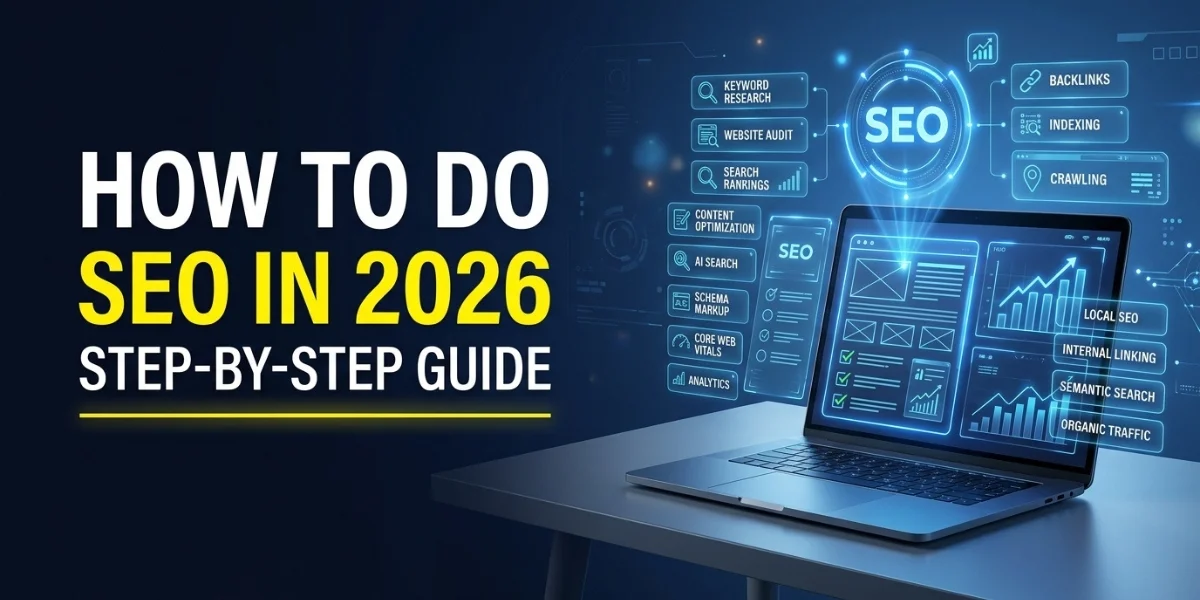

Introduction: The New Era of SEO in 2026
SEO in 2026 looks dramatically different from even two years ago. With Google's Search Generative Experience (SGE) now handling over 40% of search queries and platforms like TikTok processing more than 15 billion searches monthly, the search landscape has fundamentally transformed. Yet the core mission remains unchanged: connecting your content with people actively seeking solutions.
The shift isn't about abandoning proven SEO fundamentals - it's about adapting them for an AI-first search environment where user experience, expertise, and multi-platform visibility determine success. Traditional tactics like keyword optimization and backlink building still matter, but they now work alongside new priorities: optimizing for AI citations, building demonstrable expertise through E-E-A-T signals, and creating content that serves both human readers and AI summarization tools.
This comprehensive guide walks you through the exact steps needed to build a future-proof SEO strategy that drives measurable results in 2026's evolved search ecosystem.
What's Changed in SEO for 2026 (And What Hasn't)
The SEO landscape has undergone its most dramatic transformation since mobile-first indexing. Understanding what's fundamentally different—and what remains constant—is critical for building an effective strategy in 2026.
The Rise of AI-Powered Search Experiences
Google's Search Generative Experience (SGE) now appears for approximately 85% of informational queries, fundamentally changing how users interact with search results. Rather than clicking through to websites immediately, users receive AI-generated summaries with cited sources. This shift means your content must be structured for citation-worthiness—clear, authoritative answers that AI can confidently reference. Perplexity AI has reached 100 million monthly queries, while ChatGPT's search integration processes millions more, creating entirely new search ecosystems beyond traditional engines.
Multi-Platform Search: Beyond Google
Google's search monopoly has fractured. TikTok now handles over 40% of Gen Z search queries, Instagram's keyword search drives product discovery, and LinkedIn has emerged as a B2B search powerhouse. Platform-specific optimization is no longer optional—it's essential. Each platform has unique algorithms: TikTok prioritizes watch-time and engagement velocity, Instagram rewards saves and shares, while LinkedIn values professional relevance and connection depth. Your SEO strategy must account for where your audience actually searches, not just where they traditionally searched.
Timeless SEO Foundations That Still Matter
Amid this disruption, core principles haven't changed. Quality content that genuinely helps users still wins. Backlinks from authoritative sources remain crucial ranking signals. Technical excellence—fast loading speeds, mobile responsiveness, clean site architecture—continues to separate winners from losers. User experience metrics like dwell time and bounce rate still indicate content relevance. The fundamentals haven't disappeared; they've simply become table stakes while new optimization layers have been added on top.
Step 1: Master Modern Keyword Research for 2026
Keyword research in 2026 isn't about finding high-volume terms to stuff into your content—it's about understanding the questions your audience asks and the context behind their searches. With AI interpreting search intent more sophisticatedly than ever, your keyword strategy must evolve accordingly.
Understanding User Intent in the SGE Era
Search Generative Experience has fundamentally changed how users interact with search results. SGE prioritizes conversational, question-based queries, so your keyword research should focus on capturing complete user journeys rather than isolated terms. For instance, instead of targeting "digital marketing services," consider the fuller intent: "how to choose a digital marketing agency for small business" or "what digital marketing services do I need for ecommerce."
Analyze the type of SGE responses appearing for your target keywords. If AI summaries dominate, your content needs depth, citations, and structured answers that AI can reference.
Tools and Techniques for 2026 Keyword Discovery
Modern keyword research combines traditional tools with AI-powered insights. Use platforms like Semrush and Ahrefs for foundational data, but supplement with:
AI search simulators that show how your content appears in SGE results
Social listening tools to capture emerging queries on TikTok and Instagram
Question-mining tools like AnswerThePublic and AlsoAsked for conversational queries
Google Search Console data showing which queries trigger impressions versus clicks
Balancing Zero-Click and Click-Through Keywords
Approximately 58% of Google searches now end without a click. Rather than avoiding zero-click keywords entirely, strategically target both types. Use zero-click keywords for brand visibility and authority building, while prioritizing high-intent, click-through keywords for conversion-focused pages. This balanced approach ensures visibility across the entire search journey.
Step 2: Create AI-Optimized, Human-First Content
Content remains king in 2026, but the kingdom has new rules. Your content must satisfy both AI algorithms that determine citations and human readers who ultimately engage with your brand. The winning formula? Depth, clarity, and demonstrable expertise.
The Role of AI in Content Creation (Without Losing Quality)
AI writing tools have become sophisticated collaborators rather than replacements. Use them strategically for research, outline generation, and first drafts—but always infuse content with genuine expertise and unique insights. Google's algorithms can detect purely AI-generated content lacking human refinement. The sweet spot is using AI to enhance efficiency while maintaining your brand voice and adding proprietary knowledge, case studies, and expert analysis that AI cannot replicate.
Writing for Search Generative Experience (SGE) Citations
SGE pulls citations from content that demonstrates clear expertise and provides direct, well-structured answers. To increase citation likelihood, format information in scannable blocks with clear topic sentences, use descriptive subheadings, and answer questions definitively in 2-3 sentence paragraphs. Include statistics with sources, step-by-step instructions, and comparative analysis. SGE favors content that demonstrates firsthand experience and original research over rehashed information.
Optimizing Content for Featured Snippets and Quick Answers
Featured snippets still drive significant traffic. Structure content with question-based H2/H3 tags, provide concise 40-60 word answers immediately after questions, and use numbered lists for processes, bullet points for features, and tables for comparisons. Include a dedicated FAQ section addressing common variations of your target queries.
Building Topic Authority vs. Individual Page Optimization
2026 SEO rewards comprehensive topic coverage over isolated keyword targeting. Create content clusters with a pillar page covering broad topics (e.g., "Complete Guide to Email Marketing") linked to detailed subtopic pages (segmentation strategies, automation workflows, deliverability optimization). This interconnected approach signals topical authority to search engines and provides better user experience than scattered, unrelated content pieces.
Step 3: Implement E-E-A-T Signals and Trust Factors
In 2026, Google's AI models have become exceptionally sophisticated at evaluating expertise, experience, authoritativeness, and trustworthiness. With SGE citing sources directly in search results, trust signals are now your competitive advantage—not just a ranking factor.
What E-E-A-T Means in 2026
E-E-A-T (Experience, Expertise, Authoritativeness, Trust) has evolved from a quality rater guideline into a measurable algorithmic factor. Google's AI now cross-references author credentials, publication history, and cited sources across the web. For YMYL (Your Money or Your Life) topics—health, finance, legal advice—demonstrable expertise isn't optional; it's mandatory. Sites without verified author credentials see up to 60% less visibility in AI-generated answers compared to those with established authority.
Building Author Authority and Expertise Signals
Create detailed author bios with verifiable credentials, professional affiliations, and relevant experience. Link to LinkedIn profiles, published works, and industry contributions. Implement Author schema markup to help AI systems understand credentials programmatically. Get authors featured on reputable third-party sites—guest contributions on established publications significantly boost perceived expertise. Consider earning certifications or credentials relevant to your content topics; Google's systems increasingly recognize professional qualifications.
Trust Indicators: Reviews, Citations, and Transparency
Display customer reviews prominently with proper schema markup—SGE frequently pulls review data into AI summaries. Cite authoritative sources within your content and link to peer-reviewed research, government data, or industry reports. Add clear contact information, privacy policies, and about pages. Businesses with verified Google Business Profiles, consistent NAP (Name, Address, Phone) citations, and transparent ownership information rank higher in both traditional and AI-generated results. Transparency isn't just ethical—it's algorithmically rewarded.
Step 4: Optimize Technical and On-Page Elements
While AI has transformed how search engines understand content, technical and on-page optimization remains the foundation that makes everything else possible. In 2026, these elements serve dual purposes: helping traditional crawlers index your content and enabling AI systems to accurately interpret and cite your information.
Core On-Page SEO Elements That Still Matter
Title tags, meta descriptions, and header hierarchy haven't disappeared—they've become more important for AI interpretation. Your title tag should clearly communicate topic relevance within 55-60 characters, as SGE often pulls from these for source attribution. Header tags (H1-H3) must create logical content structure that both users and AI can navigate. URL structure should remain clean and descriptive, reflecting your content hierarchy without unnecessary parameters.
Schema Markup and Structured Data for AI Understanding
Structured data has evolved from "nice-to-have" to essential in 2026. Implement schema markup for articles (with author, date modified, and review schema), products (with aggregate ratings and availability), FAQs, and how-to content. Pages with proper schema are 47% more likely to appear in SGE citations according to recent industry analysis. Focus particularly on speakable schema for voice search and claim review schema for fact-based content.
Visual Search and Image SEO 2.0
Google Lens now processes over 12 billion visual searches monthly. Optimize images with descriptive filenames, comprehensive alt text that describes context (not just objects), and proper compression for fast loading. Use WebP or AVIF formats, and implement image schema to help AI understand visual content relationships to your text.
Core Web Vitals and User Experience Signals
Page experience remains a confirmed ranking factor. Target Largest Contentful Paint (LCP) under 2.5 seconds, First Input Delay (FID) below 100ms, and Cumulative Layout Shift (CLS) under 0.1. In 2026, mobile page speed directly impacts SGE inclusion rates—slow pages are often bypassed for faster alternatives, even with superior content.
Step 5: Build Strategic Backlinks and Topic Authority
While the SEO landscape has evolved dramatically, backlinks remain a critical ranking signal—but the game has fundamentally changed. In 2026, search engines evaluate links within the broader context of topical authority and expertise networks, making strategic link building more nuanced than ever.
Backlinks in 2026: Quality Over Quantity More Than Ever
Google's algorithms now assess link quality through multiple sophisticated lenses: the linking site's topical relevance, author credibility, content depth, and user engagement metrics. A single link from an authoritative industry publication with strong E-E-A-T signals can outweigh dozens of generic directory links. Focus on earning links from sites that demonstrate genuine expertise in your niche, have consistent publishing standards, and maintain transparent authorship. Links embedded within comprehensive, well-researched content carry significantly more weight than those in brief mentions or link roundups.
Earning Links Through Expertise and Original Research
The most effective link-building strategy in 2026 is becoming genuinely link-worthy. Original research, proprietary data studies, and comprehensive industry reports naturally attract citations. Consider publishing annual industry surveys, conducting unique experiments, or analyzing trends with original data. For example, a marketing agency publishing quarterly research on emerging consumer behaviors will earn organic backlinks from journalists, bloggers, and industry analysts seeking credible sources. Expert commentary, case studies with measurable results, and innovative frameworks also serve as powerful link magnets.
The Shift Toward Topic Authority Over Domain Authority
Search engines now prioritize topic-specific authority rather than blanket domain authority metrics. A niche website with deep expertise in a specific area can outrank larger sites with broader but shallower coverage. Build concentrated authority by consistently publishing interconnected content around core topics, earning links from specialized industry sources, and demonstrating expertise through author credentials and comprehensive topic coverage.
Step 6: Optimize for Multi-Platform Search Visibility
Search is no longer confined to Google's ten blue links. In 2026, your target audience discovers content across multiple platforms, each with unique algorithms and user behaviors. A comprehensive SEO strategy must address this fragmented search landscape.
Search Generative Experience (SGE) Optimization Tactics
To appear as a cited source in SGE responses, structure your content with clear, definitive answers to specific questions. Use concise paragraphs (40-60 words) that directly address user queries. Implement FAQ schema markup and ensure your most valuable insights appear in the first 300 words. SGE particularly favors content with data citations, expert quotes, and original research that AI can confidently reference.
Social Platform Search: TikTok, Instagram, and LinkedIn
Over 51% of Gen Z users now start product searches on TikTok rather than Google. Optimize your social content with searchable captions, relevant hashtags, and alt text descriptions. On LinkedIn, focus on detailed posts addressing professional pain points—the platform's search algorithm prioritizes engagement and expertise signals. Create platform-specific content rather than cross-posting identical material.
Voice Search and AI Assistant Optimization
Voice queries are typically longer and conversational. Target question-based keywords like "what's the best way to..." or "how do I..." and provide direct answers within the first paragraph. Structure content in natural language patterns that match how people actually speak, and optimize for local searches since 58% of voice searches have local intent.
Measuring Success: KPIs and Metrics for 2026 SEO
Traditional ranking tracking tells only part of the story in 2026. With AI-generated answers, zero-click searches, and multi-platform discovery, you need a more comprehensive measurement framework to truly understand your SEO performance.
Essential SEO Metrics to Track in 2026
Beyond rankings, focus on these critical KPIs: SGE citation frequency (how often your content appears in AI-generated answers), brand visibility score across platforms, and qualified organic traffic quality over volume. Track your "answer engine optimization" performance—are you appearing in Perplexity, ChatGPT, and Google SGE results? Monitor click-through rates specifically from AI summaries versus traditional snippets, as these often differ by 15-30%. Don't forget engagement metrics like time-on-page, scroll depth, and conversion rates, which signal content quality to search algorithms more than ever.
Tools for Comprehensive SEO Monitoring
Your 2026 SEO toolkit should include traditional platforms like Google Search Console and SEMrush, but also newer solutions. Tools like BrightEdge and Authoritas now track SGE visibility, while platforms like AnswerThePublic and AlsoAsked help monitor question-based search trends. Use Screaming Frog for technical audits, but supplement with AI content detection tools to ensure quality balance. Consider social listening platforms like Brandwatch to track discovery beyond traditional search engines.
Timeline Expectations: When to Expect Results
SEO remains a long-term investment. Technical improvements show results in 4-6 weeks, while content-driven authority building typically takes 3-6 months for competitive keywords. Brand new websites should expect 6-12 months before seeing substantial organic traffic. However, SGE citations can appear faster—sometimes within 2-4 weeks for well-optimized, authoritative content on trending topics.
Budget Allocation Guide for 2026 SEO
Smart budget allocation in 2026 requires balancing traditional SEO fundamentals with emerging AI-optimization needs. Whether you're a startup or an enterprise, strategic investment distribution directly impacts your competitive position in this evolving landscape.
Small Business SEO Budget Priorities
For businesses with monthly SEO budgets between ₹30,000-₹1,50,000, prioritize these allocations:
40% on content creation – Focus on AI-optimized, expert-driven content that earns SGE citations and builds topic authority
25% on technical optimization – Core Web Vitals improvements, schema markup implementation, and mobile experience enhancement
20% on tools and software – Essential subscriptions like SEMrush, Ahrefs, or Indian alternatives like RankWatch for keyword research and monitoring
15% on strategic link building – Quality outreach campaigns and digital PR efforts targeting authoritative publications
Small businesses should avoid spreading budgets too thin across multiple channels initially. Master Google SEO and one secondary platform (LinkedIn or YouTube) before expanding further.
Enterprise SEO Investment Strategy
Organizations with budgets exceeding ₹5,00,000 monthly should adopt a more comprehensive approach:
35% on content operations – In-house content teams, subject matter expert collaboration, and original research initiatives
25% on advanced technical SEO – International SEO, JavaScript rendering optimization, API integrations with AI search platforms
20% on multi-platform optimization – Dedicated resources for SGE, voice search, social search, and emerging platforms
15% on enterprise tools and analytics – Advanced platforms, custom dashboards, and AI-powered SEO automation
5% on experimentation – Testing new strategies, emerging platforms, and innovative content formats
Enterprises should maintain dedicated teams for content, technical SEO, and analytics while investing in proprietary data and research that competitors cannot replicate.
Transitioning from Old SEO to 2026 Strategies
Moving from traditional SEO to 2026 best practices doesn't require tearing down everything you've built. A strategic, phased approach ensures you maintain existing rankings while embracing new opportunities.
Auditing Your Current SEO Foundation
Start with a comprehensive audit of what's working. Use Google Search Console to identify your top-performing content by impressions and clicks. Check which pages already appear in AI overviews or featured snippets—these are your strongest candidates for SGE optimization. Evaluate your backlink profile for quality over quantity, and assess whether your content demonstrates clear E-E-A-T signals like author bios, credentials, and cited sources.
Phased Implementation Plan
Month 1-2: Add structured data and author expertise signals to existing high-performers. Month 3-4: Refresh top content with conversational FAQs and citation-worthy facts that AI can reference. Month 5-6: Expand into multi-platform search by repurposing content for social platforms and optimizing for voice queries. This gradual approach prevents traffic disruptions while systematically modernizing your SEO foundation for long-term success in the AI-driven search landscape.
Conclusion: Your Path to SEO Success in 2026
SEO in 2026 isn't about choosing between AI and human expertise—it's about leveraging both strategically. The most successful strategies combine AI-optimized content with genuine E-E-A-T signals, technical excellence with multi-platform visibility, and data-driven tactics with authentic audience understanding.
Three critical takeaways define 2026 SEO success: prioritize being citation-worthy over simply ranking, build topic authority across your entire content ecosystem rather than optimizing pages in isolation, and diversify your search presence beyond Google to capture audiences wherever they're searching.
The transition to these modern strategies requires expertise, resources, and continuous adaptation. Get Catalyzed specializes in future-ready SEO strategies that combine technical precision with content excellence. Whether you're looking to audit your current approach or implement a comprehensive 2026 SEO strategy, our team can guide you through every step. Contact us today to discuss how we can accelerate your search visibility in this new era.